



Infineon’s IMC300 SoC Integrates ARM Cortex‑M0 MCU for Flexible Motor Control
Energy‑conversion efficiency remains a cornerstone of modern electronics design. In electric‑motor systems this efficiency is challenged twice: first, electrical energy must be generated to power the controller; second, it must be transformed into mechanical torque. Eliminating motor‑related noise is one of the most frequent hurdles engineers confront.
Today, manufacturers treat the motor‑control unit as a core functional block rather than an optional add‑on. This trend is evident in auxiliary systems such as water‑drainage pumps or fans found in household appliances. Infineon Technologies supplies a broad portfolio of discrete parts and integrated solutions that streamline inverter applications, cutting R&D costs and BOM complexity.
The new IMC300 combines Infineon’s iMOTION Motion Control Engine (MCE) with an ARM® Cortex‑M0 microcontroller, delivering a flexible, variable‑speed drive solution that adapts to diverse applications.
CONTROLLERS
Controlling a motor’s speed and direction requires understanding the motor type and its operating mode. The motor controller must manage start‑stop, direction changes, speed regulation, torque, and protection against over‑voltage. Historically, such control relied on discrete components due to high voltages and currents. Modern engine control now focuses on efficient microelectronic solutions, combining advanced software algorithms with power‑electronics hardware.
iMOTION TECHNOLOGY
iMOTION represents Infineon’s family of products that embed a certified motor‑control algorithm within the hardware, optionally including power‑factor correction (PFC). These solutions deliver the flexibility needed for customer‑specific applications that often extend beyond simple motor configuration (see Figure 1).
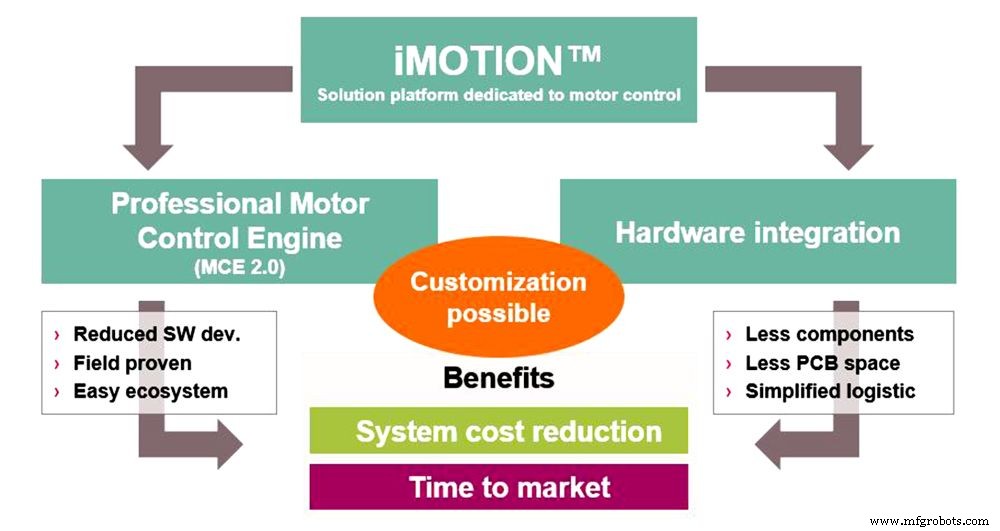
 Figure 1 : iMOTION drives integration in motor control. (Image: Infineon Technologies)
iMOTION ICs integrate all control and analog‑interface functions required for field‑oriented control (FOC) using either DC shunt current measurement or DC connection. Infineon’s patented algorithm removes the need for custom motor‑control coding.
These solutions are ideal for home appliances and small drives such as fans, combining controller, SmartDrive, and SmartIPM devices.
The SmartDrive device integrates the gate driver (MOSFETs or IGBTs), while the SmartIPM family achieves the highest level of integration by coupling the MCE, gate driver, and a three‑phase full bridge into a single, compact PQFN package.
Targeting variable‑speed motor‑control systems, the IMC300 family incorporates a user‑programmable microcontroller (see Figure 2). The dual‑core architecture merges the necessary hardware, firmware, and user code to control a permanent‑magnet synchronous motor (PMSM) with minimal system and development cost.

 Figure 2 : iMOTION Motion Control Engine plus ARM Cortex‑M0 diagram and features (Image: Infineon Technologies)
Protection features of the IMC300 include under‑/over‑voltage, over‑current, over‑temperature, motor gate‑kill, rotor lock, fault reporting, minimum dead time, and shoot‑through. Control capabilities comprise sinusoidal FOC, sensored/sensorless operation, three‑ or two‑phase modulation, field weakening, zero‑vector braking, integrated PFC, and bootstrap support.
The IMC300 and its predecessor, the IMC100, share the same MCE 2.0 core, offering a ready‑to‑use solution with PFC control, extensive protection, and a scripting engine.
By leveraging MCE for motor control, customers can focus on the application logic, which operates independently of the built‑in ARM microcontroller. This MCU offers a versatile set of peripherals for system functions, custom communication, or drive monitoring (see Figure 3).

 Figure 3 : IMC300 circuit application (Image: Infineon Technologies)
“The goal is to make motor control turnkey for customers,” says Ingo Skuras, Product Marketing Manager for iMOTION at Infineon Technologies. “We’re seeing a clear shift toward electronic, variable‑speed drives. Our solutions allow users to configure and deploy without programming—typically within 30 minutes to an hour.”
The MCE encapsulates all required hardware, software, and protection functions, reducing BOM. It is continually refined, with two new versions released each year.
Embedding advanced algorithms in peripherals such as ADCs or timers lightens the CPU load. When paired with a small 32‑bit controller, the freed CPU capacity can be dedicated to application‑specific tasks.
iMOTION controllers are designed for production environments and meet functional‑safety requirements for home appliances, enabling compliant designs across markets.
IMC300 devices are pre‑certified for functional safety under UL/IEC 60730 Class B.
Embedded
- Advanced Motor Control Circuits: Latching, Stop, and Time‑Delay Techniques
- Designing Polyphase AC Motors: Fundamentals and Practical Startup Techniques
- Control Unit Explained: Components & Design in CPUs
- Renesas Launches RX66T 32‑Bit MCU Family, Boosting Motor Control Performance by 2.5×
- Renesas Expands RX24T & RX24U MCU Lineup with High‑Temperature G Versions for Motor Control
- STM32WB50: Dual-Core Wireless MCU for Secure IoT Applications
- Infineon Unveils IMC300 Motor Controller with Integrated Arm Cortex‑M0 for Enhanced Flexibility
- Trinamic & Maxim Integrated Release Reference Design to Speed End‑of‑Arm Tooling Development in Industrial Robotics
- How Wide‑Bandgap Semiconductors Revolutionize Motor Control Design
- Custom Control Boosts Accuracy & Flexibility of New Machine Tool