



Tiny TMR Sensors Transform Current Sensing: High Precision, Low Power, and Compact Design
Today, a range of technologies can transform magnetic fields into proportional voltages, enabling diverse applications from magnetic encoders to current sensing.
The Hall effect, discovered by Edwin Hall in 1879, has long powered solid‑state magnetic sensors. Yet its limitations—higher power draw, limited sensitivity, and cost—have spurred the search for more efficient alternatives.
Enter magnetoresistance (MR), the phenomenon where a material’s electrical resistance shifts under a magnetic field. The MR effect varies with the material’s internal magnetization, offering new pathways for sensor design.
A breakthrough derivative of MR is tunnel magnetoresistance (TMR). Discovered by Professor Terunobu Miyazaki in the 1990s, a TMR sensor consists of two ferromagnetic layers separated by a nanometer‑thin insulating barrier. When the layers’ magnetizations align, resistance drops; when they oppose, resistance rises—an elegant quantum‑mechanical effect.
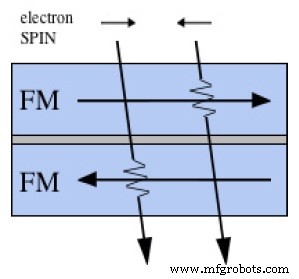
Figure 1: A TMR junction composed of two ferromagnets and a tunnel layer (Source: Crocus Technology)
Crocus Technology
Crocus Technology harnesses its patented XtremeSense TMR platform to deliver magnetic sensors for both industrial and consumer electronics. The XtremeSense family includes integrated switches and current sensors that excel in performance and footprint.
Key advantages of XtremeSense TMR include:
- Exceptional signal‑to‑noise ratio—5‑mA resolution in current sensing.
- Ultra‑low power—110 nA in switch mode.
- Robust temperature stability—< 40 ppm/°C.
“The demand for high‑speed, accurate, low‑latency current sensing is rising—especially in power‑electronics architectures,” says Tim Kaske, Crocus’ Vice President of Sales and Marketing.
TMR sensors naturally fit the role of current sensors. Their resistance varies with the surrounding magnetic field, and when paired with modern CMOS circuitry, they deliver high‑SNR, linear, and thermally stable measurements—ideal for both contact and contact‑less applications.
TMR sensor use case
Power‑factor correction (PFC) is a critical technology in power supplies, mandated by standards such as EN 61000‑3‑2. A PFC stage boosts load current capability while suppressing AC harmonics, yielding a clean, in‑phase current.
Kaske notes, “We’re targeting CCM totem‑pole PFC with GaN MOSFETs—an area that has seen little evolution in a decade. New controllers now support this architecture, opening doors to EV chargers, computing, and data centers.”
Traditional shunt‑based current sensing introduces limitations—size, power loss, and bandwidth constraints. TMR solutions can halve or quarter the PCB footprint while delivering superior accuracy, bandwidth, and latency.
“Engineers who have relied on Hall sensors now see how TMR offers a leap in performance across accuracy, bandwidth, and efficiency,” Kaske adds.
The block diagram of a standard active PFC follows in Figure 2. A diode bridge steps the AC input to DC, and a pre‑converter (typically a boost) draws a sinusoidal current from the mains, delivering a DC output.
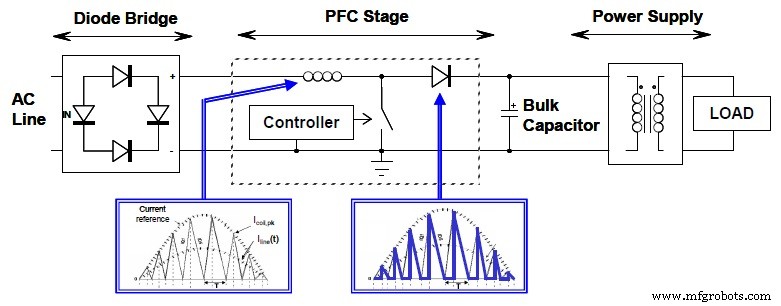
Figure 2: Diagram of a typical active PFC stage (Source: Crocus Technology)
The CCM totem‑pole PFC depicted in Figure 3 uses two GaN MOSFETs (S1 & S2) in a high‑frequency half‑bridge, while S3 and S4 handle line‑frequency synchronous switching. Its benefits—high efficiency, low losses, and component count reduction—make it attractive for modern power systems. The design requires a current sensor that can capture fast transients to avert cascading failures, using a single bidirectional sensor to monitor both halves of the cycle.
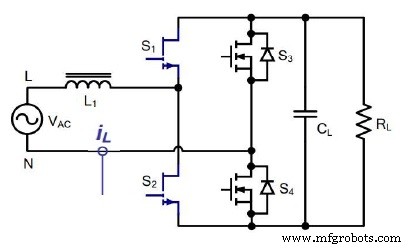
Figure 3: CCM totem‑pole PFC (Source: Crocus Technology)
According to Crocus, XtremeSense TMR sensors are the ideal choice for this application, offering:
- High SNR and clean output to the controller.
- Minimal conduction loss.
- 1 MHz bandwidth, low phase delay, and 300 ns rise time for rapid measurement.
- Programmable over‑current detection and a fault pin for MCU integration.
- Bidirectional sensing of positive and negative currents.
- 5 kV isolation for safety.
“Solar power is another fertile ground,” Kaske says. “Current transformers provide isolation and safety, but TMR can compete—offering comparable isolation with higher accuracy.”
> This article was originally published on our sister site, Power Electronics News.
Related Contents:
- Fundamentals of digital magnetic sensors
- 3D magnetic sensing aids automotive control
- Infineon is launching first magnetic sensors based on TMR technology
- Hall-effect sensors support real-time industrial applications
- Reliably powering on a battery‑operated medical device
- Hall sensor targets safety‑critical automotive systems
For more Embedded, subscribe to Embedded’s weekly email newsletter.
Embedded
- Detecting AC Magnetic Fields with a Coil and Audio Detector
- Compass Sensors: From Ancient Navigation to Modern Devices
- Magnetic Sensors: Principles, Types, and Applications
- Expert Guide to Hall Effect Current Sensors: Open‑Loop & Closed‑Loop Configurations
- Maxim Integrated’s New Sensors Slash Power, Size, and Boost Accuracy for Wearable Health Devices
- Digital Magnetic Hall Sensors: Fundamentals, Design, and Automotive Applications
- Texas Instruments Launches Zero‑Drift Hall‑Effect Current Sensors with Unmatched Accuracy
- TI Introduces TMAG5170: A High‑Precision 3D Hall‑Effect Sensor Empowering Real‑Time Control in Factory Automation
- Nanodiamonds: Ultra‑Precise Magnetic Sensors for Biomedical and Quantum Applications
- Advanced Magnetic Field Detection with NASA’s Fiber Bragg Grating Technology