



Analog vs Digital Sensors: Types, Applications, and Practical Examples
In modern electrical and electronic systems, a wide array of sensors—ranging from chemical to automotive, optical to fiber‑optic—translate physical changes into measurable signals. A sensor is essentially a device that detects variations in a physical or electrical quantity and produces an electrical or optical output that reflects that change. This article delves into the two primary families of sensors—analog and digital—highlighting their core types and real‑world applications.
Analog Sensors
Analog sensors generate a continuous voltage or current that is directly proportional to the measured quantity. This linearity makes them ideal for applications where a straightforward, real‑time response is required. Common analog sensors include accelerometers, pressure transducers, light‑sensing devices, sound transducers, and temperature sensors.
Accelerometers
These devices sense motion—such as acceleration, vibration, or tilt—by converting mechanical movement into a variable voltage. Analog accelerometers are available in several configurations, each tailored to specific sensitivity ranges.
Analog outputs are typically a continuous voltage that changes with acceleration magnitude, whereas digital variants output a converted digital signal.
Light Sensors
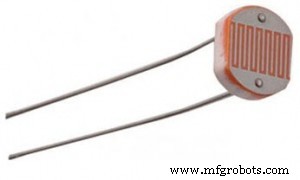
Light‑dependent resistors (LDRs) and other photoconductive devices change resistance in response to incident light. In an analog circuit, this resistance variation is converted to a voltage that can be used to switch loads automatically, such as dimming street lights or adjusting indoor lighting.
Sound Sensors
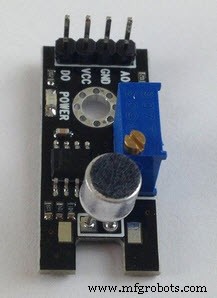
Analog microphones convert acoustic pressure into an electrical voltage. When combined with signal conditioning circuitry, the resulting voltage can be fed to a microcontroller for sound level monitoring.
Pressure Sensors
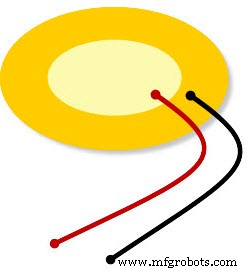
Analog pressure transducers, such as piezoelectric plates, generate a voltage proportional to applied pressure. These sensors are ubiquitous in automotive, industrial, and biomedical fields.
Analog Temperature Sensors
Thermistors—resistors whose resistance varies predictably with temperature—are the most common analog temperature sensors. In a typical circuit, a thermistor’s resistance change is translated into a voltage that drives an op‑amp, which in turn actuates a relay to control a heating or cooling element.
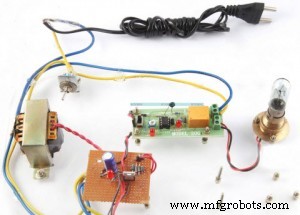
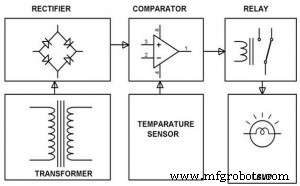
In this configuration, the thermistor’s temperature‑dependent resistance feeds an op‑amp that triggers a relay when a preset threshold is crossed, enabling fully automatic temperature regulation without manual monitoring.
Digital Sensors
Digital sensors integrate a sensor, cable, and transmitter, converting the sensed quantity to a digital value within the device itself. This internal conversion eliminates the need for external analog‑to‑digital conversion and enhances signal integrity over long runs.
Digital Accelerometers
These devices output a pulse‑width‑modulated (PWM) square wave whose duty cycle is proportional to acceleration. Typical sampling rates are 1 kHz, though many ICs allow user‑defined rates.
Digital Temperature Sensors
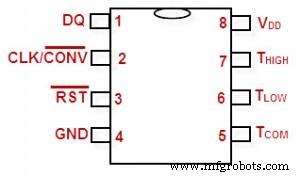
The DS1620 offers 9‑bit temperature readings and built‑in thermal alarms (THIGH, TLOW, TCOM). When the measured temperature crosses a user‑set threshold, the corresponding alarm pin goes high, allowing a microcontroller to take action.
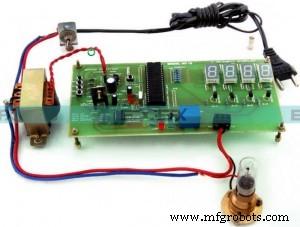
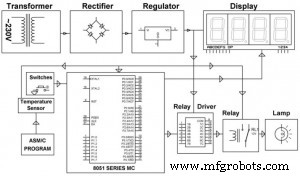
A practical implementation uses the DS1620, an 8051 microcontroller, push‑buttons, a seven‑segment display, and a relay. The system displays the measured temperature in real time and automatically cuts power to the heater when the set point is exceeded, offering greater accuracy than its analog counterpart.
Modern digital sensors continue to evolve, addressing the limitations of analog devices—such as drift, noise, and the need for external ADCs—while providing higher precision, lower power consumption, and seamless integration with microcontrollers.
Photo Credits
- Accelerometer by amazon
- Sound Sensor by ebayimg
Sensor
- Virtual Sensors: How They Work and Key Applications
- Occupancy Sensors Explained: How They Work and Why They’re Essential for Energy Savings
- Door Sensors: How They Work and Their Role in Home Security
- Inductive Sensors: How They Work and Key Industrial Applications
- IoT Sensors: Functionality, Types, and Real‑World Applications
- Arduino Sensors: Types, Applications, and Real‑World Projects
- Photoresistor (LDR): Function, Types, and Practical Applications
- MEMS Sensors: How They Work and Their Key Applications
- How Parking Sensors Work & Their Key Applications
- Magnetic Sensors: Principles, Types, and Applications