



Photoresistor (LDR): Function, Types, and Practical Applications
Light is a form of electromagnetic radiation, with the visible spectrum ranging from 400 to 700 nm. Photons carry energy that, when absorbed by semiconductor materials, can excite electrons into the conduction band, enabling a variety of photonic devices such as photodiodes, solar cells, and photoresistors.
What Is a Photoresistor?
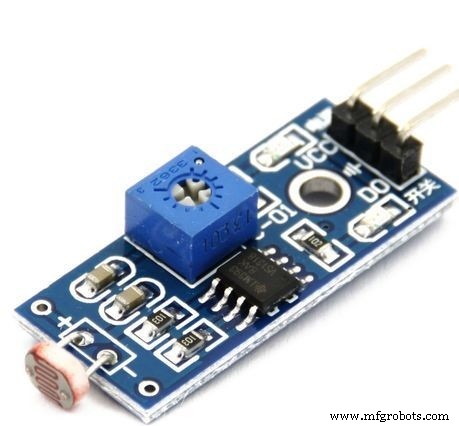
A photoresistor, also known as a light‑dependent resistor (LDR), is a passive component whose resistance decreases as incident light intensity rises. Photoconductivity governs its operation: photons liberate electrons from the valence band into the conduction band, lowering resistance and increasing conductivity. Compared to photodiodes or phototransistors, photoresistors are less sensitive and their resistance is also temperature‑dependent.
Working Principle
Unlike photodiodes, a photoresistor lacks a P‑N junction. It is fabricated from high‑resistance semiconductor material. When photons strike the material, electron–hole pairs are generated; sufficient photon energy breaks the lattice bonds, allowing electrons to reach the conduction band. The result is a pronounced drop in resistance—from megohms in darkness to hundreds of ohms under bright illumination.
Types of Photoresistors
Photoresistors are categorized by the semiconductor’s intrinsic or extrinsic nature:
- Intrinsic photoresistors use pure semiconductor crystals. They require higher‑energy photons to bridge the bandgap, making them suitable for detecting ultraviolet or high‑frequency light.
- Extrinsic photoresistors are doped with impurities that introduce free carriers near the conduction band. They respond to lower‑energy, longer‑wavelength light—including visible and infrared—making them ideal for ambient light sensing.
Both types exhibit a nonlinear resistance‑to‑light relationship; their sensitivity varies with wavelength, and they are generally temperature‑sensitive.
Symbol of Photoresistor
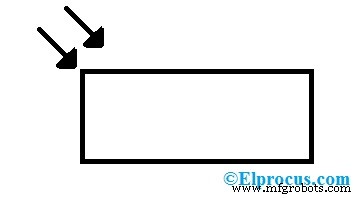
Commonly abbreviated as LDR, photoresistors are constructed from materials such as CdS, CdSe, or PbSe. Their resistance changes not only with light but also with ambient temperature, so careful calibration is essential for precision applications.
Applications of Photoresistors
Despite their lower sensitivity, photoresistors are widely used in:
- Light‑sensing circuits and ambient‑light monitoring.
- Photography light meters and night‑light switches.
- Audio compressors and external sensors where latency is acceptable.
- Alarm clocks, outdoor clocks, and solar street lamps.
- Infrared astronomy and spectroscopy for mid‑infrared detection.
Projects Based on Photoresistors
Hobbyists and researchers frequently employ photoresistors in innovative projects, including:
- Student‑built photometers for forensic dye analysis.
- Biocompatible organic memory integrated with photoresistors for wearable imaging.
- Photogate timing systems using smartphones.
- Acousto‑optic dual‑control circuits.
- Light‑source location detection systems.
- Sound‑activated mobile robots with directional light control.
- Open‑source building thermodynamic monitoring.
- Overheat protection devices.
- Electromagnetic radiation detectors.
- Solar‑powered dual‑axis lawnmowers for agriculture.
- LED‑based turbidity sensors for in‑situ monitoring.
- Light‑activated luminous keyboards.
- IoT‑based Morse‑code electronic locks.
- Smart‑city street‑light controls.
- MRI interventional device tracking with computer‑controlled markers.
- Light‑activated blinds.
- Automatic contrast/brightness control in TVs and smartphones.
- Proximity‑controlled switches.
With the EU’s cadmium ban, CdS and CdSe LDRs are restricted, prompting a shift toward alternative materials. Photoresistors can be readily interfaced with microcontrollers and are available as IC sensors, such as the OPT3002 ambient light sensor and passive LDR modules. For more technical details, consult the OPT3002 datasheet from Texas Instruments. While photoresistors offer a cost‑effective solution for many lighting applications, photodiodes remain the preferred choice when higher sensitivity, faster response, or spectral selectivity is required.
Sensor
- Blood Pressure Sensor: How It Works & Key Applications
- Voltage Sensors: How They Work & Key Applications in Modern Power Systems
- Color Sensors: How They Work & Key Applications
- Arduino Sensors: Types, Applications, and Real‑World Projects
- Fingerprint Sensor Technology: Working Principles, Applications, and Arduino Integration
- Ambient Light Sensors: Functionality, Design, and Key Applications
- Vibration Sensors: Principles, Types, and Industrial Applications
- How Oxygen Sensors Work and Their Key Applications in Automotive and Industrial Systems
- Understanding Hammer Mills: Operation, Types, and Industrial Applications
- Light Sensors Unveiled: How They Work, Types, and Practical Uses