



Arduino Sensors: Types, Applications, and Real‑World Projects
Arduino’s open‑source ethos has made it a global favorite among hobbyists, educators, and innovators. By pairing inexpensive microcontrollers with a user‑friendly IDE, it simplifies code deployment and hardware interfacing, enabling rapid prototyping of electronic systems.
What is an Arduino Sensor?
Thanks to its open‑source nature, Arduino has become a prototyping platform for hobbyists, artists, designers, and students alike. The core of an Arduino board—a microcontroller—comes with a dedicated IDE that streamlines firmware upload, eliminating the need for external programming hardware.
Because of this ease of use, a vast ecosystem of sensors has emerged, all designed to work seamlessly with Arduino. These sensors let Arduino boards sense light, temperature, motion, distance, sound, gases, and more, turning raw data into actionable insights.
How Sensors Connect to Arduino
Unlike many legacy microcontrollers that require a separate programmer, Arduino’s built‑in IDE handles code flashing. To connect a sensor, you typically need only a breadboard, jumper wires, and power (5 V or 3.3 V, as appropriate). Once wired, the sensor’s signals can be read or written through the Arduino’s digital or analog pins.
Applications of Arduino Sensors
Arduino sensors empower a wide range of projects, from simple demonstrations to sophisticated systems:
- Ultrasonic Module (HC‑SR04) – Non‑contact distance measurement for robotics and obstacle avoidance.
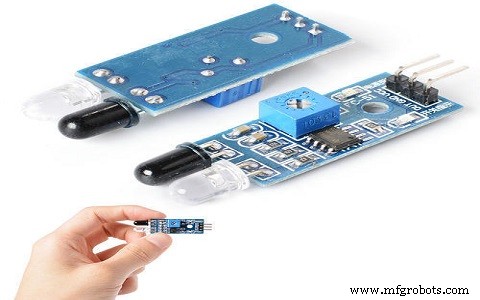
- IR Obstacle Avoidance Sensor – Detects nearby objects and outputs a digital signal for robotic navigation.
- Soil Hygrometer / Moisture Sensor – Triggers irrigation when soil moisture drops below a set threshold.
- Microphone Sensor – Captures sound intensity for audio‑reactive projects.
- Barometric Pressure Sensor – Measures atmospheric pressure for weather stations or altitude estimation.
- Photoresistor (LDR) – Detects ambient light, used in night‑time security lights.
- Temperature Sensor (DHT11, TMP36, etc.) – Monitors ambient temperature for climate control.
- MQ‑2 Gas Sensor – Detects LPG, butane, propane, alcohol, and other combustible gases.
- Rain Sensor – Alerts when precipitation occurs, useful in smart irrigation.
- PIR Motion Sensor – Detects human or pet movement for security systems.
- Flame Sensor – Identifies fire hazards by sensing infrared flame signatures.
- Touchscreen & Touch Sensors – Enables interactive interfaces, such as dimmer circuits.
Typical Arduino sensor projects include sun trackers using LDRs, rainwater alarms, gesture‑controlled robots with accelerometers, line‑following robots with IR sensors, and smart door alarms using ultrasonic rangefinders.
Popular Arduino Sensor Models
- HC‑SR04 Ultrasonic Module
- IR Obstacle Avoidance Sensor
- Soil Hygrometer / Moisture Sensor
- Microphone Sensor
- Digital Barometric Pressure Sensor
- Photoresistor (LDR)
- DHT11 Temperature & Humidity Sensor
- Rotary Encoder Module
- MQ‑2 Gas Sensor
- SW‑420 Motion Sensor
- Passive Buzzer Module
- Speed Sensor Module
- IR Flame Detection Sensor
- 5V 2‑Channel Relay Module
- Breadboard Power Supply Module 3.3V
- HC‑SR501 Pyroelectric IR Sensor
- Accelerometer Module
- RF 433MHz Transmitter/Receiver
These sensors make it straightforward to build interactive, responsive systems. Arduino’s extensive library ecosystem supports most of these modules, enabling quick integration. However, sensors demanding high processing speed or advanced signal processing may exceed the capabilities of basic Arduino boards.
How Many Sensors Can One Arduino Board Handle?
The answer varies with the board’s available I/O pins, power budget, and the sensor’s bandwidth. For example, an Arduino Uno offers 14 digital pins (6 PWM) and 6 analog inputs, so you can connect dozens of sensors if you multiplex or use I²C/SPI buses. Power‑hungry sensors, like the HC‑SR04 or RF modules, should be powered from an external supply to prevent brownouts.
Whether you’re a student just learning electronics or an engineer prototyping a commercial product, Arduino sensors provide a reliable, well‑documented foundation for sensor‑driven applications.
Sensor
- Blood Pressure Sensor: How It Works & Key Applications
- Voltage Sensors: How They Work & Key Applications in Modern Power Systems
- RVG Sensor: How It Works and Why It’s Transforming Dental Imaging
- Lambda (Oxygen) Sensor: Function, Operation, and Key Automotive Applications
- Image Sensors: Types, Operation, and Practical Applications
- Color Sensors: How They Work & Key Applications
- Photoresistor (LDR): Function, Types, and Practical Applications
- Fingerprint Sensor Technology: Working Principles, Applications, and Arduino Integration
- Vibration Sensors: Principles, Types, and Industrial Applications
- How Oxygen Sensors Work and Their Key Applications in Automotive and Industrial Systems