



Real‑Time IIoT Data Drives Safety, Efficiency, and ROI in Warehouses and Manufacturing

John Hayes of Vecna Robotics
Every sensor on AGVs—Automated Guided Vehicles—collects data to prevent collisions with people, equipment, or structures. Yet until recently, that data remained untapped, leaving manufacturers unable to transform raw metrics into actionable insights. This is a common pain point in Industry 4.0, Big Data, and the Industrial Internet of Things (IIoT): abundance of data, scarcity of usable, predictive intelligence.
John Hayes, Vice‑President of Sales and Logistics at Vecna Robotics, argues that IIoT monitoring is essential for tuggers, Automated Guided Carts (AGCs), and AGVs alike. By integrating real‑time data streams, plants gain continuous vehicle status and health information, enabling proactive maintenance and smoother operations.
Enhancing Throughput Across Manufacturing and Distribution
Without IIoT, plant and logistics managers lack visibility into vehicle performance, missing opportunities to preempt downtime. Vecna’s solution streams telemetry directly to a dedicated support engineering team that can intervene before a fault turns into a halt. The result is measurable throughput gains—each minute of uninterrupted movement translates into faster conversion of raw materials into finished goods.
While manufacturing throughput measures the total time a product spends in the production line, distribution centers focus on rapid turnover of stored inventory. Both benefit from continuous data that identifies bottlenecks and informs real‑time routing decisions.
Direct Impact on Workplace Safety
OSHA reports approximately 85 forklift fatalities and 34,900 serious injuries annually, with 42% of fatal incidents caused by operators being crushed by a tipping vehicle. The Industrial Truck Association notes a forklift’s average lifespan is nine years, and there is a 90% chance of a serious accident over that period, with 70–80% involving pedestrians.
Adopting fork‑free zones—or partial implementations—dramatically improves safety metrics, lowers insurance premiums, and reduces workers’ compensation claims. The unique advantage of Vecna’s IIoT monitoring is a live video feed from every vehicle, granting remote operators the ability to identify and correct unsafe situations instantly.
Beyond cost savings, the peace of mind that comes from 24/7 oversight by factory engineers represents a first‑of‑its‑kind industry breakthrough in harnessing data for safer, more efficient operations.
Revolutionizing Vehicle Maintenance
Maintenance costs often escape vendor ROI calculations, yet they can be substantial when a vehicle becomes inoperable. Traditional models require plant managers to locate, assess, and repair issues manually—adding labor and downtime.
Vecna’s IIoT platform detects anomalies in real time, enabling rapid remote diagnostics and reducing both labor costs and downtime. By addressing errors before they manifest on the floor, the system delivers significant cost savings to operators.
Driving Operational Efficiency and OEE Improvement
Overall Equipment Effectiveness (OEE) measures how well manufacturing assets are utilized. Stopped AGVs ripple through the system, creating cascading delays. One vehicle halted for 15 minutes can stall ten others, adding 150 minutes of lost move time and disrupting 25 moves in a 15‑minute window.
With IIoT monitoring, corrective actions are executed immediately, keeping vehicles moving smoothly and elevating OEE. The data also informs lean initiatives by pinpointing specific areas for process improvement.
A Lean‑Focused Perspective on IIoT
Vecna Robotics approaches IIoT from a lean manufacturing lens rather than a proprietary technology standpoint. This flexibility enables authentic Value Stream Mapping (VSM) without locking customers into a single guidance system.
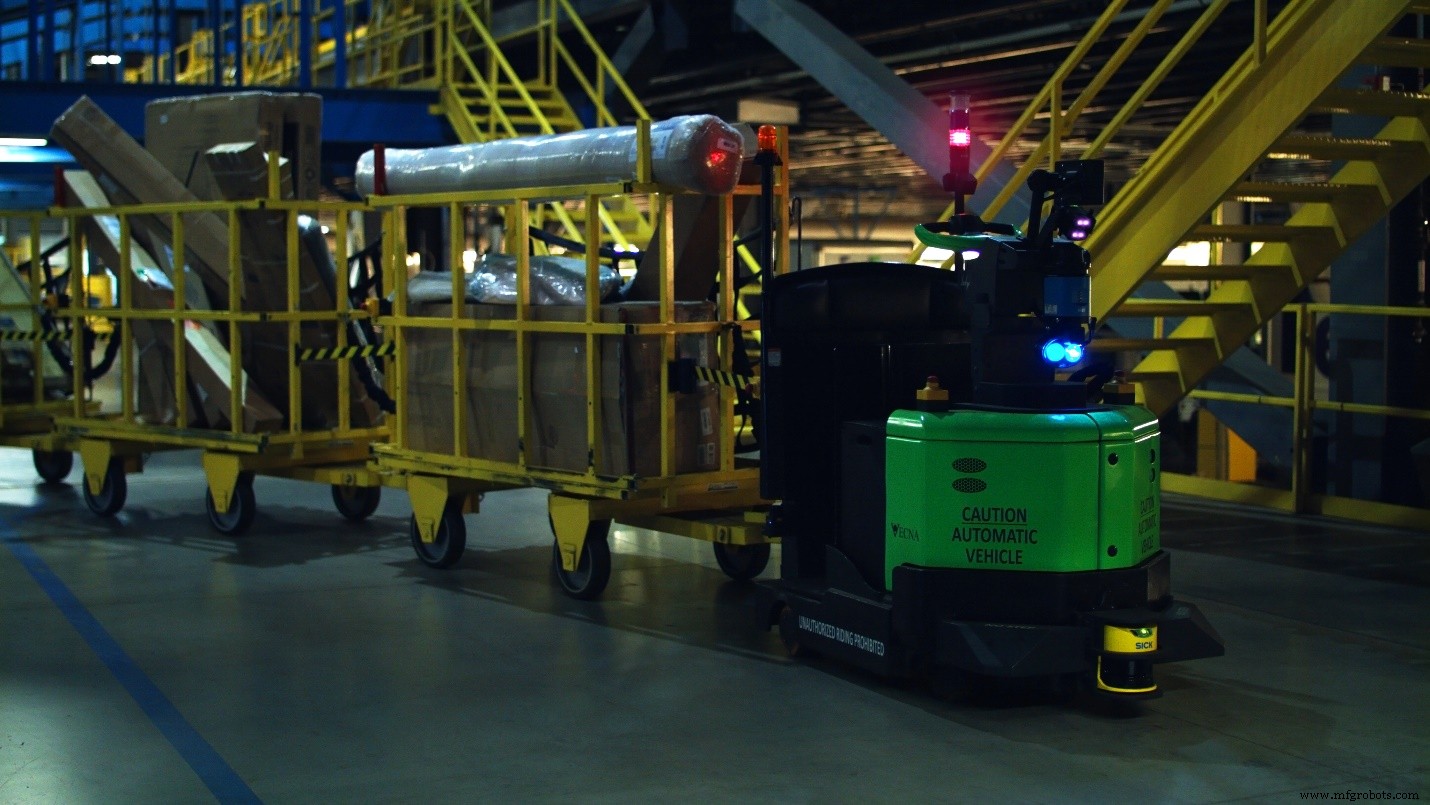
The company’s RT4500‑DO model automates point‑to‑point transport of flatbed carts using a sensor suite that blends the best of high‑cost AGV technology with lower‑cost cart systems. This hybrid sensor strategy delivers cost‑effective, highly adaptable solutions that scale with evolving customer needs.
The resulting real‑time, non‑stop monitoring transforms materials handling into a game‑changer, allowing software to communicate with vehicles for local and remote traffic control, order generation, and routing. Local maintenance teams receive anomaly alerts directly, eliminating on‑floor troubleshooting and enabling the manufacturer to address issues before they affect operators.
These capabilities demonstrate how IIoT leadership can elevate even the most sophisticated AGVs, ensuring reliability, safety, and continuous improvement.
The author of this blog is John Hayes, vice‑president of sales and logistics at Vecna Robotics
About the author:
John Hayes, vice‑president of sales and logistics for Vecna Robotics, is a widely‑respected thought leader in manufacturing, distribution, and materials handling. With over twenty years of experience, Hayes has designed and implemented innovative AGV software and hardware solutions.
Internet of Things Technology
- How Robust Data Management Drives Machine Learning and AI in Industrial IoT
- Strengthening IIoT Asset Tracking: Proven Security Practices
- Step‑by‑Step Guide: Extracting PLC Data with IIoT for Real‑Time Insights
- Elevate Continuous Improvement with Industrial IoT: A Guide to Smarter, Safer Manufacturing
- Leveraging RTUs for Big‑Data Insights in Industrial Operations
- How Industrial IoT Drives Efficient Mass Customization
- How Industrial IoT Is Revolutionizing Product Design and Manufacturing
- IIoT Trends & Challenges: Data Overload, Manufacturing Shifts, and the Skills Gap
- Unlocking Actionable Edge Insights with AI & ML
- Synergizing Industry 4.0 and IIoT: Driving Digital Transformation in Manufacturing & Beyond