



The Future of Urban Living: Key Traits of Emerging Smart Cities – Part 1

Sergei Vardomatski, CEO at HQSoftware
According to IoT Analytics, smart cities account for 20 % of all IoT projects worldwide. Europe leads with 47 %, followed by North America at 31 % and the APAC region at 15 %. These figures highlight the growing demand for smart city solutions and the influx of innovative ideas driving new projects.
In this first part of our series, we examine how the newest smart cities are evolving and identify the critical traits that demand modernization and investment.
Complex Systems Should Be Intuitive
“I’d like to bring up Edison, who first patented mass‑production of light bulbs. He noted that users simply flip a switch without thinking about how electricity powers the bulb,” says Sergei Vardomatski, CEO of HQSoftware. “This principle is foundational for any IoT initiative. End‑users should not need to understand machine‑to‑machine communication; they only need to see that a sensor triggers a response—like a garbage bin sending a signal when full, prompting a truck to arrive.”
Vardomatski predicts a significant shift in workforce skills. “We’re moving toward knowledge‑intensive roles where routine tasks become automated. Electricians, for instance, will need to understand both hardware and software—debugging code to restore system functionality.”
The Internet of Things applies to any environment—smart homes, vehicles, factories, offices, yachts, even chairs. Here, we focus on the smart city ecosystem.
How Smart Cities Operate
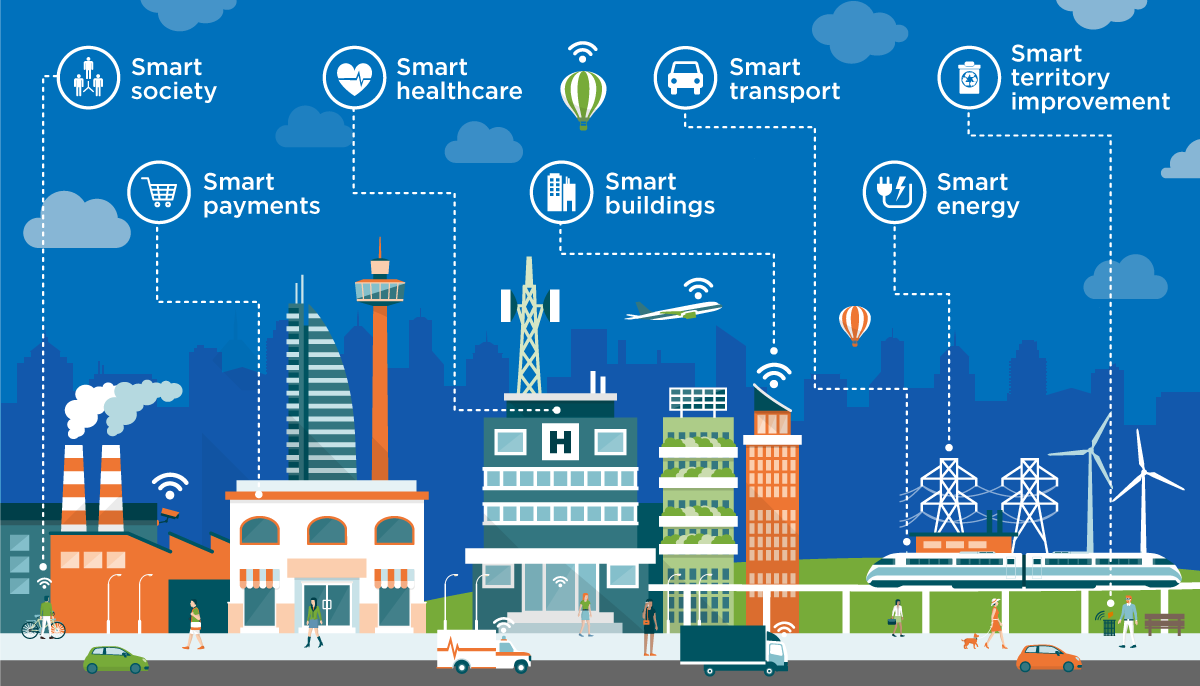
Smart cities automate essential processes to deliver rapid, efficient solutions. Real‑time sensors gather data from citizens and devices; analytics transform this information into insights that identify problems, guide solutions, and forecast emergency responses.

The IoT empowers a principle of “best‑in‑class quality, continuous interaction, and minimal labor costs.” Within the smart city framework, technology addresses strategic challenges to boost efficiency, such as:
- Reducing resource consumption—energy, money, and manpower.
- Strengthening citizen‑government connectivity.
- Facilitating rapid responses to incidents.
- Automating diverse city functions.
Technological breakthroughs, economic structural shifts, and climate‑related pressures have accelerated the adoption of smart city concepts. This approach is set to reshape many operational domains across urban environments.
The author of this blog is Sergei Vardomatski, CEO at HQSoftware.
Internet of Things Technology
- How IIoT Standards Are Empowering the Next Generation of Smart Cities
- Top 5 Factors to Evaluate When Selecting an Embedded Edge AI Platform for Smart Retail
- Key Traits of Emerging Smart Cities – Part 2: Energy, Transport, IoT, and Sustainable Urban Solutions
- Wi‑Fi: The Cornerstone of Smart Everything
- Accelerating Smart Building Adoption: ABB’s Roadmap to Affordable, Interoperable Solutions
- Why Community Engagement Drives Smart City Success – Part 2
- How Smart Cities Drive Socio‑Economic Growth: Part One
- Smart Cities: Leveraging 5G, IoT, and Fiber for a Net‑Zero Future
- HydroMazing Smart Garden System: Advanced IoT Plant Care
- Creating a COVID-Free Smart Building: How Technology Protects Occupants – Part 1