



Managing and Maintaining Hydro‑Electric Plants: Expert Strategies for Reliable Power Generation
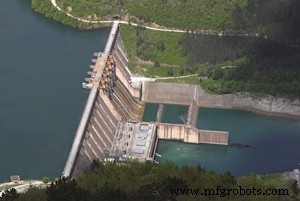
By harnessing gravity and the water cycle, humanity has long tapped into one of Earth’s most efficient and naturally occurring energy sources. Modern technology now enables more precise control and maintenance of hydro‑electric power generation. Energy industry manager Jürgen Resch of COPA‑DATA explains how intelligent systems keep hydro‑electric plants running reliably.
Hydro‑electric power accounts for roughly 24% of global energy production, ranking it among the most efficient generation methods. Britain has benefited from this renewable source for over a century, and the World Atlas of Hydropower and Dams reports that significant untapped potential remains in the UK.
Government incentives—such as the Renewables Obligation and the Feed‑in Tariff—have driven the UK’s commitment to raise renewable generation to 15% by 2020. But why does hydro‑electric power stand out among other renewables?
Highs and Lows of Hydro‑Electric Power
Hydro‑electric energy is widely regarded as one of the cleanest sources available, emitting no CO₂ during generation. However, upfront investments in time, materials, and resources can be substantial. Civil engineering challenges—river rerouting, underground power units, and environmental impact assessments—add complexity. Despite these hurdles, the long‑term rewards are unparalleled.
Like other renewables, hydro‑electric output can fluctuate, yet its capacity to generate power at night offers greater consistency than solar. Additionally, hydro plants provide operators with more controllable energy output than some other renewable technologies.
Instead of relying solely on battery storage, many hydro‑electric facilities employ pumped‑storage schemes: excess electricity is used to pump water back into the reservoir during low‑demand periods, then released to generate power when needed.
European nations such as Switzerland, Southern Germany, Austria, and parts of France rely heavily on hydro‑electric generation. The UK, still developing its expertise, can learn from these regions’ best practices and leverage emerging technologies to accelerate deployment.
Take Control with Monitoring Software
Effective control and monitoring software is essential for any power generation operation, and its importance is amplified in large hydro‑electric facilities. Intelligent control systems collect real‑time data from turbines, generators, converters, and other components, enabling local Human‑Machine Interface (HMI) views or centralized management across multiple plants.

Consider maintenance: machinery in hydro‑electric plants typically requires review every few years. Without accurate predictive data, maintenance decisions become guesswork, leading to unnecessary costs. COPA‑DATA’s zenon platform gathers essential performance metrics, allowing maintenance teams to schedule interventions based on actual wear and degradation patterns.
By archiving operational data, the software identifies recurring issues and generates clear, actionable reports—helping engineers pinpoint failure points even across dispersed sites.
React to Alerts in Real Time
Data collection and archiving also enhance rapid response capabilities. Many large hydro‑electric sites operate unmanned control rooms, which can delay incident resolution. Modern control systems deliver real‑time alerts via SMS, email, or phone calls, enabling operators to investigate problems before they worsen.
When an anomaly occurs, operators can reconstruct the event sequence using the Process Recorder module of zenon, which replays plant operations from archived data. This playback accelerates root‑cause analysis, reduces downtime, and improves overall plant efficiency.
Data archives further support post‑event analysis, allowing plant managers to refine processes and optimize performance continually.
Hydro‑electric power remains one of the most efficient renewable sources, yet its generation methods can still be refined. Central European operators already reap the benefits of carbon‑free hydro power through advanced control and monitoring technology.
Britain has relied on hydro‑electric power for centuries; meeting current renewable targets may require a new investment wave to fully unlock the sector’s potential.
Author: Jürgen Resch, Energy Industry Manager, COPA‑DATA
Internet of Things Technology
- Edge AI and Low‑Power Hardware Powering the Rise of Voice Control
- Prototyping Digital I/O with Microchip’s RN487x Bluetooth Module
- Deferred Maintenance: Definition, Costs, and Strategies to Control Backlogs
- 5G Services: Balancing Mission‑Critical Performance with Sustainability, Affordability, and Security
- Leveraging RTUs for Big‑Data Insights in Industrial Operations
- Safeguard Your Power Supplies: Prevent Heat-Related Failures & Extend Lifespan
- Master Stepper Motor Control with Arduino & A4988 Driver – Step-by-Step Guide
- Shop Floor Control: Unlocking Real-Time Visibility & Maximizing ROI
- Mastering High‑Speed PCB Power: Analyze and Eliminate Impedance for Reliable Performance
- Reliable Power & HVAC Rentals for Seamless Climate Control