



Deferred Maintenance: Definition, Costs, and Strategies to Control Backlogs
“Every $1 in deferred maintenance costs $4 in future capital renewal.”
Deferred maintenance isn’t a flaw; it’s a tactical decision. When resources—budget, time, or staff—are limited, maintenance tasks must be postponed and placed on a backlog until higher‑priority items are addressed. The key is to manage that backlog deliberately, not let it grow unchecked.
This guide explains what deferred maintenance is, the common causes of runaway backlogs, the financial impact, and a practical six‑step process to bring your maintenance program back on track.
What Is Deferred Maintenance?
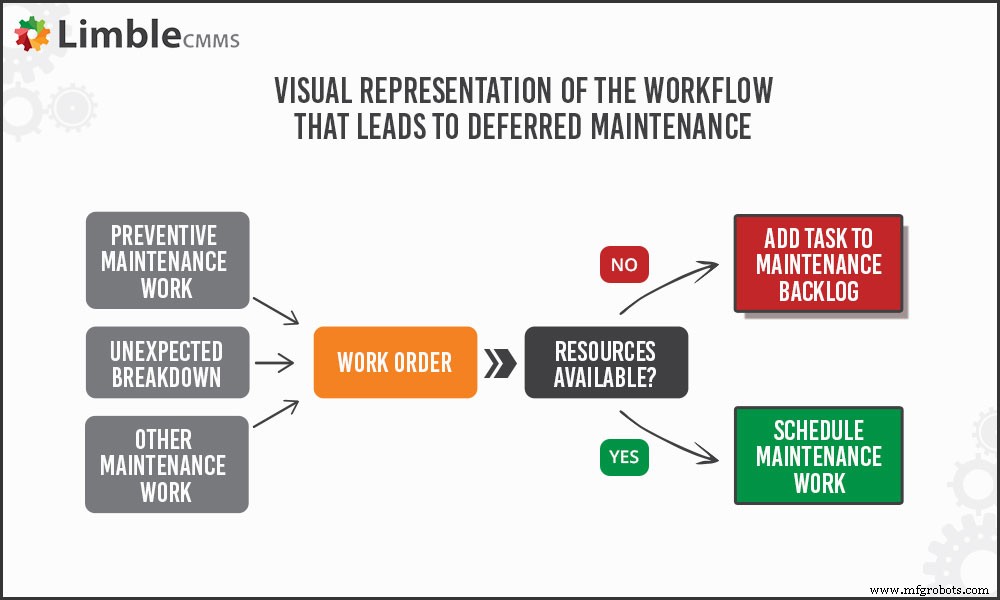
Deferred maintenance refers to any maintenance activity that is delayed because the necessary resources are unavailable. It applies to both reactive repairs and scheduled preventive work.
Common Causes of Heavy Backlogs
- Absence of a proactive strategy. Reactive maintenance inevitably leads to more work; a preventive or predictive program reduces surprises.
- Poor spare‑parts management. Without the right parts on hand, tasks stall. Efficient inventory systems are essential.
Technicians who lack training or documentation can delay work. Ongoing education and clear manuals mitigate this. - Insufficient manpower. Over‑extended teams that rely on overtime are a red flag; staffing gaps must be addressed.
- Budget constraints. When funding is tight, optimization alone may not suffice. Demonstrating ROI to leadership can unlock necessary resources.
Illustrative Scenarios
Scenario 1 – Production Line Disruption
A multi‑shift team has scheduled tasks: spare‑part reorganization, hallway light replacement, and a critical asset repair. An operator error halts the line, demanding immediate attention. The spare‑part task is completed, but the other two slip into the deferred backlog because they are lower priority.
Scenario 2 – HVAC Filter Delivery Delay
In a 10‑story building, quarterly HVAC filter changes are scheduled. One filter type arrives late, causing all units that use that filter to be postponed. The maintenance team adds the “replace filter” task to the backlog.
Financial Impact of Deferred Maintenance
Deferred maintenance can be cost‑prohibitive. According to research by The Geaslin Group, assets run to failure and then repaired generate exponential costs. Pacific Partners Consulting Group’s President Rick Biedenweg famously stated: “Every $1 in deferred maintenance costs $4 in future capital renewal.” In other words, delaying a repair today can quadruple its eventual expense.
Ignoring backlogs also erodes productivity, compromises safety, and accelerates asset wear. Over time, the cumulative effect can far outweigh the immediate savings of postponement.
Six‑Step Plan to Shrink the Backlog
Step 1 – Consolidate and Quantify Tasks
- Move all pending work into a single, centralized document or CMMS.
- Interview technicians and operators to uncover hidden or lost requests.
- Estimate resources (time, parts, budget) for each task, using maintenance logs for accuracy.
Step 2 – Prioritize with ROI Analysis
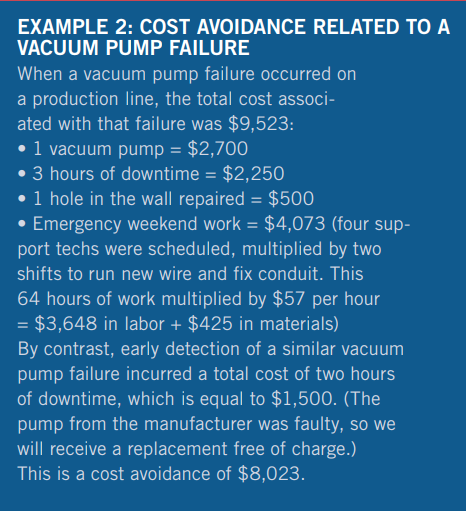
Calculate the return on investment for each task by weighing the cost of action against the potential loss if left unattended. This data-driven approach clarifies which items deliver the greatest value when completed first.
Step 3 – Allocate Resources Effectively
Use the ROI findings to build a compelling case for budget increases or additional staffing. Highlight the long‑term savings from early repairs versus the costs of overtime and reactive fixes.
Leverage CMMS data to compare original vs. aftermarket parts, MTBF, MTTR, and overtime costs. This evidence demonstrates whether spare‑part shortages or manpower deficits are truly the bottleneck.
Step 4 – Reorient Toward Preventive Maintenance
Shift from a fire‑fighting culture to a proactive one. Develop a preventive maintenance schedule, adopt predictive analytics, and ensure all maintenance records are accessible.
Additional tactics include adjusting shift lengths, consolidating work‑order processes, and establishing clear communication channels—whether through a CMMS or group messaging platforms.
Step 5 – Implement a Robust CMMS
A mobile CMMS streamlines work‑order creation, tracks real‑time progress, and centralizes asset data. Benefits include:
- Higher productivity through reduced paperwork.
- Instant notifications and better technician collaboration.
- Clear accountability with task logs.
- Easy creation and monitoring of preventive schedules.
- Accurate inventory and asset analytics for informed decisions.
Choosing a proven solution like Limble CMMS can help maintenance teams stay organized and eliminate large backlogs.
Step 6 – Maintain Consistency and Review
Even with a solid plan and technology, sustaining progress requires disciplined execution. Regularly review backlog metrics, update priorities, and involve upper management in progress discussions.
By integrating best practices, clear accountability, and continuous improvement, facilities can keep deferred maintenance under control and protect capital assets.
For further guidance on CMMS implementation or tailored maintenance strategies, contact us—we’re ready to help you achieve lasting efficiency.
Equipment Maintenance and Repair
- 12 Essential Maintenance Templates to Streamline Operations and Reduce Admin Burden
- Mastering Preventive Maintenance: Building and Optimizing Fixed & Floating Schedules
- Keep Maintenance Proactive: Lessons from Sisyphus on Continuous Improvement
- Optimizing Maintenance Cost Benchmarks: Why 4.9% MC/ERV May Be Misleading
- How to Justify the Cost of a CMMS: Calculating ROI for Maintenance Managers
- Breakdown Maintenance Explained: Rapid Response & Cost Control
- Crafting an Effective Maintenance Policy: A Step‑by‑Step Guide
- Streamline & Automate Maintenance: Proven Strategies for Reliable Operations
- Track and Manage Maintenance Costs Effectively
- Idle Time: What It Is, How to Measure It, and Proven Strategies to Reduce It