



Preventive Maintenance Software Explained: Features, Benefits, and Implementation Guide
While fixing broken equipment is a core maintenance activity, limited resources, audit preparations, and reporting can make it feel like firefighting. Overreliance on reactive maintenance leads to extended downtime and significant financial losses. Implementing a preventive maintenance program, however, can be challenging when teams and budgets are stretched thin.
Fortunately, many organizations share this struggle. A variety of technologies can help teams build a resilient preventive maintenance framework.
Leaning too heavily on reactive maintenance can have big consequences, from more downtime to losing millions of dollars.
Categories of Preventive Maintenance Software
Computerized Maintenance Management Systems (CMMS)
CMMS and maintenance applications enable teams to maintain a comprehensive, centralized database of assets, equipment, and work orders. They facilitate planning, tracking, and optimization of all maintenance activities—from scheduling to inventory management.
The primary duties of a CMMS include:
- Automating work orders
- Scheduling work
- Workflow process and management
- Resourcing and routing
- Providing operating and repair guidance
- Creating a record for reporting and auditing
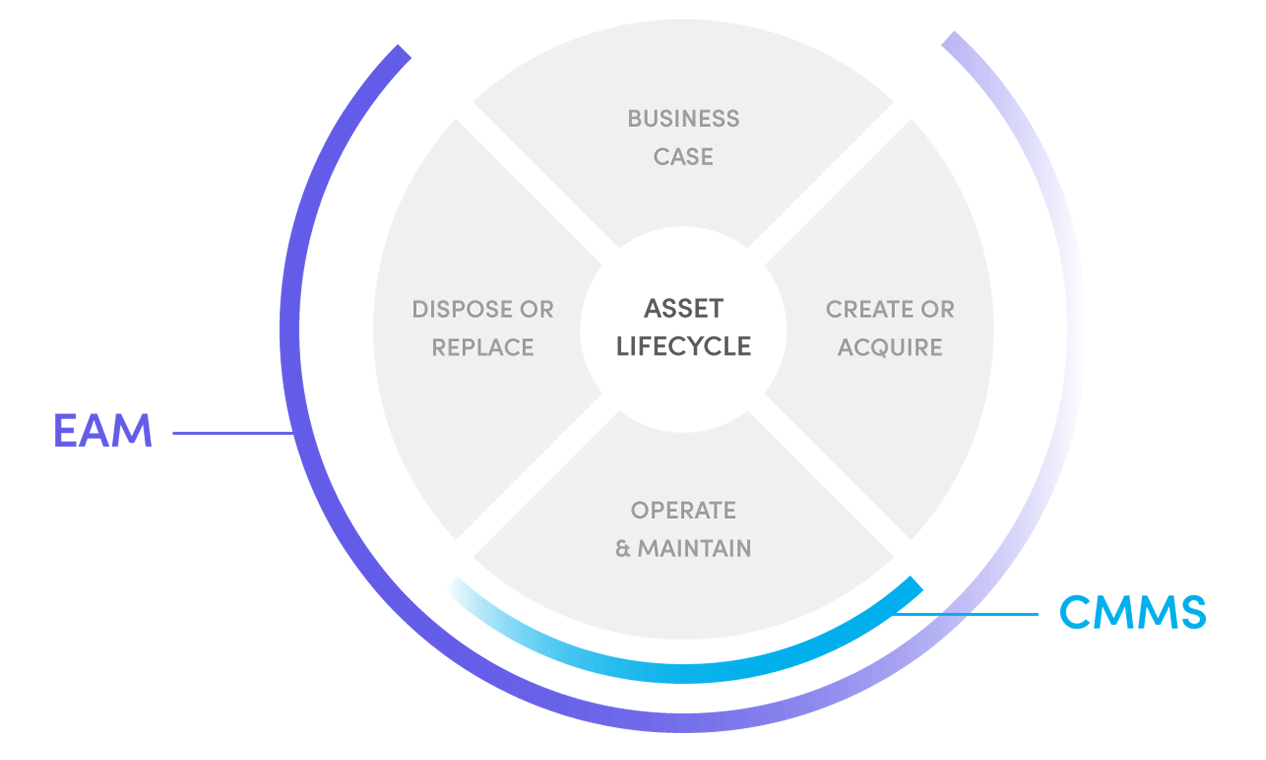
A CMMS oversees all maintenance tasks while an asset remains in operation—the period during which it contributes productively to the facility.
CMMS solutions typically fall into two categories: cloud‑based and on‑premise. A detailed comparison of their advantages and disadvantages is available here.
Discover the Ideal CMMS for Your Team—No Hassle
Get your evaluation template
Enterprise Asset Management (EAM)
EAM software provides a holistic view of an organization’s physical assets and infrastructure throughout their entire lifecycle—from design and procurement to operation, maintenance, disposal, and replacement. EAM systems record asset information, manage work orders, coordinate inventory purchasing and usage, organize labor, track contracts, measure costs and spending, and calculate KPIs.
Asset Performance Management (APM)
APM solutions integrate advanced tools—IoT and AI—to enhance asset reliability and availability. These tools collect real‑time data, continuously monitoring operational performance and risk.
Enterprise Resource Planning (ERP)
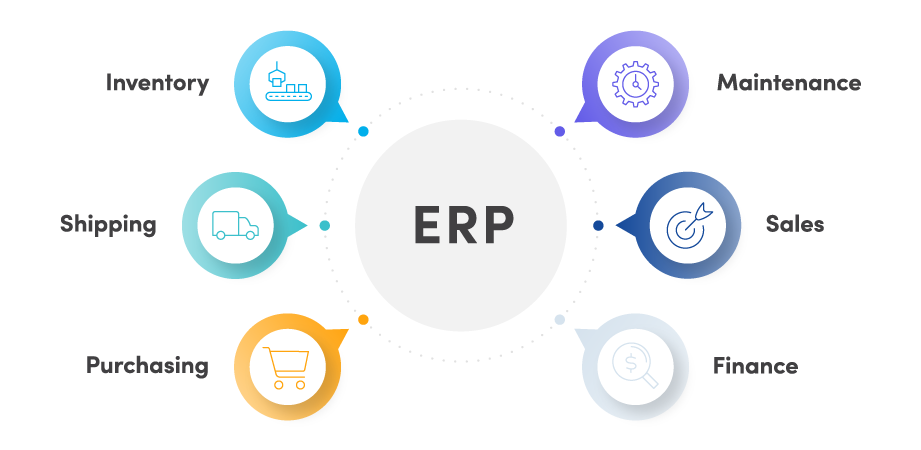
ERP systems unify disparate business units—accounting, HR, maintenance—into a single, consistent platform. By centralizing data, they eliminate duplication, ensure integrity, and provide a single source of truth. Although not a dedicated maintenance solution, ERP integration keeps inventory levels accurate and finance teams informed.
Manufacturing Execution System (MES)
MES software governs every activity on the production floor, from order receipt to scheduling, resource management, and actual production, ensuring rapid, cost‑effective, high‑quality output. Core functions include data collection, scheduling, staff and resource management, process management, performance analysis, and document management.
SCADA Systems
While not traditional preventive maintenance software, SCADA and similar data collectors increasingly support maintenance by providing accurate, actionable data. SCADA—supervisory control and data acquisition—collects real‑time information from sensors, pumps, motors, and logs events for analysis.
Every piece of technology is the master of its domain…A CMMS reigns over maintenance, making everything from work orders to inventory management easier and measurable.
For instance, SCADA can alert operators to product defects in real time. Operations may be halted, the SCADA interface reviewed, and the problem resolved immediately. SCADA’s primary objectives are to sustain efficiency, promote data‑driven decisions, and flag system issues.
Other Maintenance Technologies
Additional tools—3D printing, embedded sensors, VR/AR, video streaming, and wearable devices—augment preventive maintenance in asset‑heavy environments.
3D printing enables on‑demand production of critical spare parts and tooling, reducing lead times and inventory costs.
Embedded sensors continuously monitor asset metrics—temperature, vibration, load—allowing early detection of wear and timely maintenance actions.
VR and AR facilitate immersive training and on‑the‑job assistance, shortening learning curves and reducing repair times.
Video streaming aids remote troubleshooting, while wearable devices empower technicians to capture scans, share messages, annotate, request assistance, and access manuals on the go.
Positioning Maintenance Software Within Your Facility
Each technology dominates its niche: ERP excels at high‑level data coordination, MES masters throughput management, and CMMS centralizes maintenance—from work orders to inventory.
Yet, isolated systems lose their value. Without integration, teams miss critical context—for instance, an ERP that cannot communicate with a CMMS hampers accurate inventory ordering and budget tracking. The resulting fragmentation drives inefficiency and financial loss, underscoring the need for seamless integration.
Maximizing Preventive Maintenance Through Integration
Integrating systems creates data bridges that enable real‑time information exchange. CMMS, as the central hub for maintenance data, shares insights with other platforms, elevating maintenance quality and informing organizational decisions.
However, these systems are far less effective when they operate as lone wolves. If software doesn’t work together, you’ll never have the full story.
For example, a sensor monitors an asset’s condition and forwards data to SCADA. SCADA analyzes the input and, if degradation is detected, triggers an alert to CMMS, which generates a work order before a failure occurs. The spare parts consumed are recorded in the ERP, giving maintenance, purchasing, and finance departments a unified view to optimize decisions.
Ready to ask your boss to shell out for software? Nail your pitch with this template
Choosing the Right Preventive Maintenance Software for Your Organization
Selecting preventive maintenance software goes beyond purchase—it requires full team adoption. Without buy‑in, the technology fails to deliver its promise. Teams should evaluate their specific needs, objectives, budget, and culture to identify the most impactful solution or combination. If this feels daunting, our CMMS buying guide offers a step‑by‑step approach to clarify requirements and discover the best fit for your business.
Equipment Maintenance and Repair
- 12 Essential Maintenance Templates to Streamline Operations and Reduce Admin Burden
- Mastering Preventive Maintenance: Building and Optimizing Fixed & Floating Schedules
- P‑F Curve Explained: Mastering Reliability‑Centred Maintenance
- Breakdown Maintenance Explained: Rapid Response & Cost Control
- How Predictive Maintenance Drives Servitization Success
- Preventive Maintenance: A Path to Higher Asset Availability & Lower Costs
- Preventive Maintenance Software: Boost Asset Longevity & Reduce Downtime
- Preventive Maintenance Explained: Key Benefits for Asset Reliability
- How Much Does CMMS Software Cost? A Practical Guide
- Arduino SD Card 101: Setup, Connection, and Usage Guide