



AEye Unveils Long‑Range LiDAR Detecting Vehicles Up to 1,000 m for Autonomous Vehicles
AEye’s long‑range LiDAR system, built in Dublin, California, can detect vehicles up to 1,000 m and people up to 200 m, and it can spot tiny objects—like a brick—at 120 m using multiple measurement points. This capability is essential for autonomous cars and heavy‑duty trucks that need ample processing time before they react.
Combined with cameras and radar, LiDAR is a cornerstone of advanced driver‑assist systems (ADAS) and full autonomy. AEye has engineered a 1550 nm amplifiable laser coupled to a proprietary MEMS scanner, a design that can be tuned for any vehicle type through software. Indu Vijayan, head of product management for ADAS solutions, explained the technology’s potential in an interview with EE Times Europe, following her keynote at DesignCon 2021 in Silicon Valley.

AEye’s Indu Vijayan
According to AEye, the system’s 1550 nm laser enables absolute distance measurement and unparalleled range, allowing it to detect vehicles and road signs at 1,000 m—an industry benchmark—while maintaining fine‑grained resolution for small obstacles at highway speeds.
Heavy‑duty trucks face higher stopping distances and require high‑performance, long‑range sensors to secure sufficient reaction time. AEye’s LiDAR addresses these challenges by providing deterministic detection that feeds into the vehicle’s path‑planning algorithms.
EE Times Europe: What is the current opportunity for the autonomous vehicle market and what are the growth factors?Vijayan: “The automotive market’s immediate opportunity lies in ADAS, delivering next‑level safety features to OEMs. While cruise control, emergency braking and lane‑keep assist are already mainstream, automakers are now targeting more advanced, LiDAR‑driven ADAS solutions to further differentiate their vehicles.”
Cameras deliver excellent resolution but falter under poor lighting or at night, and they can only estimate depth. Radar performs well in adverse weather but lacks the resolution and certainty that LiDAR offers. LiDAR’s deterministic range measurements give the path‑planning system absolute confidence in object locations.
AEye’s LiDAR is tailored for high‑speed, long‑range scenarios such as highway autopilot and hub‑to‑hub autonomous trucking. The amplifiable 1550 nm wavelength, combined with a novel architecture, positions our system as the market leader in range. We project the long‑range LiDAR ADAS market to reach $3 billion by 2025, growing at a 43% CAGR through 2030. The broader mobility market is expected to expand at a 72% CAGR over the same period.
EE Times Europe: Infrastructure and regulation are two hurdles that need to be addressed in order to roll out autonomous vehicles. Where do we stand with regard to these obstacles?Vijayan: “In the U.S., state‑level regulation has created inconsistencies; a federal framework is still under development, but industry coalitions are stepping in. In contrast, Germany is pushing Level 4 autonomy on public roads by 2022, even without human safety operators.”
Infrastructure is evolving: collision‑avoidance cameras, intelligent streetlights, RFID‑tagged lane markers, curb sensors, and advanced traffic‑management systems are being deployed. 5G and other connectivity solutions are also being tested to link vehicles with the network. Yet, road‑surface imperfections—potholes, faded lane markings, and irregular striping—continue to pose safety risks, especially for trucks. Reducing the “Roughness Index” through regular maintenance will be crucial for scaling autonomous operations.
Combining smart infrastructure, connectivity, and edge‑intelligent LiDAR sensors will supply vehicles with the data they need to make real‑time decisions. The information gathered can feed back into the vehicle’s AI, enabling continuous learning and software upgrades that adapt to dynamic environments.
click for full size image
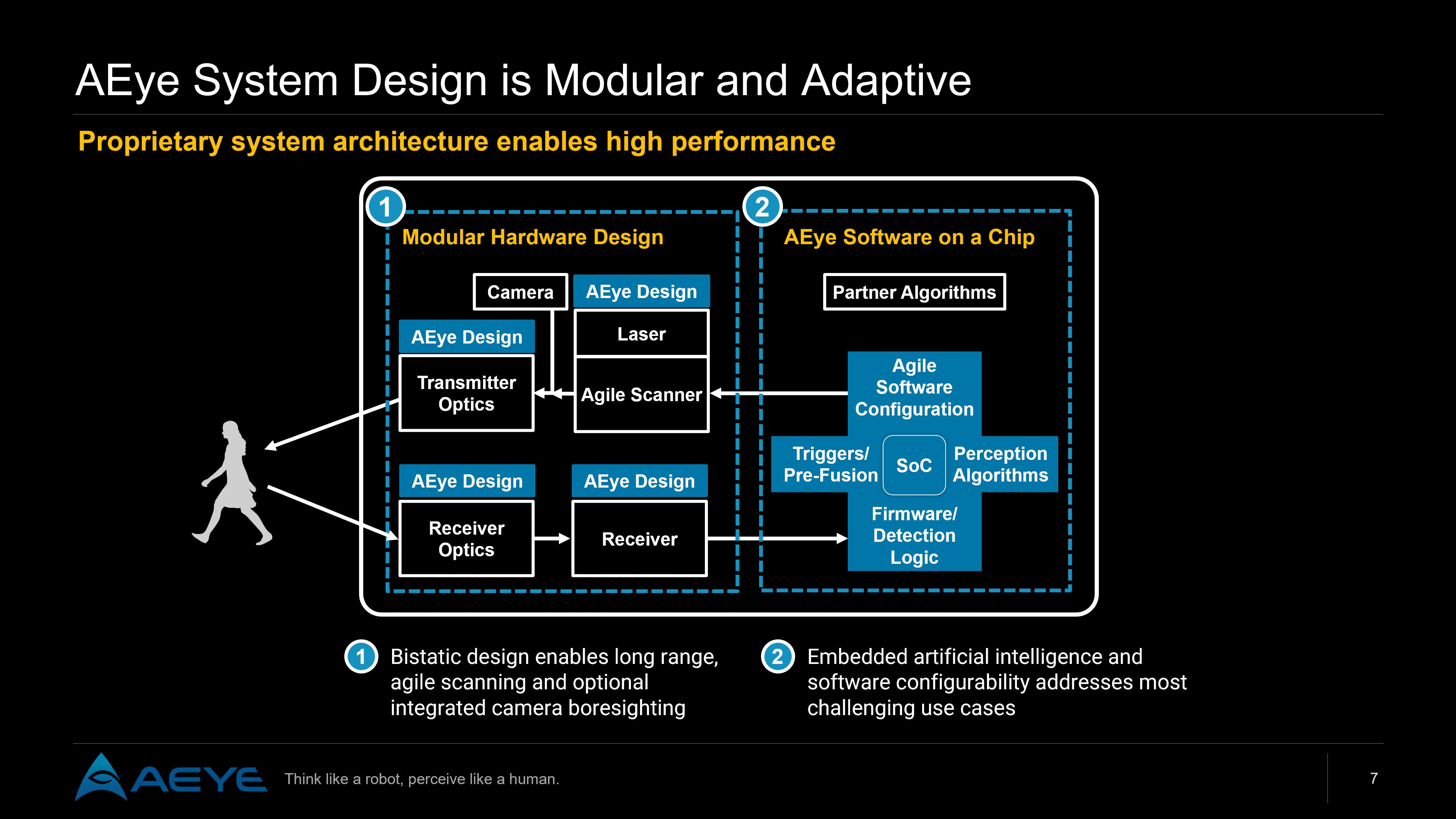
AEye’s System
Vijayan: “AEye has built a software‑definable LiDAR platform. Unlike hardware‑centric sensors, our architecture moves complexity into software, allowing continuous optimization through built‑in feedback loops. This adaptability lets the sensor respond in real time to changing conditions.”
AEye also licenses its reference architecture to Tier 1 suppliers, empowering them to produce custom products that meet OEM specifications at lower cost, while ensuring long‑term reliability for 10‑15 year vehicle lifecycles.
EE Times Europe: What other challenges are preventing the widespread production and adoption of autonomous vehicles?Vijayan: “Historically, price has been a barrier, but LiDAR costs have fallen dramatically over the past three years. As volume production ramps up, we anticipate costs to drop to $100–$1,000 for ADAS deployments, comparable to radar. Maturation of the technology, a mature business model, and an established supply chain will drive gradual market entry, beginning with Tier 1 suppliers rolling out LiDAR‑powered safety features.”
Original article published on EE Times Europe.
Related Contents:
- Understanding wavelength choice in LiDAR systems
- Smart cities: the case for lidar in intelligent transport systems
- Solid‑state LiDAR offers simpler automotive sensing solution
- Lidar platform supports occupancy detection, social distancing
- LiDAR module supports increased highway speed
For more Embedded, subscribe to Embedded’s weekly email newsletter.
Sensor
- Autonomous Vehicle Tech Meetup Highlights: Insights from Richard Bishop
- Intrusion Detection Systems: Protecting Your Network with Smart Alerts
- Quanergy’s LiDAR Qortex Platform Enhances Occupancy Management and Social Distancing
- Advancing Autonomous Driving: How Next‑Gen Sensors Are Pushing the Limits
- Enhanced LiDAR Technology Improves Autonomous Vehicle Detection of Fast-Moving Objects
- Autonomous Robot Mastering Door Entry – A Breakthrough for Service Robots
- Compact 3D LiDAR Imaging System Outperforms Traditional Mechanical Units
- Kodiak 3D LiDAR: Precision Spaceborne Ranging for High‑Orbit Missions
- Bosch Gains Approval to Test Autonomous Driving Tech in Victoria, Australia
- MSA Leads the Future of Workplace Safety with Connected Gas Detection Platforms