



Advancing Autonomous Driving: How Next‑Gen Sensors Are Pushing the Limits
The current capabilities of sensors, while helpful, remain relatively rudimentary for fully autonomous vehicles. Yet the automotive industry has made remarkable strides in the past few years.
Five or six years ago, a brand‑new car might have carried roughly 60 to 100 sensors. Today that figure is closer to 200 or more. As vehicles become smarter and closer to full autonomy, sensor sophistication continues to grow, laying the groundwork for new, everyday features.
To fuel these advancements, tech providers and automakers are tackling several key challenges: sensor degradation, industry‑wide standardization, and the long‑term maintenance of cybersecurity defenses.
The Automotive Rat Race
Automakers and OEMs must keep pace with the rapid evolution of sensor and data technologies. Sensors must deliver the high‑fidelity data required for vehicle systems to meet rigorous design specifications.
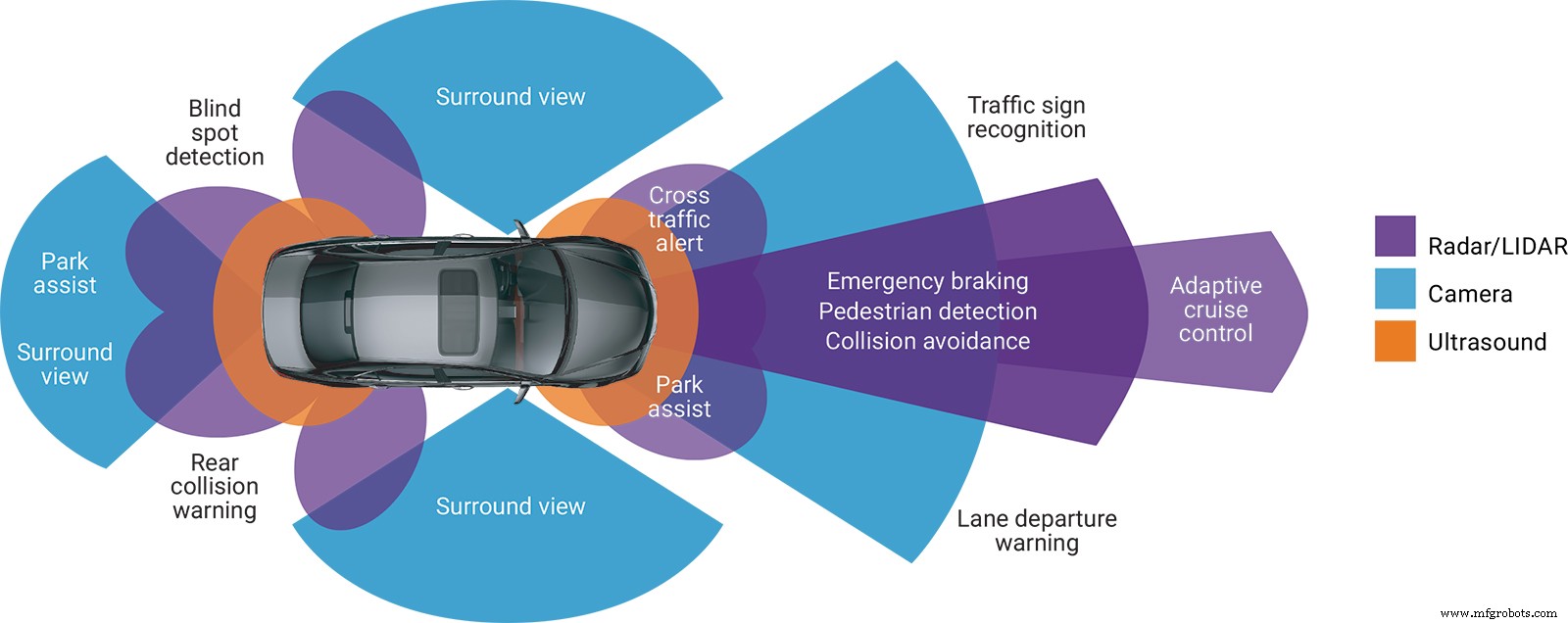
Different sensors bring unique strengths and weaknesses. Combining multiple sensors—camera, LiDAR, radar, ultrasound—provides a more complete perception of the environment.
In dense urban environments populated by pedestrians, cyclists, and motorcycles, vehicles must make split‑second decisions to stop or swerve. Sensor fusion enables the advanced driver‑assist system (ADAS) to react faster than a human driver, processing diverse data streams to maintain safety.
During the early stages of sensor manufacturing, automakers must adhere to automotive functional‑safety standards to prevent hardware or software failures. ISO 26262 governs the development process that OEMs and suppliers must follow and document to certify functional safety, ensuring devices perform as intended.
Sensor Degradation Challenges
Sensor degradation is an inevitable part of the autonomous vehicle equation, especially given the typical 10‑15‑year lifespan of modern cars. Common causes include general wear, harsh operating conditions, and the aging of associated electronic components.
Automakers and technology providers must design sensors—LiDAR, cameras, ultrasound, etc.—to maintain, or even improve, performance throughout the vehicle’s life. They also need robust protocols for handling sensor failure, such as driver alerts and built‑in safety features. Predictive failure modeling and alternative pathways across diverse environments become essential.
Cybersecurity Concerns
Ensuring the security of autonomous vehicle sensors requires addressing both direct hacking threats and subtler attacks that manipulate machine‑learning models. A recent U.K. study demonstrated how a tampered video billboard could briefly display a stop sign, causing an autonomous vehicle to halt abruptly while human drivers could not react in time—an example of a “phantom object” threat.
To guard against sensor vulnerabilities, the NHTSA recommends adopting the National Institute of Standards and Technology’s Cybersecurity Framework. This layered approach—identify, protect, detect, respond, recover—provides a structured path to secure vehicle systems.
Designers must balance comprehensive security with user experience. For instance, ADAS systems alert drivers to impending hazards, but security‑related errors often trigger costly recalls. Embedding security measures from the outset can prevent malicious actions before they manifest.
As sensor complexity and capability rise, so too will the avenues for cyberattacks. Continuous updates to defensive measures and a robust software lifecycle management program are essential to learn from incidents and strengthen resilience—paralleling the physical upkeep required to combat sensor degradation.
With autonomous vehicles poised to become mainstream, evolving regulations and consumer habits will shape the market. Keeping abreast of sensor fusion advancements remains a critical challenge—and a necessary one—for the future of autonomous mobility.
—Chris Clark, Senior Manager, Automotive Group at Synopsys.
>> This article was originally published on our sister site, EE Times.
Related Contents:
- ADAS experts ponder sensor integration in future vehicles
- Machine learning might mitigate sensor degradation
- Understanding AV complexity
- Embedded sensors are key to smart mobility growth
- How smart sensors enhance ADAS designs
For more Embedded, subscribe to Embedded’s weekly email newsletter.
Sensor
- Autonomous Vehicle Tech Meetup Highlights: Insights from Richard Bishop
- Key Automotive Sensors: How Modern Cars Use Advanced Technology
- Ethernet: The Backbone of Autonomous Vehicle Reliability
- Experts Debate Optimal Sensor Integration for Next‑Gen ADAS and Autonomous Vehicles
- Mouser Showcases Advanced Sensor Technologies at Sensors Expo 2019
- Mercedes Accelerates Autonomous Commercial Vehicle Systems, Bringing Self‑Driving Trucks to Market
- Digital Sensors in Industrial Machinery: Function, Types, and Best Practices
- Enhanced LiDAR Technology Improves Autonomous Vehicle Detection of Fast-Moving Objects
- NASA-Developed Inductive Non-Contact Position Sensor for Precise Motion Control
- Nature-Inspired Sensors Boost Autonomous Machines' Vision for Safer Navigation