



Carbon ThreeSixty Enhances Production Speed and Sustainability with New Tailored Fiber Placement Cell
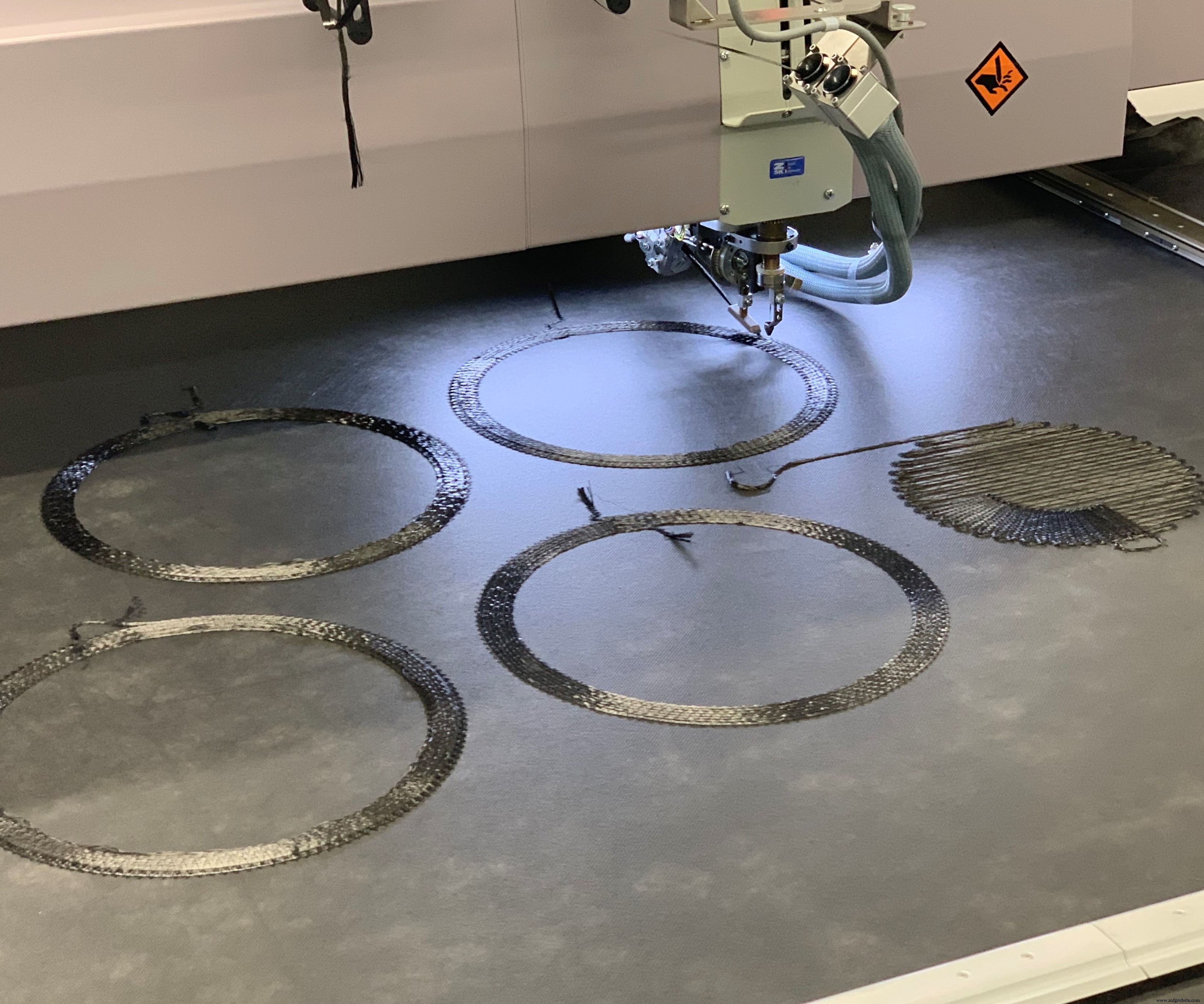
Structural composites specialist Carbon ThreeSixty (Wiltshire, U.K.) announced on Jan. 24 that it has installed an in-house Tailored Fiber Placement (TFP) cell, which the company says will enable it to deliver composite products three times faster than traditional methods while also reducing waste by up to 90%.
The automated cell, which the company says is currently the only commercially accessible machine of its type in the U.K., uses high-precision free-form fiber placement to enable greater design freedom, improved repeatability and multiple complex design configurations. It can reportedly produce up to 100 metric tonnes of composite preforms per year.
“We specialize in the design and out-of-autoclave manufacture of highly stressed novel composite structures. The TFP cell enables the production scale-up of our defense wheel products, while significantly contributing to ongoing R&D activity with clients in other sectors. Such challenging structures are inherently complex, and for true weight, stiffness and strength optimization the reinforcing fibers must be placed to run in specific orientations, so for us TFP was the obvious solution,” says Ed Allnutt, managing director of Carbon ThreeSixty.
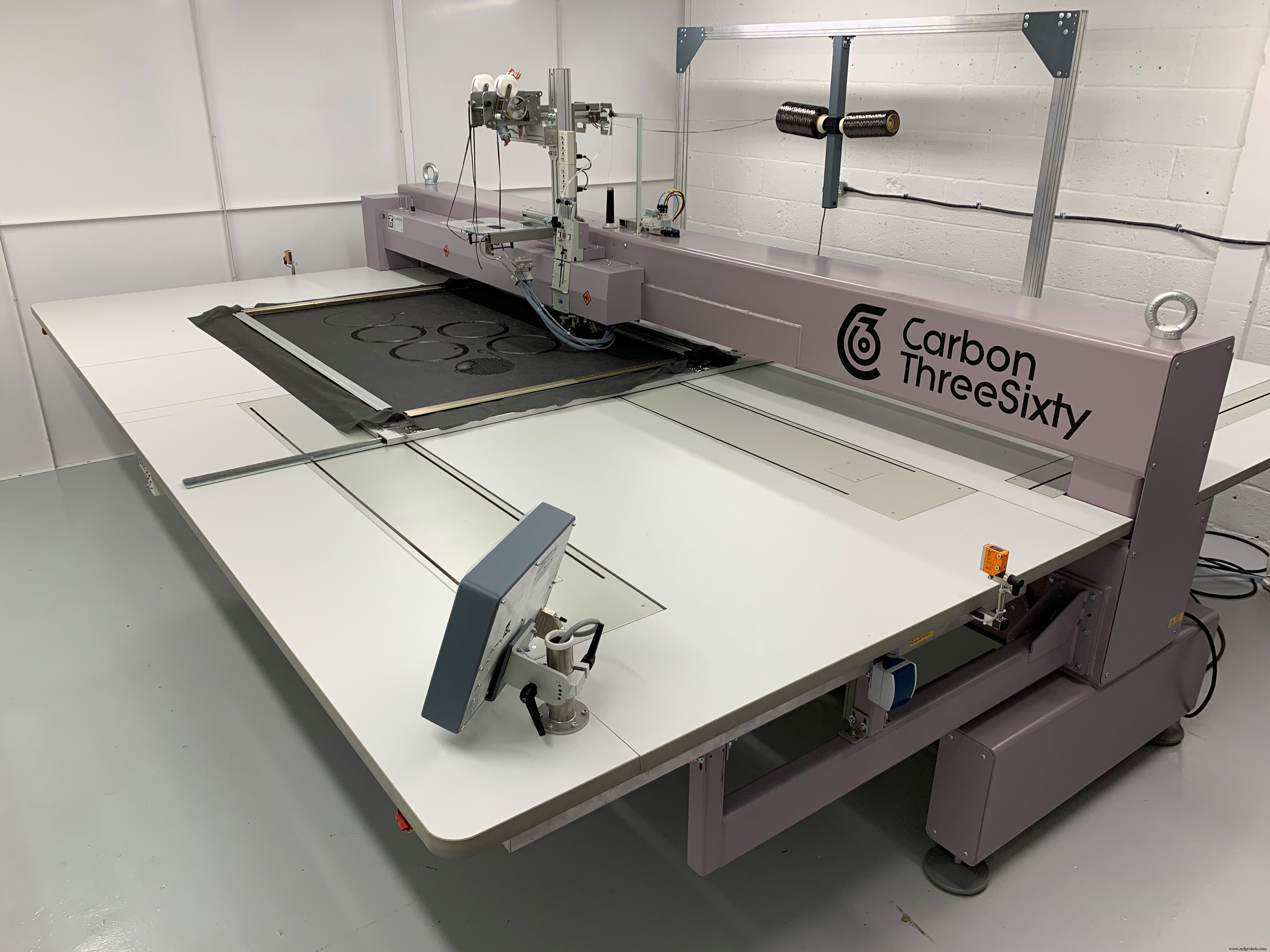
Carbon ThreeSixty invested in the TFP machine in fall 2019, following a successful trial of the technology at the U.K.’s National Composites Centre (NCC) in Bristol. According to Carbon ThreeSixty, that trial directly contributed to its securing ongoing R&D and pilot production projects with a global land defense OEM.
TFP’s automated technology enables accurate positioning of fibers onto a variety of backing materials to exact orientation requirements, and secures the fibers in place with fine thermoplastic polymer fibers. These bespoke preforms are then placed into precision resin transfer molding (RTM) closed molds, impregnated with high-performance resin and cured.
“Thanks to TFP when it comes to shape, the sky’s the limit and we are able to make products that were previously out of reach using traditional preforming methods. Helping our global customers gain access to next generation composite structures will also be quicker compared to traditional labor intensive routes, which are not only time consuming but less accurate with poorer repeatability,” Allnut says.
Carbon ThreeSixty says that TFP also enables it to take raw material to preform itself, without having to rely on suppliers for product-specific preforms. The process is also said to take hours, rather than weeks. Carbon ThreeSixty predicts that the new capability will also lead to job creation in the near future.
Carbon ThreeSixty will be highlighting the benefits of its new TFP capability at JEC World 2020.
fiber
- Top 3 Benefits of Carbon Fiber Watches for Luxury Timepieces
- Unidirectional Carbon Fiber: The Strength, Lightness, and Cost‑Savings Advantage for Modern Manufacturing
- Carbon Fiber: 3 Key Properties That Drive Innovation
- 5 Unexpected Carbon Fiber Innovations Reshaping Modern Life
- Carbon Fiber Weaves: Types, Properties & Industrial Applications
- Carbon Fiber Explained: Strength, Production, and Industry Applications
- Is Carbon Fiber Recyclable? A Guide to Sustainable Recycling & Repair
- How Carbon Fiber Footwear Enhances Speed, Energy, and Performance
- Is Carbon Fiber Conductive? Understanding Its Electrical and Thermal Properties
- Scania Growth Capital Injects SEK 35 M into Corebon AB to Accelerate High‑Quality CFRP Production