



McLaren 720S Enhanced: 3D‑Printed Carbon‑Fiber Body Lightens Car by 9%
The enhanced McLaren 720S already delivers world‑class performance, but the addition of a fully covered carbon‑fiber body takes it to the next level. Explore the details below.
RELATED: How to Make Carbon Fiber from Scratch At Home
In This Article:
- The World's First
- Tuning the Enhanced McLaren 720S
- A Successful 3D‑Printed Design
- Start of Tuning Advances
McLaren 720S and Carbon Fiber – A Breakthrough
Combination
The World’s First
1016 Industries, a leader in automotive tuning, has integrated 3D‑printed precision components into a unique, ultra‑lightweight version of the McLaren 720S. The fully exposed carbon‑fiber design incorporates weight‑saving molded parts, reducing the car’s mass by 9%—the first hybrid implementation of its kind.
CEO Peter Northrop notes this project is a “showcase of the future of elite manufacturing.” 1016 Industries plans to commence production of 3D‑printed parts for a range of vehicles by the end of 2021.
RELATED: Weds Sport Full Carbon Fiber Wheel
Tuning the Enhanced McLaren 720S
The carbon‑fiber body and lightweight additive‑manufactured parts make the enhanced 720S 9% lighter than the factory model. Through years of iterative design, 1016 Industries achieved a fully functional, production‑ready vehicle that retains the iconic aesthetics of the 720S.
Using 3D printing, the team replaced conventional bumpers and structural elements with engineered components that contribute to a total weight reduction of 268 lbs (122 kg). The standard supercar weighs approximately 3,128 lbs (1,419 kg); the new version achieves a 9% mass drop.
Northrop suggests the success of this project could serve as a foundation for future automotive design innovations.
A Successful 3D‑Printed Design
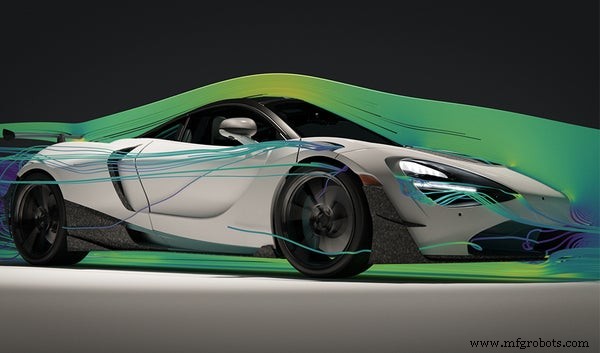
1016 Industries’ prior experience with additive manufacturing (AM) on exotic vehicles set the stage for this breakthrough. The 720S project refined AM integration into scaled production, producing parts that complement the vehicle’s new lightweight carbon‑fiber exterior.
Computational Fluid Dynamics guided the design and optimization of each component, ensuring structural integrity while maximizing weight savings. The company now intends to offer this 3D‑printing technology to other manufacturers.
Start of Tuning Advances
Beyond the 720S, the automotive industry is embracing 3D printing for high‑performance parts. Bugatti, for instance, incorporated titanium, hollow‑interior components into the Bolide hypercar, achieving significant weight reduction without compromising strength.
Porsche has collaborated with MAHLE and TRUMPF to 3D‑print pistons for the 911, reducing weight by 10% and adding 30 BHP to the engine’s output.
Does the new design of the enhanced McLaren 720S suit your taste? Or which model would you like to see with the application of carbon fiber? Let us know in the comments!
Looking for a cool and protective frame for your license plate? Check them out on our website.
UP NEXT:
- Carbon Fiber Phone Cases: Keep Your Phone Stylish and Protected
- How Durable Is Carbon Fiber?
- $160,000 All‑Carbon‑Fiber and Titanium Ducati 999S Motorcycle
fiber
- Top 3 Benefits of Carbon Fiber Watches for Luxury Timepieces
- Unidirectional Carbon Fiber: The Strength, Lightness, and Cost‑Savings Advantage for Modern Manufacturing
- Carbon Fiber: 3 Key Properties That Drive Innovation
- 5 Unexpected Carbon Fiber Innovations Reshaping Modern Life
- Carbon Fiber Weaves: Types, Properties & Industrial Applications
- Carbon Fiber Explained: Strength, Production, and Industry Applications
- Is Carbon Fiber Recyclable? A Guide to Sustainable Recycling & Repair
- Is Carbon Fiber Conductive? Understanding Its Electrical and Thermal Properties
- Plasan Set to Revolutionize Mass‑Market Cars with Ultra‑Light Carbon Fiber Bodies
- McLaren Artura Unveils Groundbreaking Composite Architecture