



Investment Casting: Unlocking Precision and Cost‑Effective Production
Lost wax, one-time molds create precision products with finer surfaces
What is investment casting?
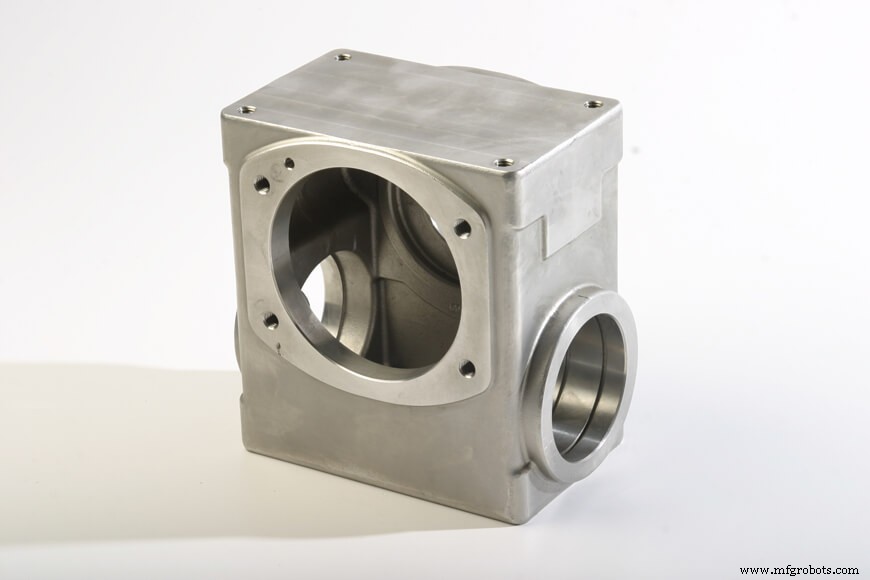
Investment casting, often referred to as "lost-wax" casting, uses an expendable-mold process to create complex products with exceptionally fine surfaces. It’s a precision technique because of the versatility that can be created in mold design. Sand casting patterns must be split in two, and have internal cores are able to be supported inside a closed split mold. Investment molds can be made in almost any shape that can be carved in wax and coated. The process and molding is more expensive, but the products produced can be more complex and precise. The surface of all metal castings reflect the materials they’re cast into. Sand castings therefore have a bumpy texture. Investment castings can come from the mold with a smoother finish.
What are common investment casting products?
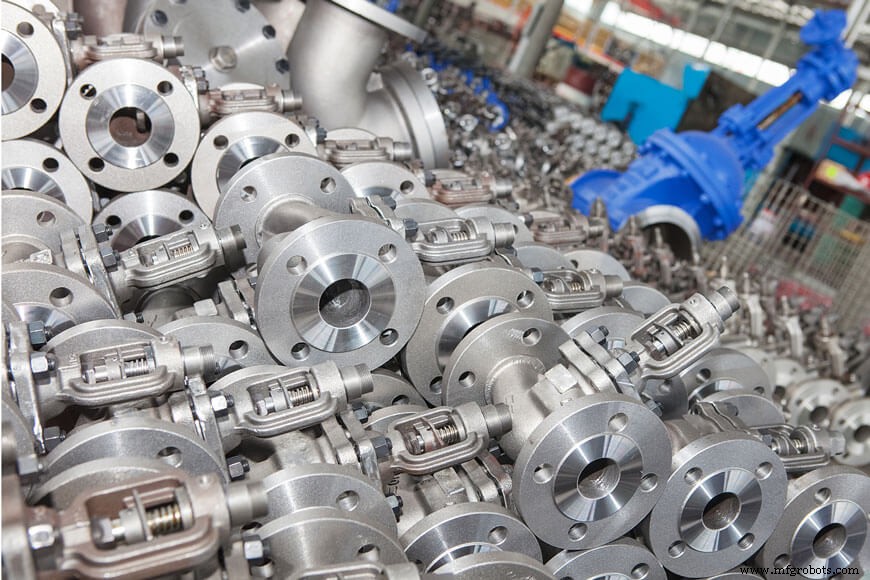
Investment casting products are often found as operational pieces of precision machines. In an automobile, for example, the engine housing may be sand-cast. Fans, cams, and other parts with complex shapes, especially those that move and need fine surfaces, will often be investment cast.
Investment casting is also common for very detailed statuary, jewelry, or other decorative items that have very fine details and smooth surface finishes.
Investment casting process
The investment casting process requires an expendable pattern, usually made of wax; a ceramic mold material; a kiln; and a foundry process for melting metals and filling molds.
Expendable or Wax Patterns
A pattern is an exact replica of the final product to be made. Humorously, a pattern is made by filling an injection mold often made of aluminum or steel. These molds may be machined, 3-D printed, or even hand carved. Creating each part with these processes would be more expensive than creating a mold and then moving to a foundry process. Lost-wax casting is more expensive than sand casting, but it is still capable of scaling up for high-turnover industrial production. Once the injection mold has been created, wax patterns can be made quickly and in high quantities, as they require minimal time to cool and solidify.
Pattern assemblies
Once formed, wax patterns are assembled into a tree, or casting system, that will allow multiple items to be cast at the same time. The tree formation is made from a series of gates and sprues, also made from solid wax. These solid wax branches will eventually form the hollow channels that carry molten metal to form each final product. The tree structures must be assembled carefully to ensure quality products and efficient workflows. Depending on a site's facilities and the product size, many patterns can be assembled in the same tree for bulk production. Larger items can also be cast on their own.
Ceramic "investment" mold
Once the tree structure is assembled, it is dipped in a liquid ceramic bath. The ceramic coats the entire tree and is left to dry. These baths are repeated several times, allowing each coat to harden, until a thick mold is created. The tree is then heated to melt the wax, which drains entirely from the mold. Once the wax is removed, the mold is heated to a higher temperature and molten metal is poured inside, filling the cavities once occupied by the wax pattern. The process of applying the ceramic slurry is referred to as the "investment" aspect of investment casting.
Mold removal
Once the metal has cooled and solidified, the ceramic mold is broken away to reveal the cast products. Gates and sprues are then removed, and any additional finishing or treatment procedures are then applied.
Versatile application
Wax patterns can be made in virtually any form, without tapers and without affecting the quality of the final product.
Investment casting can be used for a range of products and materials. Depending on a site's casting facilities, products can weigh as little as a fraction of an ounce, and upwards of a thousand pounds. Ceramic investment molds are also suitable for high-temperature pour.
Common materials used in investment casting include steels and other alloys based on iron, aluminum, nickel, cobalt, titanium, and copper. Depending on the application, investment casting can be suitable for both short and long production runs, and can produce several hundred products at a time.
Wax and ceramic materials can be reused throughout the investment casting process. Used wax gets re-set into gates and risers, and ceramic molds can be re-processed for use in new molds—typically the outer ceramic layers where less precision is required.
Benefits of investment casting over sand casting
All casting methods offer many design benefits: the ability to minimize material inputs, and to form structures that would be otherwise difficult to achieve without significant machining or assembly.
A key benefit of investment casting, however, is the versatility of its mold. Because the mold is expendable, and because wax patterns can be removed unobtrusively in liquid form, manufacturers have an exceptional amount of freedom when designing investment cast products. Investment casting provides much for much more complex design capabilities than most other molding and casting methods.
Investment casting versus sand casting
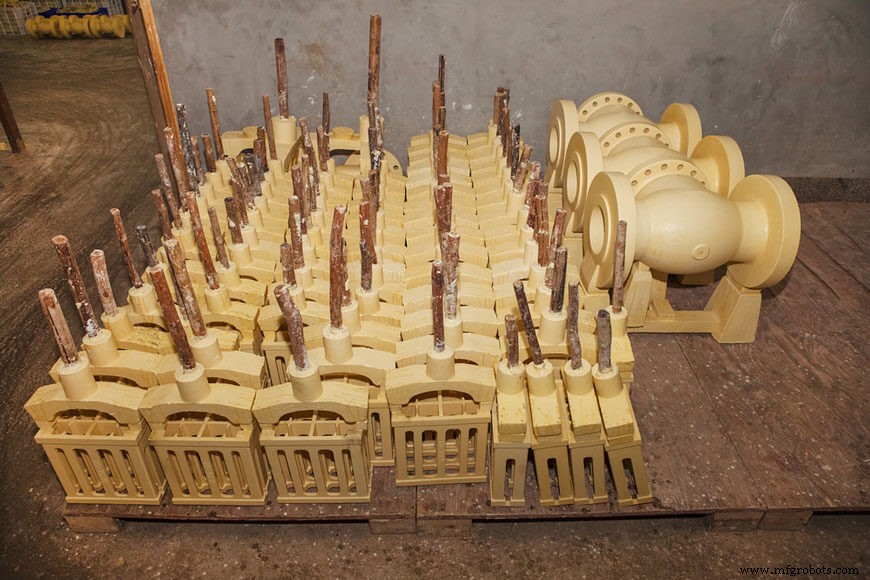
Sand casting is another effective casting method that uses sand to form disposable molds. It's the most widely-used casting method in North America, but there are several key differences.
When selecting the best casting method for a project, consider the following:
- Sand molds must be pulled apart to remove a pattern before pouring. To ensure a proper mold, a pattern needs to be designed with tapers, or drafts, to minimize friction—and to prevent the sand mold from being disrupted—when the sections are split apart. Because sand molds are comprised of two pieces, the final product will always have a parting line, which may need to be ground away once cooled.
- Sand casting molds can be easily adjusted to accommodate design changes. This gives freedom to an engineer to change parts quickly and easily after it is tested.
- Internal cavities can also be a challenge for sand casting, which rely on the use of cores. A core is a preformed shape that is inserted into a mold to form the interior of the part not in contact with the mold's surface. Depending on the shape and complexity of a core—which can be a single component or an assembly of multiple cores—it can be time-consuming to form and secure within a mold.
- In sand casting, new castings are manufactured more quickly than in investment casting due to the reusability of the pattern.
- It's also worth noting that sand molds, even with synthetic additives and high compaction, can't achieve the hardness of ceramic. As a result, sand-casted surfaces often have higher tolerances and require machine grinding to achieve a finished surface.
- It's also worth noting that sand molds, even with synthetic additives and high compaction, can't achieve the hardness of ceramic. As a result, sand-casted surfaces often have higher tolerances and require machine grinding to achieve a finished surface.
- Sand casting can produce metal components of all sizes and weight, while investment casting requires the final pieces to weigh less than 100 pounds.
- With investment casting, wax patterns can be made in virtually any form.
- Ceramic molds are also very hard, which create smooth surfaces with low tolerances, often with very thin walls. Once any gates and sprues have been removed, many products don't require any additional labor for treatment or finishing.
- With investment casting, wax patterns can be made in virtually any form—without tapers and without affecting the quality of the final product.
- Ceramic molds are also very hard, which create smooth surfaces with low tolerances—often with very thin walls. Once any gates and sprues have been removed, many products don't require any additional labor for treatment or finishing.
Planning an investment casting project
Determining the best manufacturing method depends on a range of factors. Here are a few things to consider with your production design professionals:
- Final product type: What is the desired size and shape of the product? Different casting methods will be better suited to certain dimensions, and they'll also influence the amount of machining required to reach final dimensions.
- Quantity: When taking into account quantities, it's best to look as far ahead as possible. What might be more economical in the short run may turn out to be more costly if planning several batches for the long term. A greater initial investment in tooling and molds can often save money down the road. Short-run or one-shot productions, however, won't require the same investment.
- Tolerances: How exact do your dimensions need to be? Minimal tolerances can often be achieved with investment casting, especially for products with very thin walls.
- Mechanical application: Casting can reduce the amount of assembly required for mechanical applications—often saving time and labor down the road.
- Material requirements: Ceramic molds used in investment casting are suitable for a broad range of materials, including steel- and iron-based alloys poured at high temperatures.
- Post production: As with other forms of casting, depending on their final application, investment-cast products may undergo various heat treatments or other surface finishing if required.
Investment casting foundries
Most foundries that produce investment castings will not necessarily provide other casting production methods, preferring to specialize in a single foundry production method. Significant differences exist between production methods such as sand casting vs. investment casting, making it unlikely a single company that will have the infrastructure needed to offer more than one molding production method.
It is normal for investment castings to cost more than castings produced using other, simpler methods, such as sand casting. The benefits achieved, however—including intricacy, reliability, reproducibility, surface finish, and others—more than make up for the difference in cost.
It is important to truly understand the design parameters of the casting you are designing or trying to buy. If investment castings can offer a net shape part without machining, for example, but a sand casting will need to be machined, then the additional cost for investment casting may be justified.
Sources
- Grote, Karl-Heinrich and Erik K. Antonsson. Springer Handbook of Mechanical Engineering, Volume 10. Pasadena, CA: Springer Science & Business Media, 2009.
- Hunt, L.B. "The Long History of Lost Wax Casting: Over Five Thousand Years of Art and Craftmanship." Gold Bulletin. June 1980, Volume 13, Issue 2, pp 63-79.
- Rundman, Karl B. Metal Casting (Reference Book for MY4130). Michigan Tech. University: Department of Materials Science and Engineering.
Metal
- Is a Custom CNC Router Worth the Investment? Expert Insights
- Discover the Value: Why Investment Casting Delivers Superior Precision & Quality
- Why Investing in Demag Cranes Pays Off: Quality, Reliability, and Longevity
- Investment Casting: Unlocking Precision and Versatility in Metal Fabrication
- Investment Casting: Unlocking Cost Savings and Quality – Part 2
- Investment Casting vs. Die Casting: Key Differences Explained
- How Robotics Transform Investment Casting: Applications & Advantages
- Vacuum Investment Casting: Precision, Quality, and Reliability for High-Integrity Metal Parts
- Understanding Investment Casting: Turning Wax Patterns into Precision Metal Parts
- Investment Moulding: The Reliable Casting Method for Precise Metal Components