



Precast Concrete Bollards: Leading Safety & Design Solutions
Impact protection and premium design
When it comes to pedestrian safety, there are many different types of bollards that urban planners and architects can use to protect people and property from vehicle intrusions. Steel bollards in bright colors line many street corners and parking lots—but not every bollard has to look like a neon pipe to be a traffic guide or crash barrier. Sites requiring a more modern or subtle aesthetic have other options to provide security against vehicle crashes.
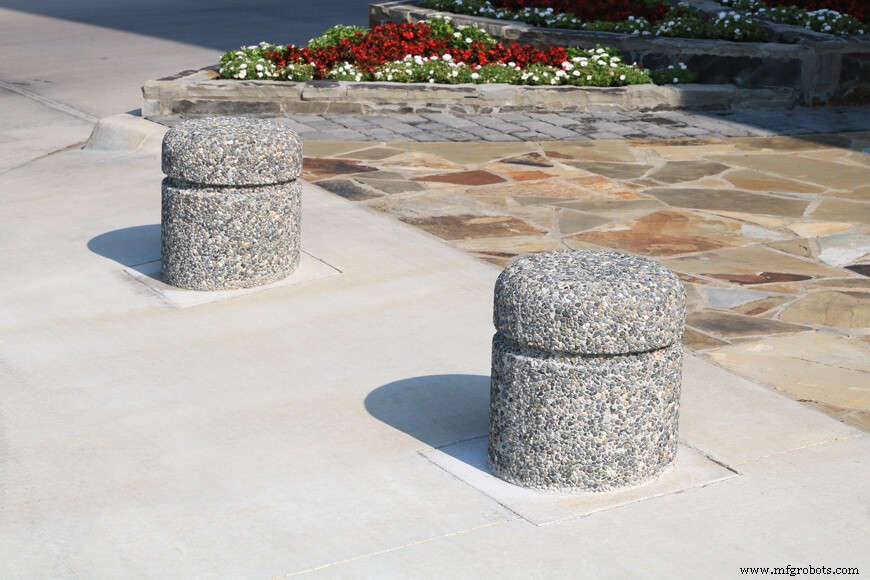
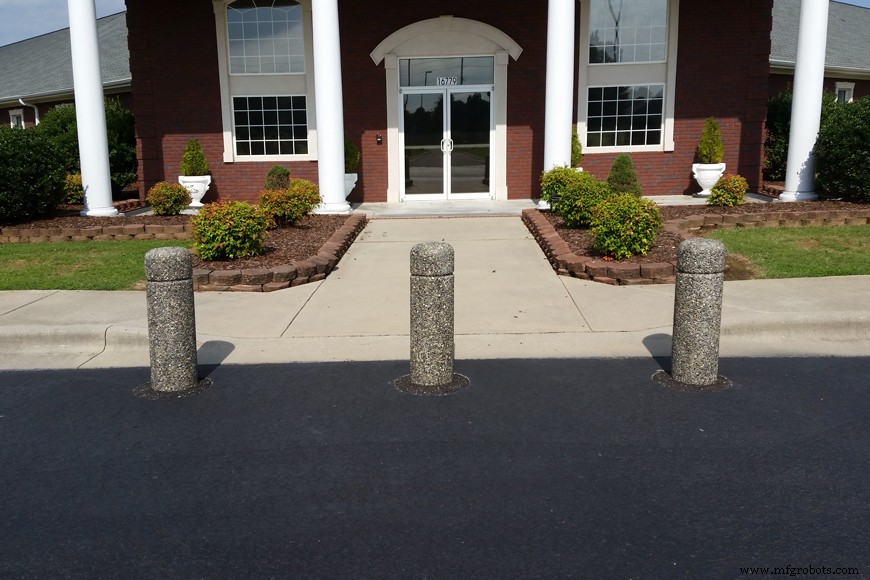
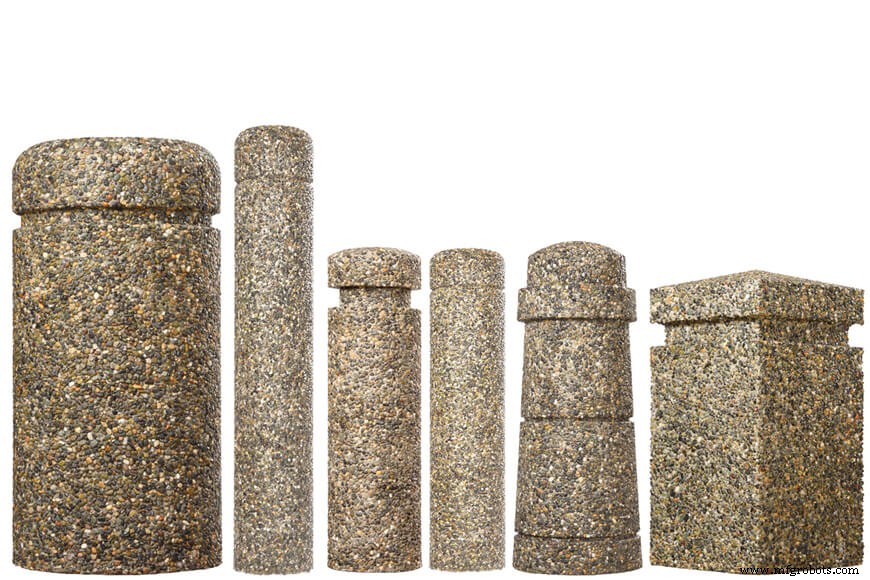
Precast concrete bollards are one example of a decorative bollard that provides impact protection without distracting from the landscaping and architectural style. Reinforced with steel for exceptional strength and available in many shapes, sizes, and surface finishes, concrete bollards can be used for any permanent bollard application.
Why use concrete?
Concrete is an excellent building material, used in most major buildings and urban infrastructure projects—you would be hard-pressed to find any modern building that doesn’t use concrete for at least the foundation. On its own, concrete has a high thermal mass and is resistant to weathering, making it ideal for outdoor use. Concrete can also be easily upgraded with steel reinforcement for added strength and additional surface finishing, protecting it from external elements while adding an appealing surface texture.
Precast concrete products are used for a range of applications:
- Architectural site furnishings for safety and protection
- Structural building materials
- Surface pavers
- Housings for utility conduits
Precast concrete: Benefits of controlled manufacturing
Compared to cast-in-place concrete projects, precast concrete manufacturers have exceptional control in managing the quality and appearance of concrete products. Casting facilities have the benefit of a clean manufacturing environment to minimize impurities. Precast products also use molds, which ensure uniformity across multiple items, and allow for a high degree of planning and predictability in determining concrete mixes and volumes.
For cast-in-place concrete projects, formwork is often the costliest input, as it requires extensive labor and materials. Relying on off-site manufacturers is an effective way to reduce costs while ensuring quality and performance-specific characteristics. Precast concrete products are shipped ready for use, and typically require much less time and labor to install.
Reinforced concrete: Steel provides strength and durability
On its own, concrete has exceptional compressive strength, but is weak in tension and shear strength. That means it is highly susceptible to cracking—especially when subject to significant forces over time. So how can concrete be strengthened? Using steel.
Advantages of steel
- Exceptional strength: Steel can withstand high tension and shear forces
- Behaves similarly to concrete: Steel responds to temperature and humidity by shrinking and expanding
- Easy to manipulate: Steel can be bent, cut, or bound into different shapes to fit any concrete form
- Speed of assembly: Steel can be assembled rapidly into formworks and molds
- Low maintenance: Steel requires minimal maintenance once installed
- Economical: Steel is affordable and common across North America
When steel is coupled with concrete, the result is reinforced concrete. This is a material with incredible strength and durability and is relied upon as a building block for both decorative and functional bollards.
Rebar: The most common reinforcement material
Different types of reinforcement can be used for specific concrete applications. The most common reinforcement material is steel rebar, though reinforced concrete can also use steel wire mesh. The steel interlocks and bonds with the concrete as it cures, providing additional strength.
What is rebar?
Rebar is a versatile material that can be easily bent, cut, or spliced together, and different types are available, each with specific properties incorporated for strength, weldability, and corrosion resistance.
Dealing with corrosion
It's worth noting that steel is generally protected from corrosion by the high PH levels of surrounding concrete. However, lowered PH levels, or excessive marine or de-icing salts, can permeate concrete and trigger a chain reaction.
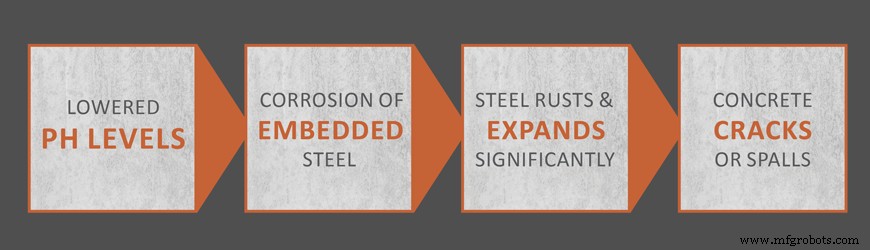
At the time of installation, minor surface corrosion won't affect the structural integrity of rebar (and may even be desired to encourage better bonding). Once sealed, isolation from external environments halts oxidation.
To prevent further corrosion, manufacturers should:
- Ensure enough concrete has been applied to surround and protect integral steel
- Use corrosion-resistant materials, such as stainless, galvanized, or epoxy-coated steel
To increase the structural integrity of load-bearing concrete, apply tension to reinforcing bars prior to pouring concrete. The tension is then held until the concrete cures. Pre-stressing ensures a more resilient final product in carrying heavy loads.
Strategies for steel reinforcement can vary. Formal projects require qualified design professionals to consider a structure's intended use:
- Location
- Span lengths
- Expected loads
Designs also require that accurate parameters be specified for material quantities, grades, sizes, and placement within a larger project. The methods used to produce precast concrete offer ideal circumstances for predetermining load designs and ensuring consistent application across a range of products.
Surface finishing for the final touch
Precast concrete can be designed with a range of colors, textures, and finishes that would otherwise be difficult to achieve using cast-in-place methods. These finishes are achieved by using different concrete mixes, aggregate selections, and processing methods. Typically, concrete finishes are grouped into two categories: smooth and exposed aggregate.
1) Smooth concrete finish
There are a number of variables that can affect the final appearance of concrete:
- Type of cement used
- Mixing
- Weather
- Conditions for curing
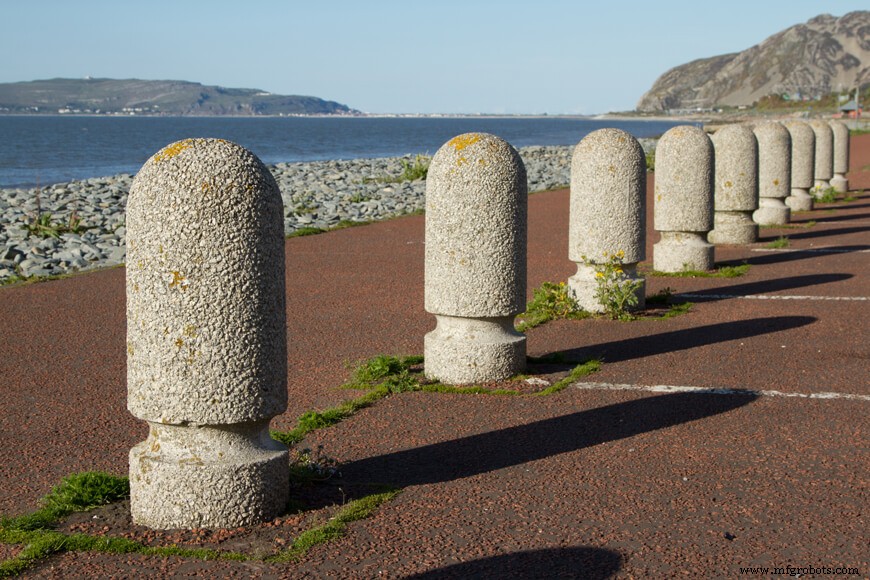
Smooth surfaces can be created by giving precast concrete an as-cast or light sandblasted finish. An as-cast finish is created by pulling concrete from its form and applying little or no additional processing. As-cast finishes offer a very clean profile and are conducive to painting. However, it can be difficult to achieve a consistent color across as-cast finishes for larger projects.
Small air voids, or “bug eyes,” will be more noticeable across smooth concrete surfaces, which, depending on the application, can be a disadvantage. Voids can be removed with additional concrete sacking, but this can be an expensive process. Light sandblasting is often applied to achieve a more uniform and smooth appearance, minimizing variabilities in the color and texture of binding cement—but it can also make voids and other imperfections more noticeable. Heavier sandblasting will result in exposed aggregates, so consider the desired finish to determine the required level of sandblasting.
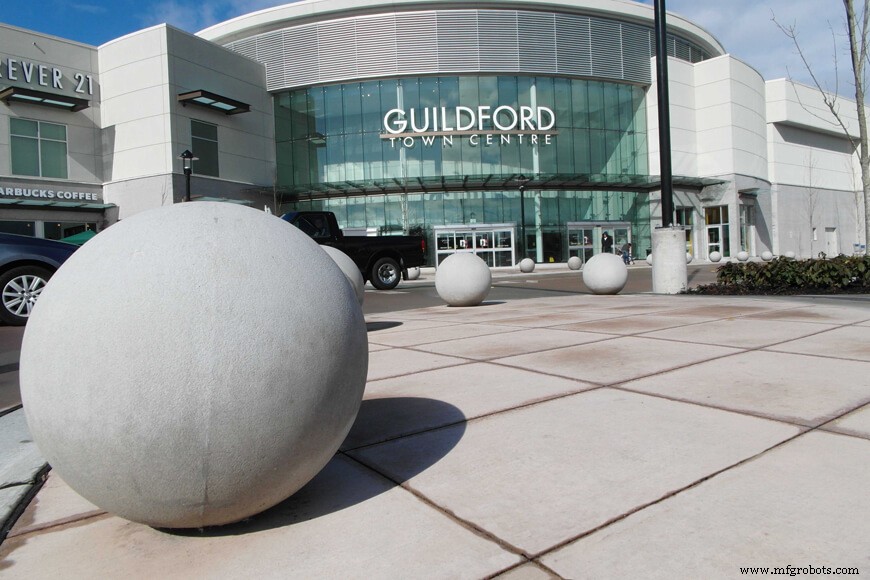
2) Exposed aggregate concrete finish
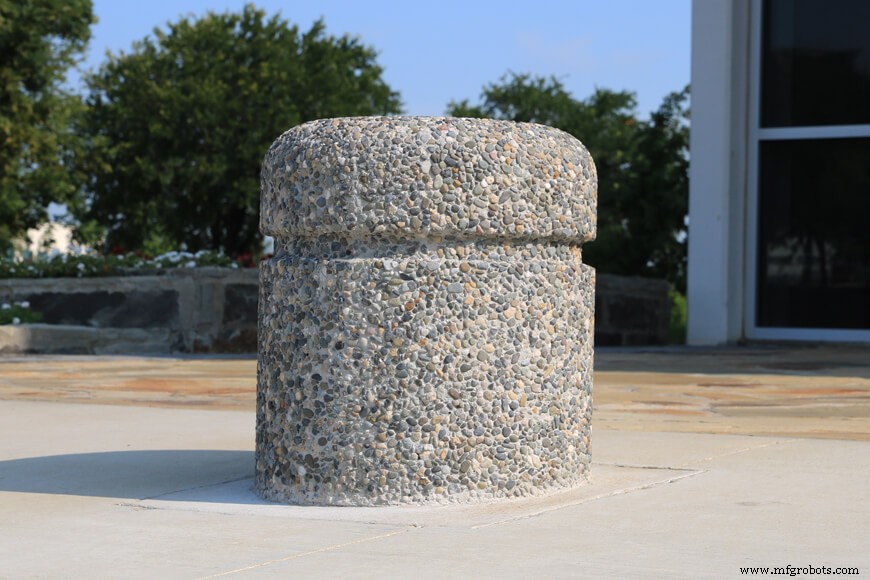
Exposed aggregate concrete requires additional processing, such as sandblasting, to reveal the stones used in a concrete mixture. Aggregate materials typically comprise about 60–70 percent of a concrete mix, and a multitude of different aggregate-types can be used. Once exposed, aggregates can have a significant effect on the color, appearance, and texture of concrete. Exposed aggregate finishes tend to be more uniform and consistent than smooth finishes, virtually eliminating the appearance of voids and other imperfections—both up close and from a distance.
Aggregate can be exposed to different degrees to achieve a range of textures and color casts, or to preserve the presence of the concrete mix:
- Light exposure involves sandblasting a concrete surface until aggregates are just visible through the concrete mix, maintaining a significant presence in the overall surface appearance.
- Medium exposure removes more of the surface concrete, creating a more balanced aesthetic between aggregate and cement.
- Deep exposure exposes as much aggregate as possible—about a third of each stone or half of the smallest stone size—to make it the dominant feature.
Aggregates are typically exposed though sandblasting, but chemicals are sometimes used in forms to limit curing. This makes surfaces easier to remove.
Other concrete finishes
In addition to sandblasting, a range of other processes are available to alter concrete surfaces:
- Acid etching - similar to sandblasting but allows more preservation of color and detail
- Form liners - involves lining forms with additional materials to achieve unique textures
- Additional tooling - used to create a broken-stone texture
Precast concrete bollards and outdoor site furnishings
Out of the many concrete products to choose from, precast concrete bollards often go unnoticed, but they play an important role in security. Protect any outdoor space with concrete bollards that won’t distract from the surrounding infrastructure while increasing safety.
This content is provided for informational purposes only. A professional engineer or design professional should be consulted for any performance-specific application related to structural performance or aesthetic design.
Sources
- Architectural Precast Association. "Architectural Precast Concrete Finishes Guide."
- Arnold, Christopher and Mary Ann Lasch. "FEMA 430: Chapter 4: Perimeter Security Design." Site and Urban Design for Security: Guidance Against Potential Terrorist Attacks. Earthquake Engineering Research Institute under grant from the Federal Emergency Management Agency and the Department of Homeland Security. 2007.
- Encyclopedia Britannica. "Reinforced Concrete." britannica.com, accessed June 2014.
- National Precast Concrete Association. The Little Book of Concrete: A Guide to the One Hundred Advantages of Precast Concrete. 2006.
- Precast/Prestressed Concrete Institute. "Design Factors Affecting Aesthetics of Architectural Precast Concrete." PCI Designer's Notebook.
Metal
- Corten Steel: Long‑Lasting Durability and Aesthetic Patina for Outdoor Structures
- Essential Phases of Designing & Constructing a Steel Plant
- Steel Grading Explained: Chemistry, Properties, and Selection Guide
- Transforming Concrete: From Bold Buildings to Stylish Bollards
- Concrete Production & Applications: A Global Perspective
- Cast Steel Production: Key Properties, Composition, and Performance
- Ferrous & Non-Ferrous Metals: Optimizing Casting Design for Performance and Efficiency
- Stainless Steel Production: From Mill to Finished Product
- Stainless Steel Grades: Types, Properties & Common Uses
- Mastering Snap Fit Design: Types, Best Practices & Production Efficiency