



Rubber Recycling Unveiled: Sustainable Solutions for a Greener Future
Transforming an environmental hazard into a sustainable resource
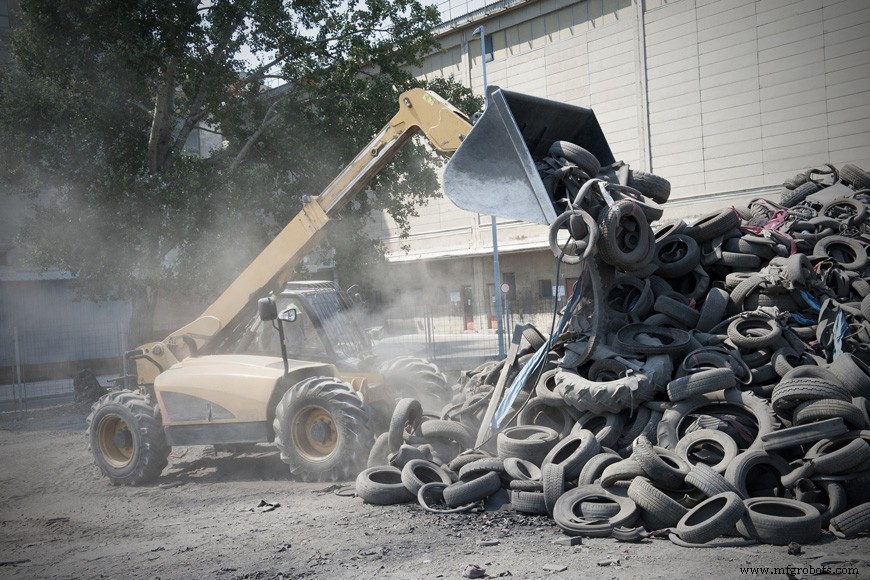
The concept of sustainability has been garnering much-needed public attention and interest in recent years. The increase of waste has serious environmental implications, and waste management must be carefully considered. There is now a focus on sustainable practices in almost any industry—including the rubber industry.
The rubber industry has been faced with its own unique challenges when it comes to recycling. Synthetic rubber is difficult to manage due to three main factors:
- Large volume of waste
- Durability of the material
- Hazards involving handling and storage
Until recently, the technology and infrastructure to deal with this waste did not exist—rubber stockpiles were standard, despite the hazards. Fortunately, decades of concerted effort have culminated in effective rubber recycling programs. Old tires can find new life as playground surfaces, floor mats, or even impact-resistant parking stops. The success of rubber recycling sheds light on a promising future in non-biodegradable waste management.
The largest source of rubber waste: old tires
Rubber recycling is synonymous with waste tire management for good reason. Old tires are by far the most common source of waste rubber. Passenger cars, trucks, airplanes, and off-road vehicles all use and abuse rubber tires during operation. Tire service life can be extended by retreading, but not indefinitely. Eventually, end of life tires (ELTs) are taken off the road. From there, they are either recycled, stockpiled, or sent to the landfill.
The sheer volume of waste tires is intimidating. In 2007, 303.2 million scrap tires were generated in the US. Two thirds were from passenger cars and the remainder came from trucks, heavy equipment, aircraft, off-road and scrapped vehicles.
Tire stockpile hazards
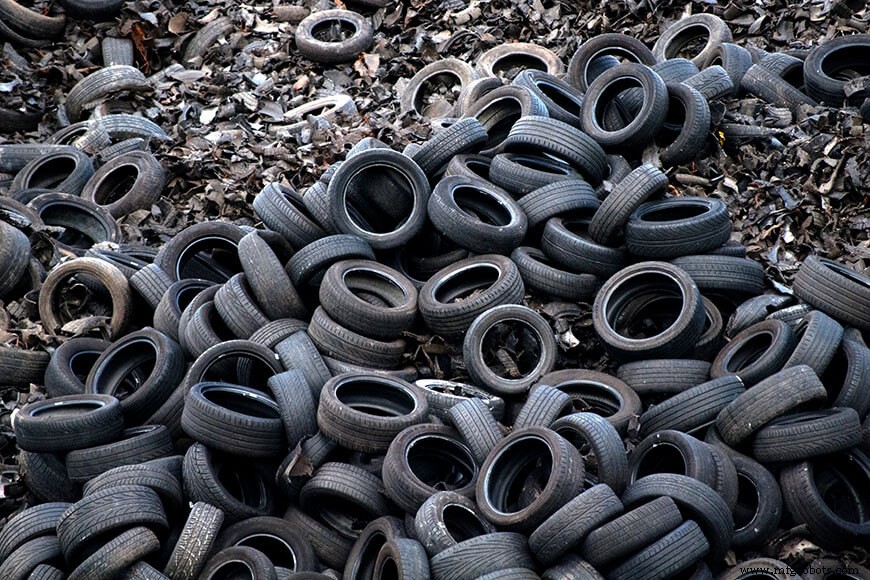
Most of the ELTs in developed countries are recycled, but this is a fairly recent development. Prior to the 21st century, very few countries had the collection and processing infrastructure to recycle rubber on a large scale. The only possible destinations for ELTs were the landfill—or a dedicated tire stockpile. The constant influx of used tires quickly exceeded landfill capacity, so most regions stockpiled them for future use.
Economic and health risks
Tire stockpiles have been blamed for a range of negative implications on the surrounding environment. While ELT stockpiles are theoretically more responsible than a landfill, they are still problematic. They discourage development of surrounding land, encourage illegal dumping, and even harbor disease-bearing mosquitoes and vermin.
Flammability risks
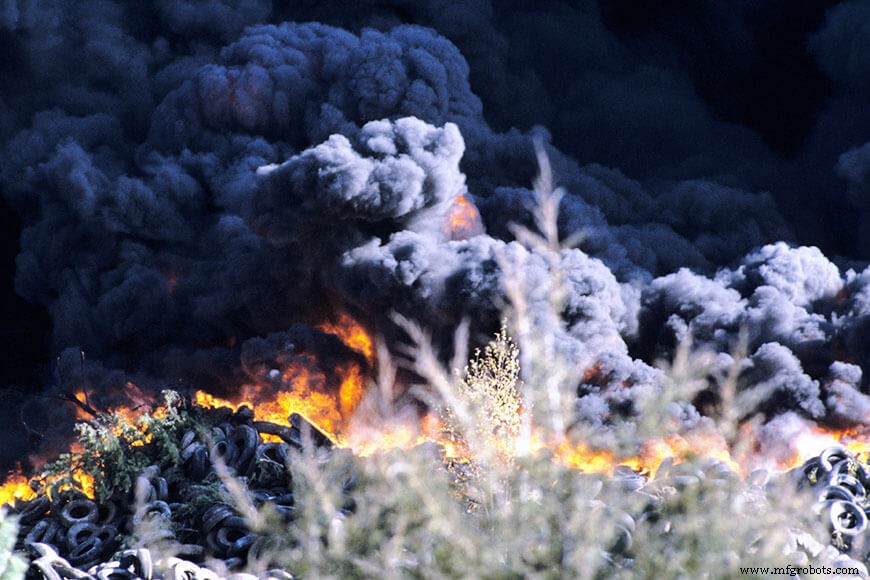
The economic and health risks alone are cause for concern, but the most serious issue is flammability—tire stockpiles are essentially mountains of fuel waiting for a spark. The longer a stockpile stays idle, the more likely it is to ignite and cause severe damage. Tire fires are notoriously toxic and difficult to put out. The thick, black smoke they generate negatively impacts air quality for weeks, with soil and ground water taking even longer to recover.
ELTs are non-biodegradable, meaning it will not diminish over time—waste tire is a persistent environmental hazard. Site remediation can minimize the damage, but at a considerable expense. The most cost-effective option is preemptive clean up and recycling.
Benefits to rubber recycling
Failure to recycle ELTs is a missed opportunity to produce useful secondary raw material. In certain applications, ground rubber has unique properties that are superior to traditional materials:
- Shock absorption
- Sound absorption
- Non-slip
- Lightweight
- Permeable
- Insulating
- Abrasion and crack resistant
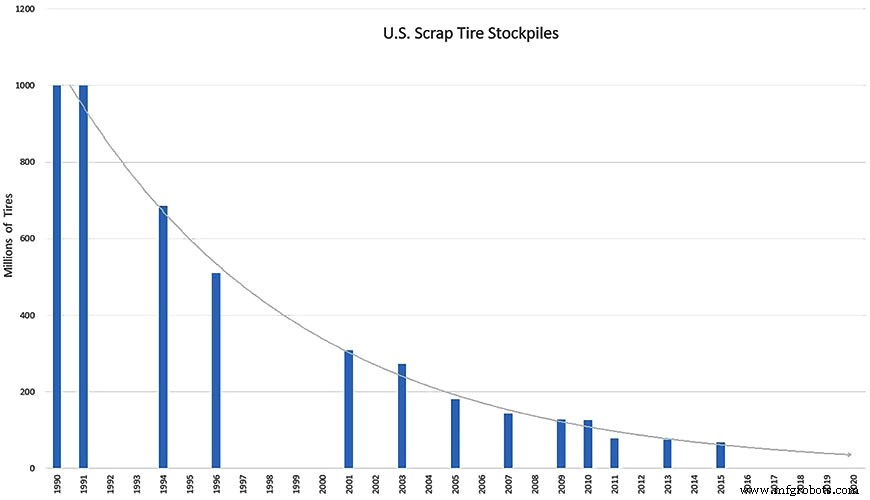
Recycling is becoming more frequent as capable facilities get up and running. The recycling effort is responsible for nearly eliminating the massive stockpiles of the 1990s. As of 2015, 93% of the peak tire stockpile volume in the US has been cleaned up and recycled. Similar cleanups have taken place in most developed countries.
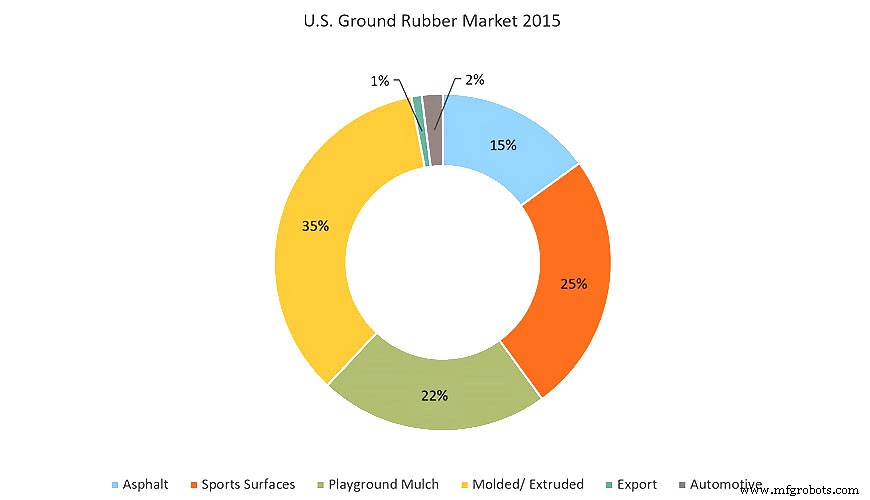
According to the Rubber Manufacturer's Association, the utilization rate for recycled rubber scrap in the US has also remained above 80% for the past decade. The majority of waste tire is still recycled into tire-derived fuel, but that trend is shifting towards ground rubber and related products. The most common uses are asphalt, playground mulch, sports surfaces, and other molded rubber products.
Rubber recycling process
Unprocessed ELTs are large, unwieldy, and typically covered in dirt. Prior to recycling, they need to be cleaned and cut down to a uniform size. ELTs are fed into a granulator, where they are fragmented into smaller pieces collectively known as crumb rubber. A single passenger tire can generate 10-12 pounds of crumb rubber.
Crumb rubber
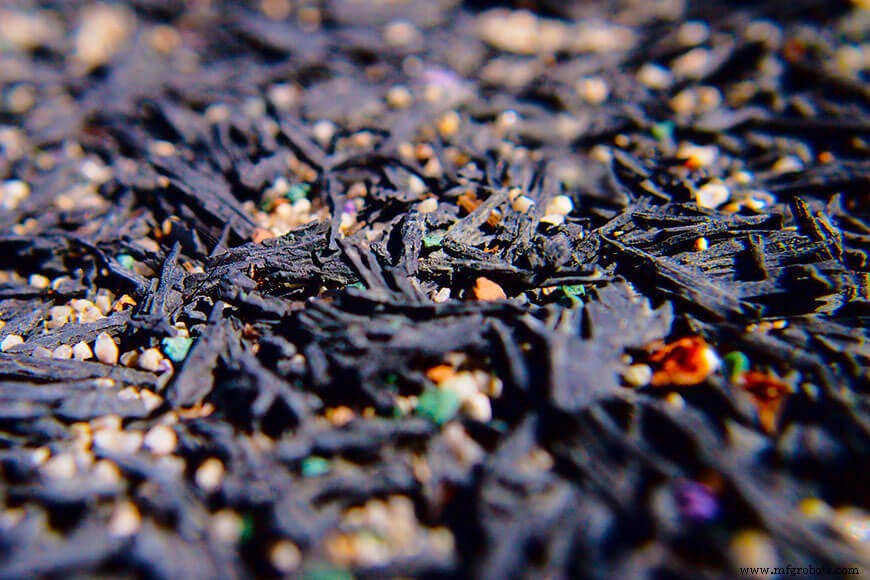
Rough crumb rubber is more manageable than whole tires, but not very useful. It still contains fragments of reinforcing fabric and wire. Depending on the end market, additional processing may be necessary to remove those impurities and create a finer crumb size, or mesh.
Mesh
Mesh is a term for the number of holes per inch that the crumb rubber can pass through. The finer the crumb, the higher the mesh count. Recyclers use a few different processes to increase mesh—ambient grinding, cryogenic processing, and wet grinding.
- Ambient grinding Crumb rubber undergoes a series of shear and compression processes at ambient temperatures. The resulting crumb is irregular.
- Cryogenic processing Frozen rubber is fractured in a highspeed hammer mill. The process produces fine mesh with smooth sides and easy flow.
- Wet grinding Rarer process used to produce a much finer mesh. The final mesh makes the crumb rubber suitable for different applications.
Recycled rubber uses
Processing technology and manufacturing capacity have been in development since the 1990s with significant breakthroughs. Due to the effort, crumb rubber markets are steadily growing. The rise in popularity is partially driven by cost as recycled rubber is relatively inexpensive. However, economies aside, there are many exceptional properties of recycled rubber worth highlighting. The strength, durability, and impact absorption of recycled rubber often supersedes traditional materials.
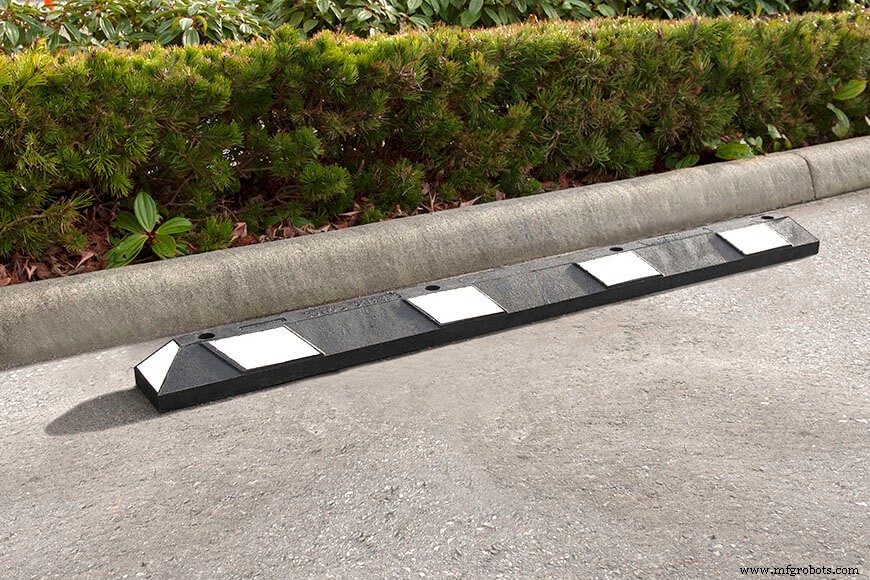
Recycled rubber is now a standard material for a wide variety of applications:
- Playground surfaces
- Athletic tracks
- Synthetic turfs
- Textured paints
- Non-slip surfaces
- Automobile floor mats
- Waterproofing silo and roof liners
- Speed bumps and humps
- Shock absorbing pads for machinery
- Garbage cans
Sources
- United States Environmental Protection Agency. “Scrap Tires: Handbook on Recycling Applications and Management in the US and Mexico.”
- United States Environmental Protection Agency. “Scrap Tire Cleanup Guidebook.”
Metal
- 6 Key Applications of Molybdenum – From Steel to Medicine
- Professional Molded Rubber Solutions: Custom, Waterproof, Durable Parts
- Cryorolling Explained: How Cryogenic Temperatures Transform Metal Strength
- Additive Manufacturing: Redefining Scale Economics and Driving Integrated Production
- How Bluetooth LE Range Shapes Industrial Asset Tracking – Facts & Solutions
- The Complete Brass Recycling Process: From Scrap to New Products
- 15 Key Insights Into U.S. Manufacturing: History, Trends, and Impact
- Infographic: Essential Manufacturing Insights Revealed
- Unveiling Supply Chain Costs: A Logistics Expert’s Insight
- Dynamic Balancing Unveiled: Myths Debunked & Real Advantages