



Nanocups: Advanced Light‑Bending Nanomaterials for Biomedical and Photonic Applications
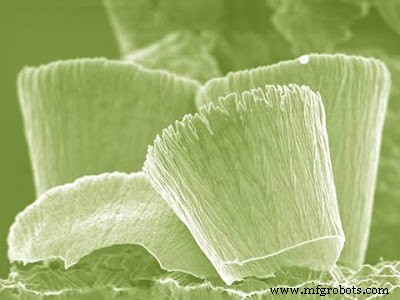
Nanoshells, Nanoeggs and Nanocups
Nanoshells are spherical silica cores coated with a thin gold shell. When the core is offset within the shell, the structure becomes a nanoegg; if the offset exceeds the shell thickness, the core pierces the shell, forming a nanocup. These shapes exhibit distinct absorption and scattering spectra, with nanoeggs showing strongly red‑shifted multipolar peaks and enhanced near‑field intensities compared to nanoshells.
Biomedical Potential of Nanoeggs
Researchers at the Hong Kong University of Science and Technology engineered a nanoegg comprising a hard cobalt shell encapsulating a platinum‑iron core. This design safely delivers platinum, a recognized anticancer agent, to tumor cells. In vitro studies revealed that the nanoegg is seven times more cytotoxic to cancer cells than the standard drug cisplatin, while maintaining a favorable safety profile.
The fabrication process involves synthesizing cobalt sulfide nanoparticles that form a porous crystalline shell around iron/platinum nanocrystals. The shell’s pores are sufficiently large to allow water penetration, yet the hollow cobalt sulfide particles themselves exhibit negligible toxicity toward cultured human cancer cells.
Nanocups: Light‑Bending Metamaterials
Nanocups are minute, cup‑shaped nanoparticles that can manipulate light through plasmonic interactions. By embedding these nano‑antennas into a polymer matrix, scientists have created a metamaterial that redirects incoming light in a predetermined direction, minimizing back‑scattering and rendering the material effectively invisible to the eye.
Fabrication Process
The production of light‑bending nanocups involves depositing polystyrene or latex colloidal particles onto a glass substrate, evaporating a gold layer at controlled angles, and overcoating with an elastomer. After curing, the composite slab is lifted from the substrate, leaving oriented nanocups embedded within the elastomer.
Applications
- Inter‑chip optical signal transmission for high‑speed computing.
- Enhanced spectroscopy and super‑lensing for high‑resolution imaging.
- Photovoltaic tracking systems that focus sunlight onto a fixed receiver, increasing solar panel efficiency.
Other Nanostructures
Ghim Wei Ho of the University of Cambridge’s Nanoscale Science Laboratory has demonstrated the growth of diverse nanostructures—including nanowires, cones, rings, cups, and flower‑like shapes. These complex, often amorphous‑crystalline composites hold promise for next‑generation electronic and photonic devices.
Nanomaterials
- Gas Lanterns: Evolution, Design, and Modern Manufacturing
- Laser Pointer: Design, Manufacturing, and Safety Overview
- Shrapnel Shells: From Henry Shrapnel’s 18th‑Century Innovation to Modern Munitions
- Flashlight: From Inception to Modern Innovation
- The Kaleidoscope: From Brewster’s Science to Modern Design
- Semiconductor Lasers: Precision Light Generation for Modern Technology
- Shell’s Digital Vision: How IoT, AI, and Data Are Shaping the Energy Future
- Universal Light Modulator: A Breakthrough Laser Architecture for Precise Matter Control
- New Nanowire UV LEDs Deliver Fivefold Brighter Light for Advanced Applications
- Printable Light Sensors Now Detect Colors, Paving the Way for Visible Light Communication