



SABIC & Local Motors Study Feasibility of Recycling 3D‑Printed Thermoplastic Scrap for Sustainable Manufacturing
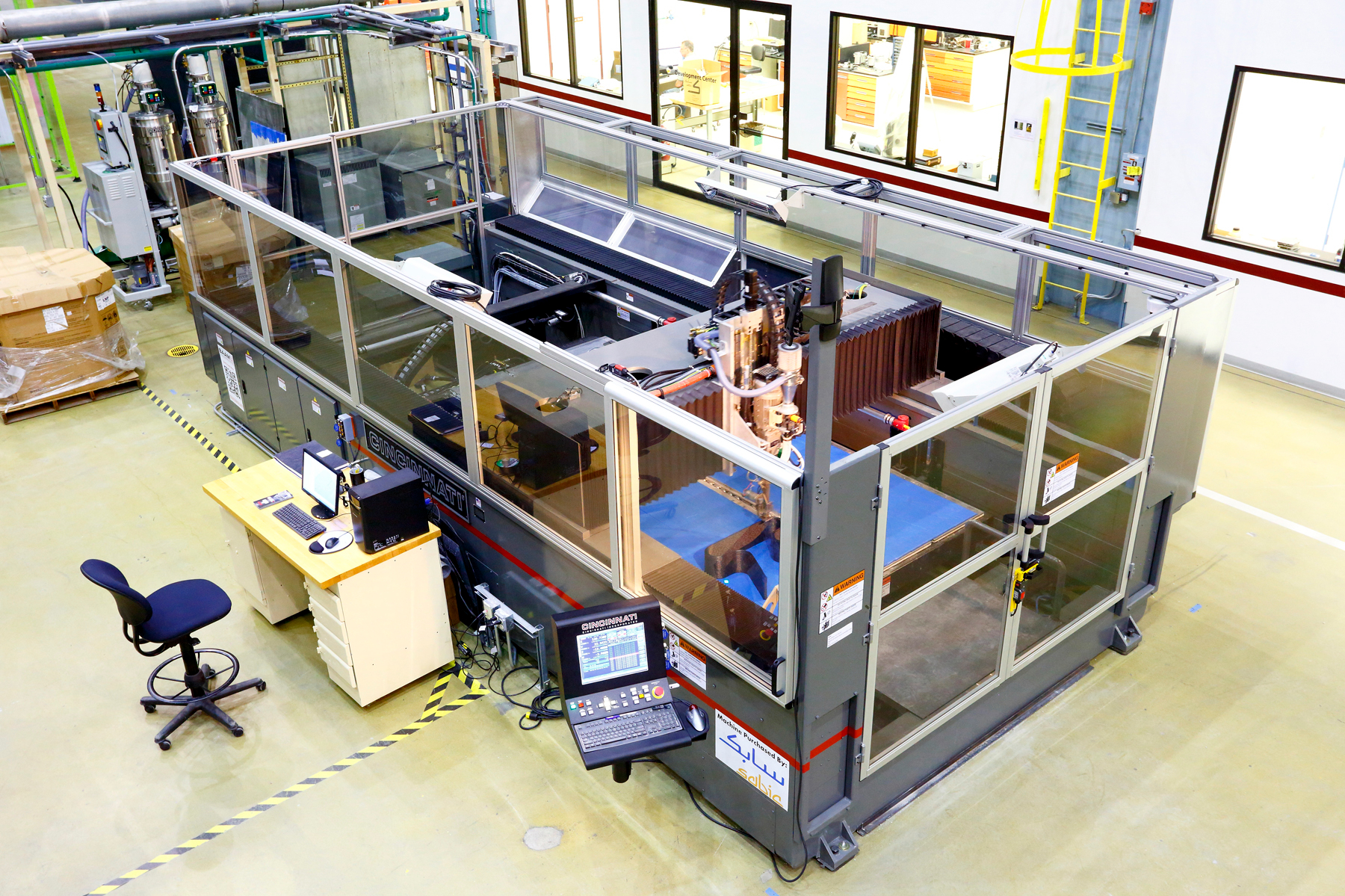
With the desire to improve the circularity of large-format additive manufacturing (LFAM), SABIC (Riyadh, Saudi Arabia), a multinational chemical manufacturing company, and Local Motors (Phoenix, Ariz., U.S.), a next-generation vehicle manufacturer, completed a joint study on the feasibility of recycling scrap thermoplastic parts and shavings from the 3D printing process. The study explored more sustainable alternatives to landfilling large, printed parts in anticipation of wider adoption of LFAM. It included analyzing the printability and mechanical properties of SABIC’s LNP THERMOCOMP AM-reinforced compound, used by Local Motors, after being printed, reclaimed, ground and reprocessed into pellet form.
The study determined that material from post-production parts and scrap can potentially be reused in LFAM or other processes, such as injection molding or extrusion, at amounts up to 100%. According to SABIC and Local Motors, these insights can help identify a feasible path to circularity and an extended lifecycle for materials used by the LFAM industry.
“As adoption of LFAM accelerates, it is essential to find sustainable alternatives to landfilling large, printed parts,” says Walter Thompson, senior applications development engineer, SABIC. “SABIC and Local Motors have investigated the practicality of using mechanically ground scrap material and end-of-life [EOL] parts generated from LFAM. Our study showed great potential for reusing these materials and marks a first step in supporting reuse within the value chain.”
“Building next-generation vehicles means embracing next-generation manufacturing processes,” adds Johnny Scotello, director of Technical Product at Local Motors. “We’re proud to work with SABIC in making LFAM more sustainable. Bringing value to scrap or EOL parts is a difficult challenge, but the results of this study point to a bright future for sustainable, circular products.”
Challenges of reusing large, printed parts
Currently, no established value chain exists for reclaiming post-production LFAM parts and scrap, SABIC and Local Motors says. This complex sequence of steps includes managing the logistics of locating, collecting and transporting large parts to a facility capable of cleaning, cutting, regrinding and repurposing the material.
Another challenge of reusing LFAM materials is potential degradation from multiple heat cycles (grinding, re-pelletizing, re-compounding, etc.). Each step adds to the cumulative heat history, which tends to break down the polymer chains and reduce fiber length and can affect performance. These factors should be considered when identifying opportunities for material reuse.
Study methods and results
The SABIC-Local Motors study included evaluations for printability, throughput and mechanical properties. In order to assess printability, six material samples of LNP THERMOCOMP AM compound were prepared, containing 0, 15, 25, 50, 75 and 100% reprocessed content, respectively. These samples were monitored for changes in throughput and melt flow rate on SABIC’s Big Area Additive Manufacturing (BAAM) machine from Cincinnati Inc. (CI, Harrison, Ohio, U.S.) located in the company’s Polymer Processing Development Center in Pittsfield, Mass. Each sample was used to print a single-wall hexagon, which is SABIC’s typical test part geometry for processing and material characterization. All the samples reportedly printed well, with a smooth, shiny surface and straight, even layers that demonstrated no issues with material flow.
For the mechanical properties evaluation, specimens were cut from each hexagonal printed part. These were tested for tensile properties using Test Method D638 as a guideline, and for flexural modulus using a three-point bend test following a modified ASTM D-790 test method. Results showed excellent tensile properties in the part samples containing smaller percentages of regrind and only incremental declines in the samples that included larger percentages of regrind. The 100% regrind sample experienced just a 20% reduction in tensile properties in the x-direction and a 15% reduction in the z-direction. For flexural properties, the same gradual trend occurred, with flexural modulus declining by only 14% in the x-direction and 12% in the z-direction for the sample containing 100% regrind.
As expected, tensile and flexural testing showed decreasing mechanical strength as the percentage of regrind increased. This finding is typical of regrind used in other processes such as injection molding and extrusion.
Looking ahead
This study highlights the reusability of post-industrial LFAM shavings and parts. SABIC and Local Motors say both post-industrial and post-consumer scrap materials offer potential for reuse; however, existing gaps in the recycling value chain need to be filled before this process can be viable. A large collective effort by the LFAM community, including resin manufacturers, converters, 3D printers and recyclers, is needed to devise an economical method of collecting scrap and converting it to a reusable form.
Conducting this study with Local Motors and presenting these results are SABIC’s first steps in finding a circular solution for the LFAM industry. The company will soon complete a report containing detailed data from the study. SABIC is committed to leveraging Chemistry That Matters to support collaborations across the full LFAM value chain to help advance social responsibility, a lower carbon footprint and circularity.
Resin
- How to Weld and Glue 3D‑Printed Plastic Parts for Strong, Precise Assemblies
- Kraiburg Thermolast K Smooth‑Touch TPEs: Premium Touch Quality for Packaging & Consumer Parts
- Electroimpact, Toray, and Janicki Pioneer High-Speed Manufacturing of Large Thermoplastic Composite Parts
- Democratizing Composite Production with Multilayer Thermoplastic Tapes, AFP & Resin Infusion
- CompositesWorld Partners with ITHEC for Expanded 3-Day Virtual Thermoplastic Composites Conference
- Driving Thermoplastic Composite Innovation with RTM for Clean Sky 2 in Spain
- Tool‑Free Resin Infusion for Class A Composite Parts
- Victrex Invests in Bond High Performance 3D Technology to Accelerate 3D-Printed PAEK Parts
- AZL & IKV Pioneer Thermoplastic Tape Solutions for Injection Molding
- SABIC Unveils STADECK: Advanced Lightweight Composite Panel for Building & Construction