



10 American Inventions That Transformed Modern Manufacturing
As Independence Day approaches, I’m highlighting ten American inventions that have profoundly shaped manufacturing. Happy 238th Birthday, USA! 
1) Interchangeable Parts
Eliminating the need to build each machine from scratch, interchangeable parts became a cornerstone of mass production. Eli Whitney pioneered the concept while fulfilling a 1798 contract to produce 10,000 muskets for the U.S. government. Demonstrating a musket assembled from seemingly random parts before the Founding Fathers, Whitney proved that standardized components could be manufactured rapidly. Though some debate the true interchangeability of his early parts, Whitney’s advocacy laid the foundation for modern manufacturing standards used in everything from Craftech’s plastic fasteners to global automotive assembly.
2) Light Bulb
In 1879, Thomas Edison showcased the first commercially viable electric light bulb. Building on earlier patents by British scientists, Edison’s team perfected filament durability and high‑voltage delivery, making household lighting—and by extension, factory lighting—accessible. Electric illumination enabled nighttime shifts and accelerated the adoption of electric machinery across industries.
3) Telephone
Alexander Graham Bell’s 1876 patent for the telephone revolutionized business communication. Replacing slow postal orders with instant voice contact, the telephone accelerated decision‑making and coordination across supply chains.
4) Ford Model T and the Assembly Line
Henry Ford’s 1908 Model T brought affordable automobiles to the masses. By introducing the moving‑conveyor assembly line, Ford reduced production time from months to hours and lowered costs, transforming manufacturing methodology. The combination of interchangeable parts and continuous flow production became the blueprint for modern factories.
5) Plastic
The birth of commercial plastics is credited to Charles Goodyear’s 1839 discovery of vulcanization, which transformed rubber into a durable material. Although early plastics like Parkesine and Bakelite were patented in Europe, Goodyear’s process enabled mass‑production of flexible, heat‑resistant polymers that now underpin countless products—from fasteners to packaging.
6) Industrial Robots
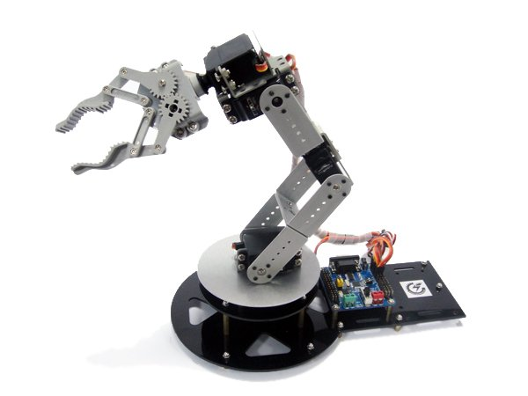
George Devol’s 1954 invention of the first manufacturing robot, "Unimation," marked a leap toward automation. By 1960, General Motors became the first client, and a decade later Devol secured a Stanford patent for a computer‑controlled robot, the PUMA. These machines, resembling a human arm, perform high‑speed assembly tasks, reducing labor costs and improving precision.
7) Sketchpad and CAD
In 1963, MIT doctoral student Ivan Sutherland created Sketchpad, the first interactive graphical program, laying the groundwork for computer‑aided design (CAD). Today, CAD tools like SolidWorks enable engineers to model products in 2D and 3D, streamlining design, simulation, and manufacturing processes.
8) ARPANET and the World Wide Web
ARPANET, launched in 1969 by the U.S. Advanced Research Projects Agency, linked research computers nationwide. The network evolved into the Internet, which now provides instant access to global information, enabling manufacturers to source materials, collaborate across borders, and reach new customers with unprecedented speed.
9) Personal Computer
Apple’s 1976 release of the Apple I, the first consumer‑ready personal computer, democratized computing. Though modest by today’s standards, the Apple I paved the way for ubiquitous office computing, accelerating productivity and data management across industries.
10) 3D Printing
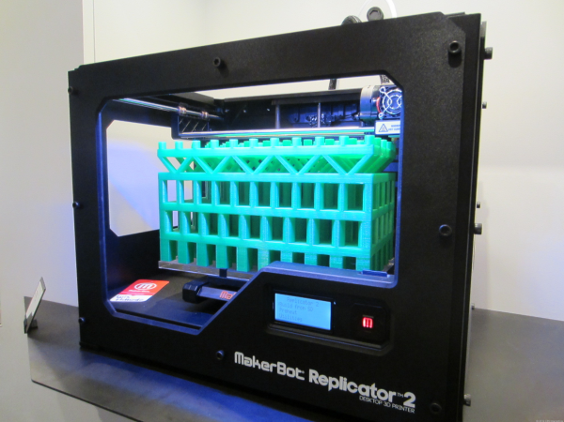
Chuck Hull’s 1984 invention of stereolithography and the founding of 3D Systems ushered in additive manufacturing. Relying on CAD models, 3D printers create complex parts layer by layer, producing prototypes, customized implants, and even edible goods. While not yet a mass‑production mainstay, 3D printing remains a powerful tool for rapid prototyping and small‑batch production.
These ten inventions only scratch the surface of American ingenuity. Which one has had the biggest impact on your industry? Share your thoughts in the comments below.
Looking for more information on plastic manufacturing? Check out our free Glossary of Manufacturing Terms.

Resin
- Designing Sheet‑Metal Assemblies That Withstand Manufacturing Tolerances
- Debunking 4 Common Myths About American Manufacturing
- American Innovations That Transformed Manufacturing
- Hexcel Secures Long-Term Contract with Boeing to Produce Advanced Composite Structures for 777X
- Alltec Expands Production Capacity in North America to Serve Global Aerospace Demand
- Three Emerging Trends Shaping the Future of Rapid Manufacturing
- Why Metrology Is Critical for Manufacturing Excellence
- Key Factors Influencing Plastic Part Manufacturing Decisions
- The American Manufacturing System: History, Techniques, and Impact
- GD&T Tolerances: Ensuring Precision and Fit in Parts Manufacturing