



Establishing Robust Quality Control for 3D Printing Success
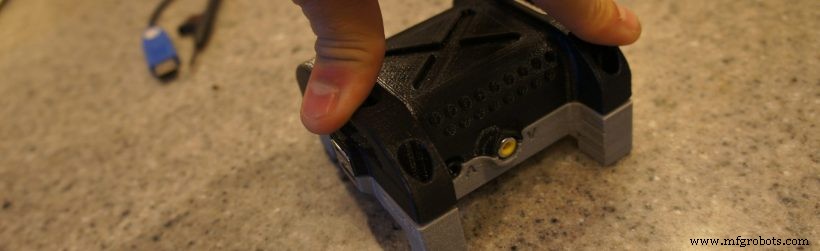
For both prototyping and production, clients expect high‑quality parts delivered on schedule. That expectation demands a production workflow that is not only efficient but also tightly integrated with a quality‑assurance system that verifies every component before it leaves the shop floor.
The first step: a fool‑proof quality‑assurance process
Preventing errors is far cheaper than correcting them. Once a project specification and its associated 3D files arrive, a clear protocol should verify the data, repair any defects, and, when necessary, consult the customer. This can be manual, semi‑automated, or fully automated, but it must be embedded in your standard operating procedures. By catching issues early, you reduce costly re‑runs and streamline the later quality‑control stage.
Inspect each print before finishing
After a part is removed from the build platform, conduct a thorough check prior to any post‑processing. At a minimum, use the following checklist:
- Dimensional accuracy. Confirm that the printed X, Y, and Z dimensions match the original design. File repairs should not alter dimensions, but verification is essential.
- Surface quality. Ensure the part is free of voids, warping, and that fine details are reproduced. Any polygon simplification should leave the surface unaffected.
- Mechanical integrity. For functional prototypes or parts, perform tests that confirm required strength and stiffness. Additional tests may follow post‑finishing.
- Chemical compliance. Parts destined for medical, food‑contact, or chemical‑exposed applications must meet material‑specific safety standards as outlined in the datasheet.
Validate the finish
Post‑processing introduces new variables. Verify that:
- All residual powder (in powder‑based systems) has been removed.
- Support structures were removed cleanly, without compromising surface integrity.
- The applied finish is uniform across the part.
- Colour application is even, especially when multiple hues are used.
- The part is free of dust, oils, and fingerprints.
- Dimensions remain within tolerance after finish (thicker coatings can alter size).
- Mechanical tests are repeated for coated parts, such as metal plating, to confirm expected properties.
Scaling for high‑volume orders
Quality control becomes more complex as order volume rises. Fortunately, modern solutions can automate many checks, reducing manual labour. EOS offers a suite of software tools that combine cameras and sensors to monitor build beds in real time. SigmaLabs’ PrintRite3D® INSPECT™ similarly tracks metallurgical quality. While these systems require investment, the time and cost savings for large‑scale production—exemplified by GE’s adoption—make them worthwhile. Any new software must integrate seamlessly with your existing workflow platforms.
Build customer confidence
Achieving ISO 9001 certification—an internationally recognized quality‑management standard—can signal your commitment to excellence. Though no dedicated 3D‑printing standard exists yet, ISO 9001 demonstrates that you uphold rigorous quality protocols. Robust quality control not only delivers consistent results but also encourages clients to adopt 3D printing for new applications, advancing the technology’s maturity across industries.
3D printing
- Elevating Quality Control: 3D‑Printed Tooling Enhances Manufacturing Precision
- Ensuring Quality of Thermoplastic Prepreg Tape for Superior Part Process Control
- Designing an Effective Air Quality Control Strategy: Key Considerations for Industry
- Unlocking Enterprise Success: How an Automation Operating Model Drives Growth – Part 1
- Mastering Quality Control: Strategies for Consistent Excellence
- Enhancing Quality Control in CNC Machining: Strategies for Precision and Customer Satisfaction
- Elevating Repair Shop Standards: The Power of a Dedicated Quality Control Department
- Understanding Quality Control: Ensuring Consistent Excellence
- Streamline Packaging Quality Assurance with Advanced Automated Control Systems
- Quality Control: Ensuring Steel Integrity for Reliable Fabrication