



Closing the AM Skills Gap: How Universities Are Driving Additive Manufacturing Innovation
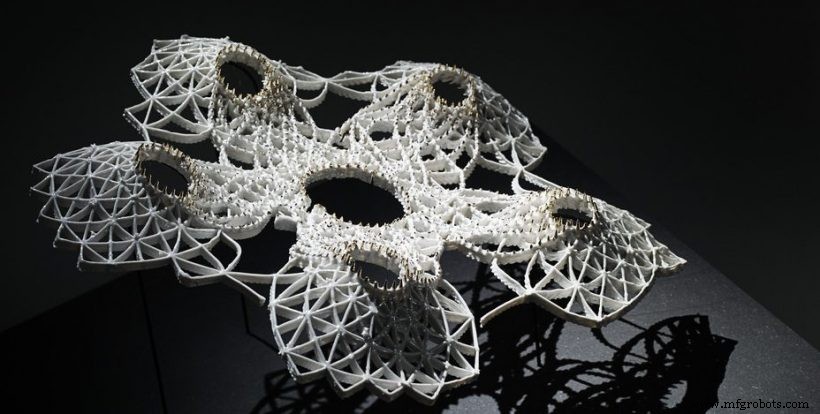
Universities worldwide are increasingly investing in 3‑D printing laboratories, turning campuses into hubs of innovation where students and faculty push the boundaries of additive manufacturing (AM).
As part of our ongoing series on AM’s impact across sectors, we turn the spotlight on education—examining how academia is reshaping AM and preparing the next wave of experts.
Education: Bridging the AM Skills Gap
AM still faces a chronic skills shortage that hampers broader adoption. While more universities now host 3‑D printing labs and offer AM‑focused degrees, multidisciplinary curricula that cover design, materials science, and process engineering remain scarce.
Universities and research institutes can close this gap by launching programmes that teach the unique demands of AM. “Design for Additive Manufacturing” (DfAM) is one such discipline; it requires rethinking product geometry to exploit the freedoms of layer‑by‑layer fabrication while respecting material and process constraints.
Loughborough University exemplifies this approach with a brand‑new master’s track that immerses students in DfAM concepts and advanced tools like topology optimisation. As more institutions follow suit, learners will graduate with a robust, industry‑ready skill set.
A Fertile Ground for Research
Higher‑education research is the engine behind many of today’s breakthrough AM technologies, propelling manufacturers toward new applications.
Faster AM Systems
Speed remains a critical bottleneck. Last year, MIT’s research team unveiled a desktop FDM printer that operates ten times faster than conventional models, opening doors to rapid prototyping and small‑batch production. Meanwhile, the University of Sheffield introduced “high‑speed metal sintering,” a novel laser‑melting technique that promises to slash build times for metal parts.
Design for Additive Manufacturing
Loughborough’s research portfolio spans automotive part design, customisation, and performance optimisation. The university’s Additive Manufacturing Research Group boasts state‑of‑the‑art facilities that support cross‑disciplinary projects—from aerospace to consumer goods.
Materials
Material science is a frontier area. Florida State University’s High‑Performance Materials Institute collaborates with the College of Engineering to develop advanced AM feedstocks for space‑grade applications. Parallel work on hybrid and multi‑material printing is uncovering new possibilities for complex, multifunctional parts.
Embracing 3‑D Printing in Higher Education
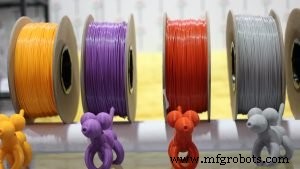
Hands‑on AM tools enrich curricula across disciplines, turning abstract concepts into tangible experiences.
Medical
Medical schools are using 3‑D printed anatomical models to enhance learning. Macquarie University and Western Sydney University have pioneered printed human bones that are both realistic and cost‑effective. At the University of Minnesota Medical School, students practice surgical procedures on high‑fidelity 3‑D models, while also producing affordable substitutes for specialised instruments.

Robotics
At the University of California, researchers released a low‑cost, 3‑D printable robotics kit that empowers students to design, build, and iterate custom robotic systems, fostering creativity and problem‑solving.
Architecture
The Oslo School of Architecture and Design (AHO) integrates AM into its design studios, encouraging students to experiment with complex geometries that would be impossible to fabricate traditionally. CARTA Innovation Lab at Florida International University gives architecture students access to 3‑D printers for re‑imagining buildings and exploring new structural concepts.
Automating the Process
As demand for on‑campus printing grows, manual request handling can become a bottleneck. Workflow‑management software tailored to academic needs automates request submission, cost estimation, real‑time tracking, and file preparation. AHO’s recent deployment of RP Platform’s automation suite has streamlined pre‑production and post‑production workflows, freeing faculty and students to focus on design.
Education – A Vital Area for Additive Manufacturing
Partnerships between universities and original equipment manufacturers (OEMs) are essential for closing the skills gap and fostering innovation. Together, they can deliver curriculum that aligns with industry needs and cultivate a workforce ready to tackle tomorrow’s challenges.
Ongoing research into AM systems, materials, and processes will continue to bridge theory and practice, ensuring that additive manufacturing thrives in both academia and industry.
This is the third article in our Industry and AM Series—discover how AM is impacting the medical industry in our previous piece.
3D printing
- How 3D Printing Is Revolutionizing Defence – Benefits, Challenges, and Future Applications
- How the Industrial Internet of Things is Revolutionizing Manufacturing
- Bridging the UK Engineering Skills Gap with Automated Engineering Solutions
- Digital Twins Are Closing the Manufacturing Talent Gap
- Additive Manufacturing Explained: From Design to Finished Part
- Fusion 360's Generative Design: Bridging the Manufacturing Skills Gap
- Revolutionizing Education: How AI Shapes Modern Learning
- Bridging the Skills Gap in Automotive Manufacturing: A Path to Innovation
- Bridging the Skills Gap: Engaging Youth in Manufacturing
- Maximizing CAD Efficiency in Additive Manufacturing