



Reverse Engineering Meets Additive Manufacturing: Accelerating Innovation Across Industries
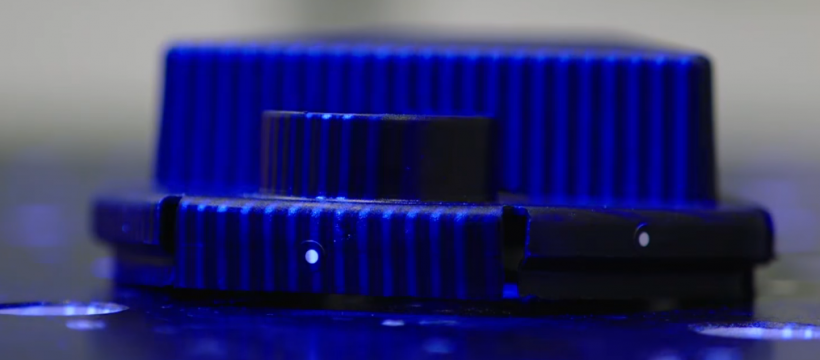
Reverse engineering—extracting digital data from a physical object—paired with additive manufacturing creates a powerful workflow that shortens development cycles, cuts costs, and expands design freedom. From legacy aerospace components to bespoke medical implants, this synergy enables companies to recreate or enhance parts when no CAD data exists.
What Is Reverse Engineering?
While traditional design starts with a concept and proceeds to detailed drawings, reverse engineering works backward: it captures the geometry and function of an existing item and reconstructs the original design in digital form. Any object—from a mechanical bolt to an ancient artifact—can be reverse engineered, provided its shape can be measured accurately.
How Does Reverse Engineering Work?
The process begins with precise measurement of the part’s dimensions. In industrial settings, this is typically performed with a 3‑D scanner, which rapidly collects millions of data points to generate a “point cloud.” The cloud is then processed into a CAD model, which can be converted to an STL file for additive manufacturing. This workflow replaces tedious manual measurement with automated, repeatable, and highly accurate data acquisition.
Why Use Reverse Engineering?
Reverse engineering is invaluable when CAD files are missing or outdated. Automotive suppliers, for instance, can reproduce rare spare parts by scanning an original component and 3‑D printing a replacement. It also facilitates iterative improvement: a scanned part can be modified in CAD and re‑printed, dramatically reducing time to market.
3‑D Scanning: The Natural Companion to 3‑D Printing
Manual measurement is labor‑intensive and error‑prone. Modern 3‑D scanners—whether handheld or desktop—deliver high‑resolution data in minutes, forming the foundation for accurate additive manufacturing. Combining scanning with printing shortens development time and boosts product quality.
Three main scanning methods dominate the field today:
1. Photogrammetry
Photogrammetry captures a series of photographs from multiple angles and stitches them into a 3‑D model. While effective in controlled studio environments, it often falls short of the precision offered by light‑based scanners and is less portable.
2. Light‑Based Scanning
Light‑based scanners use either structured light or laser beams to project patterns onto an object’s surface. Structured‑light scanners capture fine detail and are ideal for small parts, while laser scanners excel at large or complex geometries, offering the highest accuracy. Major manufacturers, such as BMW Group, use blue‑light scanners to reverse‑engineer spare parts that are then produced additively.
3. CT Scanning
Computed tomography (CT) employs X‑ray projections to build a volumetric model that reveals both external and internal structures. This capability is crucial for assessing structural integrity, residual stresses, and internal geometry—especially in high‑performance or medical applications. For instance, surgeons have used CT‑derived 3‑D printed models of organs to plan complex procedures.
Use Cases: Reverse Engineering + Additive Manufacturing
Industry leaders are leveraging this combination to solve specific challenges:
- Aerospace: Roc‑Aire scans obsolete aircraft parts, 3‑D prints prototypes for fit‑testing, and accelerates redesign cycles.
- Medical: In 2016, the Royal Hospital for Sick Children used a structured‑light scanner to capture an unaffected ear, printed a polymer template, and guided a successful reconstruction surgery.
- Automotive: Engineers used reverse engineering with SLS printing to create a space‑optimised air inlet for a racing motorbike, cutting development time and improving performance.
3D printing
- Liquid Additive Manufacturing: Crafting 3D Objects with Liquid Materials
- 5 Proven Strategies to Drive Success with Additive Manufacturing
- Additive Manufacturing 101: A Beginner’s Guide to 3D Printing
- Revolutionizing Heat Exchanger Design through Additive Manufacturing
- Additive Manufacturing: Unlocking Unlimited Product Customization
- Beyond Prototyping: Additive Manufacturing for Production-Grade Parts
- How Additive Manufacturing Consolidates Parts to Cut Costs & Boost Performance
- Additive Manufacturing: Driving Innovation and Cost Efficiency in Aerospace
- Additive vs. Subtractive Manufacturing: Unlocking the Future of Production
- Exploring Metal Additive Manufacturing: A Beginner’s Guide to Direct Metal Laser Sintering (DMLS)