



Why Additive Manufacturing Execution Systems Are Essential for 3D Printing Success – Insights from Timm Kragl
AMFG's Production Scheduling System [Image credit: AMFG] As additive manufacturing advances toward full industrialization, Additive Manufacturing Execution Systems (MES) are becoming indispensable for manufacturers who want to manage their 3D‑printing operations efficiently and reliably.
Additive MES software addresses the pain points of fragmented, manual workflows by enabling real‑time data capture, seamless integration between software and hardware, and complete end‑to‑end visibility across the production chain.

Timm Kragl, Senior Consultant at Phanos GmbH
We spoke with Timm Kragl, Senior Consultant at Phanos GmbH, a Munich‑based independent additive‑manufacturing consultancy, about the evolving landscape of Additive MES and practical tips for choosing the right solution. In this interview, Timm explains when to adopt MES, how to evaluate vendors, and the key criteria that differentiate successful implementations.
How would you describe the current landscape of Additive MES solutions?
The market is expanding rapidly, and the influx of new players can be overwhelming. Broadly, the ecosystem falls into three categories:
- Traditional MES vendors – They offer conventional manufacturing platforms that are often ill‑suited to the unique demands of 3D printing.
- Broad‑scope software houses – These firms recognize the potential of AM and are extending their product portfolios to include additive‑specific features.
- Specialist Additive MES providers – A smaller group focused exclusively on AM, delivering tailored workflows and advanced traceability functions.
With such diversity, a clear understanding of your organization’s requirements is critical before you begin the selection process.
At what point should a company consider adopting an Additive MES solution?
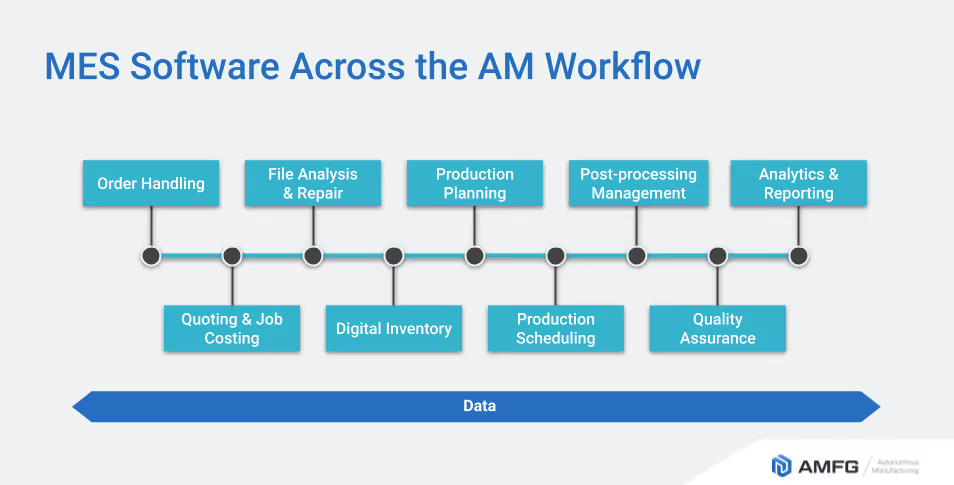
[Image credit: AMFG]
Several signals indicate that MES adoption is timely:
- Scale of operations – Multi‑site plants or businesses with stringent certification and quality‑assurance needs benefit from unified oversight.
- Traceability requirements – If your business must provide instant status updates, company‑wide dashboards, or detailed audit trails, an MES is essential.
- Automation goals – To reduce manual intervention, improve turnaround times, and lower costs, a customer‑facing frontend and automated workflows are invaluable.
In short, when transparency, efficiency, and compliance become priorities, MES becomes a strategic necessity.
Why are more companies exploring Additive MES solutions?
In a market where customisation is king, manufacturers must streamline customer interaction and adopt a customer‑centric product strategy. MES delivers the data visibility needed to manage orders, production stages, scheduling, and quality metrics—all in one place. This holistic view drives operational efficiency, reduces bottlenecks, and empowers better decision‑making.
How would you advise a company that is just beginning its search for an Additive MES solution, but doesn’t have a solid process in place?
My recommendation is to start from both process and customer perspectives. Define the procedures you need and determine what a MES must support.
Be meticulous in mapping current gaps and envision how software can close them. Consider new workflows, such as handling a failed print or post‑processing bottlenecks. Group scenarios under themes like quality assurance and process stability—this structure clarifies what you’re truly looking for and simplifies vendor comparison.
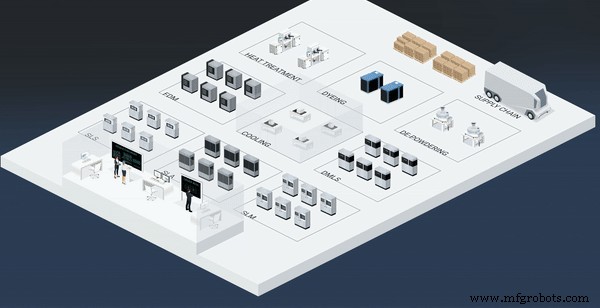
MES software connects entire 3D printing facilities [Credit: AMFG]
From your experience, what do companies need to successfully transition to production with AM?
While specific processes differ, the foundational requirement is robust traceability. Quick root‑cause analysis depends on complete, accurate data from raw material to finished part. This data fuels continuous improvement, quality assurance, and customer confidence.
Quality assurance in AM is no different from conventional manufacturing—only the scope expands to include post‑processing, data acquisition, and design validation. Ultimately, success hinges on delivering a defect‑free product, a superior customer experience, and a streamlined, efficient production flow.

3D printing
- Quick Guide to Untangling Knotted 3D Printer Filament Spools
- How to Prevent PLA Warping: Proven Tips & FAQ
- Expert Insight: Dominic Parsonson on the Future of Additive Manufacturing at Fuji Xerox Australia
- Silent Fan Upgrade for Ender 3 Pro & V2 – Step‑by‑Step Guide with Photos
- AS 9100-Certified, Fast Sourcing of Custom Aerospace & Aviation Parts
- HP MJF 3D Printing Design Guidelines – Optimize Your Parts for Precision
- Comparing 3D Printing and CNC Machining: Which Is Best for Your Projects
- Altair Expert Ravi Kunju Discusses Advanced Simulation Software for 3D Printing
- Step‑by‑Step Guide: Convert STL to G‑Code for Reliable 3D Printing
- Four Key Automotive Trends Accelerating Innovation