



Customer Spotlight: Custom CVT Impellers Power Olin Baja MiniBaja Racing Team
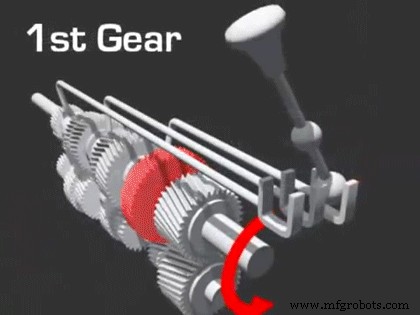
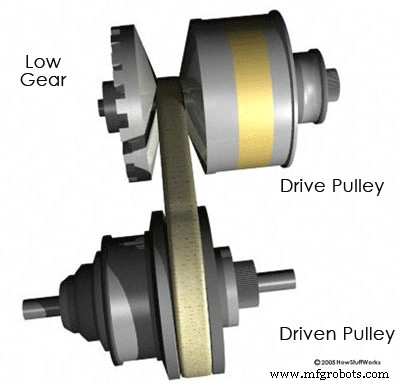
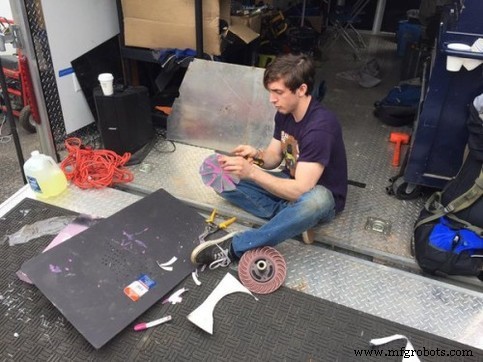
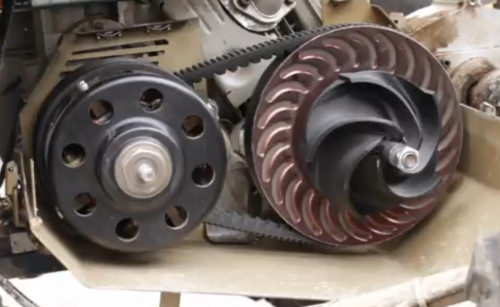
In recent posts, we’ve celebrated Olin College’s ventures into aviation and marine projects. This week, we turn the spotlight to Olin’s MiniBaja team—a group of students who design, build, and race off‑road vehicles in the global SAE MiniBaja competition. MiniBaja challenges teams to construct cars from scratch that excel in speed, maneuverability, lightness, strength, and—most critically—durability. Courses feature log piles, steep drops, and even railroad tracks, demanding robust engineering and meticulous fabrication. While the majority of the vehicle is student‑crafted, teams often source specialized components off‑the‑shelf, including the drivetrain. Olin Baja opts for a Continuously Variable Transmission (CVT) to bridge the engine output to the gearbox. Unlike a conventional gearbox that relies on gear ratios and clutches, a CVT uses V‑belts and sprung pulleys to continuously adjust the ratio. This design is far lighter and more compact—ideal for MiniBaja’s stringent weight limits. The following GIFs illustrate the stark difference between a standard gearbox and a CVT. CVTs shine in small vehicles thanks to their affordability and size, but they come with trade‑offs. Their typical efficiency hovers around 88%, noticeably lower than the near‑perfect figures of geared transmissions. More importantly, the friction between belt and pulleys generates heat that can degrade performance if not adequately dissipated. For Olin Baja, excessive heat melted internal plastic bushings, rendering the car inoperable. To counter this, the team ingeniously fabricated a sheet‑metal fan to circulate air around the CVT. Although the fan was a quick fix, it highlighted the need for a more reliable solution. The following year, Olin Baja partnered with Markforged to design and 3D‑print a dedicated impeller that draws air through the CVT enclosure. The impeller mounts directly onto the driven pulley shaft, providing efficient airflow and thermal relief. Our first prototype used nylon and carbon fiber, which performed adequately but struggled in high temperatures. The subsequent iteration, printed in Onyx, delivered superior heat diffusion while withstanding the thermal stresses of racing. Markforged and Olin Baja have documented their collaboration in a video—link below—that showcases the impeller’s impact on the car’s performance over a competitive season. We look forward to continuing our partnership with Olin Baja, equipping their MiniBaja cars with high‑strength, 3D‑printed components that push the limits of racing technology. If your organization is interested in a similar collaboration, contact us at social@markforged.com.
3D printing
- Designing Custom iPad Display Stands with the Desktop Series
- Custom Soft Jaws Designed by AW Miller: A Rapid Prototyping Success Story
- Case Study: Autometrix Accelerates Prototype Development with Markforged Mark One
- Customer Spotlight: 3D‑Printed Sailboat Components Propel Olin’s Autonomous Sailing Team
- Wärtsilä's First CE‑Certified 3D‑Printed Lifting Tool: A Game‑Changing Innovation
- Transform Customer Experience with Intelligent Automation
- Custom Metal Fabrication Spotlight: Precision Beer Tanks for Premium Breweries
- When to Use Custom Macros in CAM Systems for Optimal Safety and Quality
- Spotlight on Field Engineering: Q&A with Andrew Wright, Metallurgical Expert
- Lightning Bay Pneu-Draulics: Southeast’s Leading Marine & Industrial Maintenance Company