



1960 60‑inch 13‑Vane Pump Transmission: The Genesis of 60L Automatics
In 1960, the first 60-inch transmission was put into service on the Dredge Master, a dredging machine. The 13-vane pump was one of the most innovative features of this transmission.
What are 60L transmissions?
60L transmissions are the most popular transmissions in use today. They are also known as torque converters or universal joints. They are a type of automatic transmission that uses a planetary gearset to send power to the axle.
The 60L transmissions were first introduced in 1978 and they have become the most common type of transmission in use today. They are often found in sedans and SUVs because they offer good fuel economy and they provide good performance while driving.
60L transmissions are also popular because they are easy to operate and they offer good reliability. They are able to handle high levels of torque and they are typically very quiet when in use.
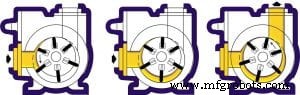
13 vane pumps
Pumps: Types of Pumping Systems Used on 60le Engines Automotive Transmission Basics
What are vane pumps?
Vane pumps are a type of pumping system used on automotive transmissions. They work by using a series of impellers to move fluid through the transmission.
What are the different types of vane pumps?
There are three main types of vane pumps: planetary, rotary, and diaphragm. Each type of vane pump has its own advantages and disadvantages.
Which type of vane pump is best for my application?
The best type of vane pump for your application depends on your specific needs. You’ll need to do some research to find out which type of vane pump is best for your transmission.
What are the Pros of the 60 le Transmission?
The pros of the 60 le transmission include its longer life, its ability to handle heavier loads, and its lower operating costs. These transmissions are also becoming more and more popular due to their many benefits.
60 le transmissions are built to last longer than other types of transmissions. They are able to handle heavier loads than other transmissions, meaning that they can take more abuse without breaking.
The operating costs of a 60 le transmission are also lower than other types of transmissions. This is because they require less maintenance than other types of transmissions.
Overall, the pros of a 60 le transmission outweigh the cons. They are durable, capable of handling more weight, and cheaper to operate than other types of transmissions.
What are the Cons of the 60 le Transmission?
There are many pros to the 60-liter transmission, but there are also some cons to consider. One of the biggest cons is that it can be more difficult to shift in tight areas. Additionally, this type of transmission can also be harder on the engine because it takes more power to reach the desired speed.
On the other hand, the 60-liter transmission is great for off-road use because it can handle a lot of torque and stress. It is also perfect for vehicles that have a high center of gravity, such as trucks and SUVs.
Overall, the pros and cons of the 60-liter transmission are both important to consider when making a decision about which transmission option is best for your vehicle.
How do you calculate KMH on a 60le transmission?
If you are looking to calculate the KMH on a 60le transmission, you will need to use the formula KMH = (1-Fv)×100. Fv is the forward speed of the transmission.
For a 60le transmission, Fv would be 6,000 RPM. Therefore, the KMH calculation would be (1-6,000)×100 which would result in a KMH of 5,000.
Keep in mind that this calculation is only for a 60le transmission. If you are looking to calculate the KMH on a different type of transmission, you will need to use a different formula.
How do you calculate KPH on a 60le transmission?
When working with 60le transmissions, it is important to calculate KPH (kilometers per hour) in order to properly adjust the transmission. To do this, you first need to know the gear ratio of your transmission.
Once you have the gear ratio, you can use the following equation to calculate KPH:
KPH = (output speed in km/h) / (input speed in km/h)
For example, if you have a 60le transmission that is currently set at a 2.0 gear ratio and you want to change it to a 1.5 gear ratio, you would use the following equation:
KPH = (1.5*100)/(2.0*100) = 50%
What are the major differences between the 60l and 65 l transmissions?
There are a few major differences between the 60l and 65 l transmissions. The biggest difference is in the engine size. The 60 l transmission has a small, 2.0-liter engine while the 65 l transmission has a larger 3.0-liter engine.
The other main difference is in the gear ratios. The 60 l transmission has shorter gear ratios than the 65 l transmission, which makes it better for acceleration and hills.
Overall, the 60 l transmission is better for people who primarily use their car for commuting and errands, while the 65 l transmission is better for people who use their car for more intensive activities, such as driving to work or running long distances.
If you are not sure which transmission is best for you, it is best to consult with a mechanic or a car salesperson to see what they think.
what year where 60le transmissions with 13 vane pumps
In 2006, transmissions with 13 vane pumps were becoming more popular. This was due to the fact that they offered better fuel economy and performance.
Today, 60le transmissions are still popular. They offer the same benefits as the 13 vane transmissions, but they also have some additional features.
Some of the most important features of 60le transmissions include:
-They offer greater fuel economy than 35l transmissions
-They provide better performance in icy conditions
-They are easier to operatethan 35l transmissions
Overall, the 60le transmission is a great option for drivers who want good performance and fuel economy.
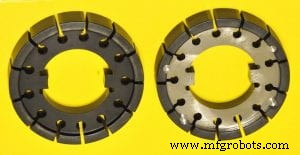
13 vane pumps
Conclusion
What year were 60- and 13-vane pumps first used in a locomotive? In this article, we look at the history of these two types of locomotive pumps and see how they have changed over time. We also provide some tips on how to identify a 60- or 13-vane pump when you see one, so that you can correctly determine which type of pump your locomotive requires.
To buy a vane pump, please clickhttps://topkitparts.com/ to learn more
Industrial equipment
- Transmission Fluid Explained: Purpose, Importance, and Maintenance Guide
- Understanding Vehicle Transmissions: Types, Functions, and How They Operate
- Maximizing Value: Smart Strategies for Selling, Trading, or Leveraging Used Industrial Equipment
- Hydraulic Vane Pumps: Essential Insights for Industry Professionals
- 1960 60‑inch 13‑Vane Pump Transmission: The Genesis of 60L Automatics
- Exploring the Two Primary Types of Pumps
- BHP: Global Mining and Energy Leader – Products & Services Overview
- Hydraulic Pump Classifications: Positive vs Negative Displacement Explained
- Discover the Reliability of Vickers VQA1 Vane Pumps – Trusted Solutions for Fluid Transfer
- Vickers VH01 Vane Pumps: High‑Viscosity, Low‑Speed Fluid Handling