



Honoring Trailblazing Women in Science and Engineering
As Women’s History Month draws to a close, we celebrate the pioneering women whose groundbreaking work has shaped science and engineering. Their achievements set the stage for future generations. Born in Massachusetts, Richards was raised in a family that prized education. After earning a bachelor’s degree from Vassar College in 1868, she pursued chemistry at MIT, becoming the first woman accepted into any U.S. science and technology program—and the first female MIT student—in 1870. Richards graduated from MIT in 1873 with a second bachelor’s degree and later earned a master’s in chemistry from Vassar. Together with her husband, she founded MIT’s Women’s Laboratory, where she taught chemistry, biology, and mineralogy to aspiring female scientists. By the 1880s, her efforts helped transition women from “special students” to full‑time MIT enrollees. Hopper earned a B.S. in mathematics and physics from Vassar College in 1928 and later a Ph.D. in mathematics from Yale in 1934. After teaching at Vassar, she joined Harvard’s Computation Laboratory, where she became the third programmer of the Harvard Mark I computer. Her work on early computer programming laid the groundwork for future languages and earned her the Naval Ordnance Development Award. Hopper’s legacy underscores that many of the field’s earliest pioneers were women, even if they did not receive widespread recognition. “Computer science has long been male‑dominated, but women like Ada Lovelace, Joan Clarke, Kathryn Davis, Margaret Hamilton, and Grace Hopper were foundational,” notes Cori Drysdale, Markforged Software Engineer. Imagine Hopper collaborating on a Mark One 3D printer—her inventive spirit would have thrived. Dr. Hicks co‑founded the Society of Women Engineers (SWE) and became its first president. After earning a B.S. in chemical engineering from what is now the New Jersey Institute of Technology in 1939, she became the first woman hired as an engineer by Western Electric. In 1950, SWE started with 60 members; today it boasts ~35,000 members and will celebrate its 70th anniversary next year. Hicks was inducted into the National Women’s Hall of Fame in 2001, and her efforts helped increase female representation in engineering from <1% to 13%. Stephanie Kwolek earned a B.S. in chemistry from Carnegie Mellon University in 1946. While at DuPont, she spearheaded research into advanced polymers, leading to the creation of Kevlar®, a high‑strength, lightweight fiber used in everything from bicycle tires to military body armor. Material scientist Michelle Chao shared that she was unaware Kevlar was invented by a woman, yet she admires the material for its durability and versatility. In March, we honor the women who fought for their rights and achieved unprecedented milestones, paving the way for limitless possibilities. Thank you. Check our open jobs.Ellen Swallow Richards (1842–1911)
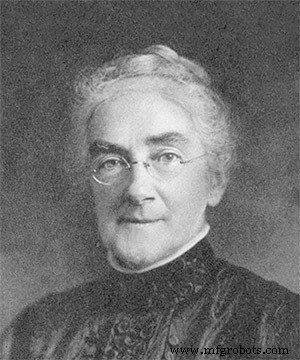
Grace Hopper (1906–1992)
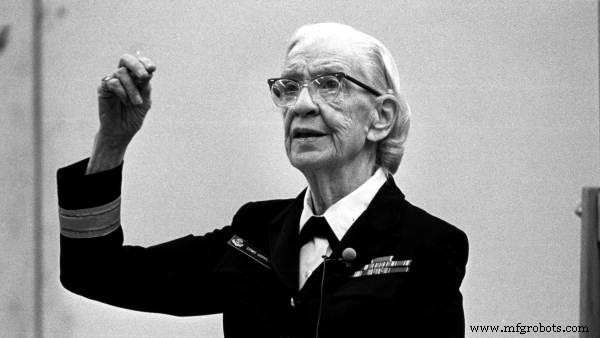
Beatrice Hicks (b. 1905)
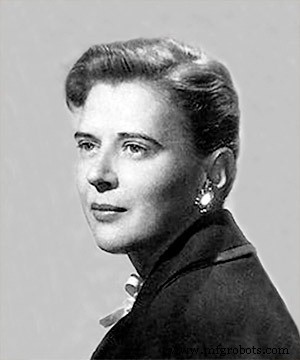
Stephanie Kwolek (1923–2014)
Read our Composites Design Guide
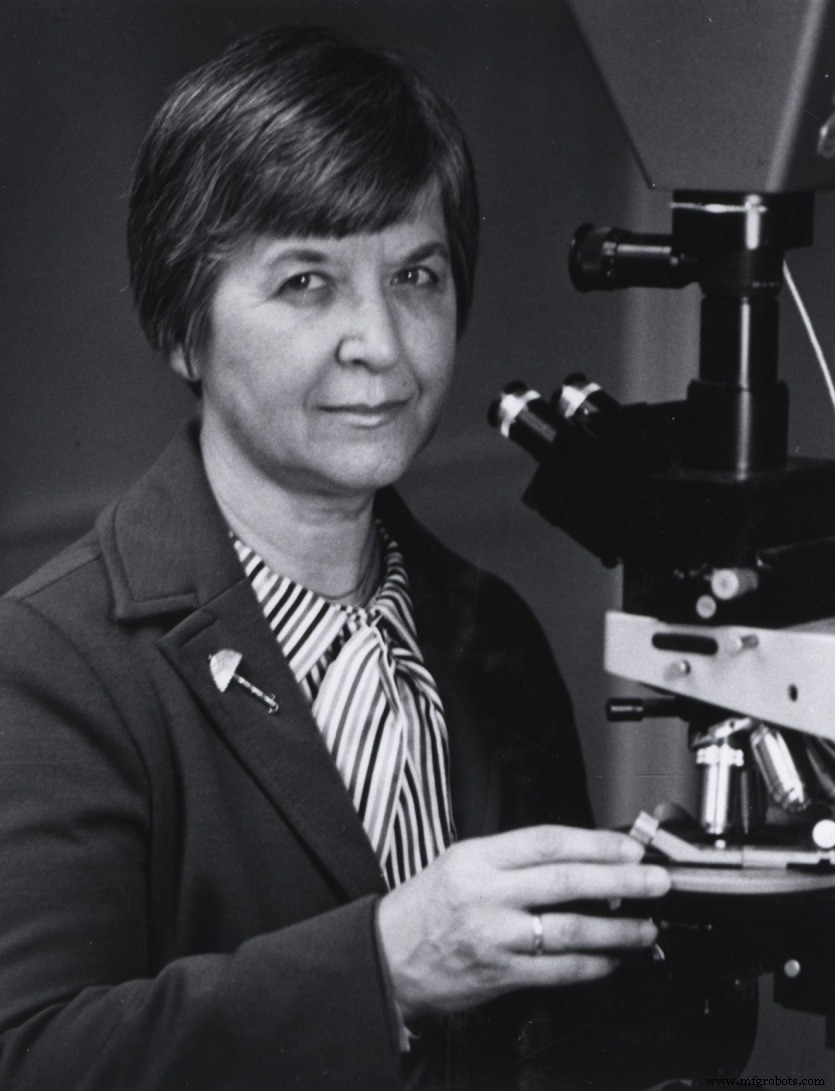
3D printing
- From Lodestone to Neodymium: The Evolution of Magnetism
- From Edison’s Lamp to the Audion: The Early Evolution of Vacuum Tubes
- California's Manufacturing Month 2021: Honoring Innovation and Economic Growth
- Predictive Maintenance Evolution: From Reactive Failures to Proactive Success
- The Evolution of Basic Oxygen Steelmaking: From Inception to Modern Practices
- The Legacy of Vancouver Foundries: Industry & Development
- The Evolution of Printed Circuit Boards: From 1940s Origins to Modern High-Speed Design
- The Evolution of Industrial Robots: From Ancient Automation to Modern Marvels
- Fanuc Robot History: From 1956 to Global Industrial Leader
- The Evolution of Yaskawa Motoman Robotics