



UMass Amherst ADDFab: Advancing Additive Manufacturing Education & Industry Collaboration
Dave Follette, head of the Advanced Digital Design and Fabrication Core Facility (ADDFab) at UMass Amherst, leads the university’s premier additive manufacturing hub.
Over the past decade, additive manufacturing has evolved from hobbyist tools to industrial‑grade production systems. Today, students—from elementary classrooms to graduate labs—are experiencing 3D printing firsthand. While many programs rely on consumer‑grade printers, ADDFab bridges that gap by offering industrial‑level equipment, enabling students to design and fabricate parts that meet real‑world quality standards.
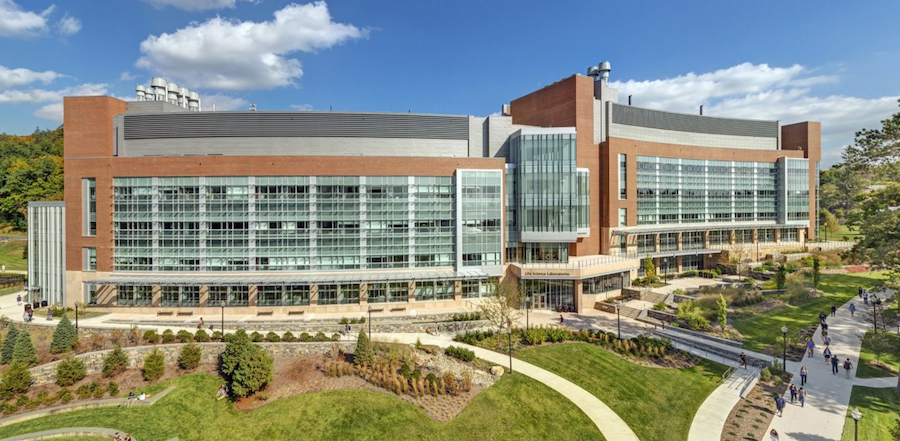
ADDFab operates within the Life Science Labs and boasts a diverse array of printers—Markforged Onyx One & Two, as well as other technologies—allowing us to produce high‑precision components in nylon‑12, stainless steel, fiber‑reinforced polymers, and UV‑cured blends. Our facilities are fully funded by a grant from the Commonwealth of Massachusetts Life Sciences Council (MLSC) and remain independent of any single manufacturer, ensuring unbiased access to the latest industry tools.
Undergraduate and graduate students operate most of the printers, gaining hands‑on experience that directly translates to industry roles. Our focus is divided into three core areas:
Design & Production of Industrial‑Grade Parts
We design and print components that meet rigorous specifications for strength, durability, and finish. With access to a broad material palette—including high‑performance polymers and advanced metal alloys—ADDFab can satisfy almost any additive manufacturing need on campus and within the surrounding community.
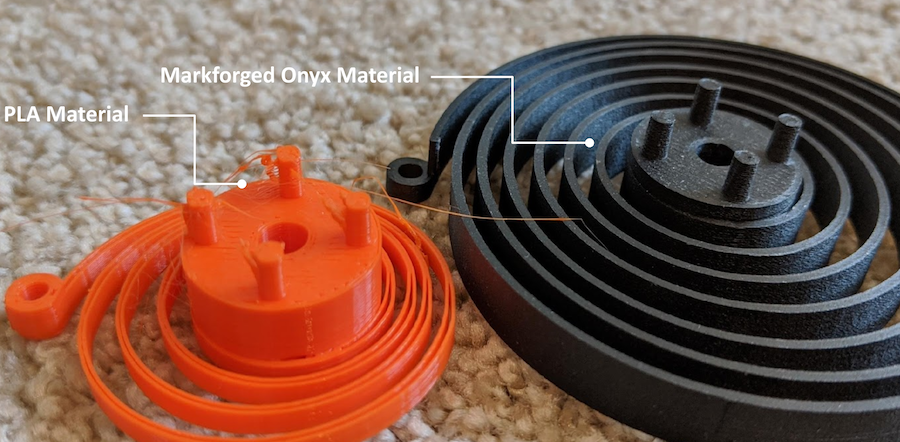
Our Markforged printers are a favorite for rapid prototyping. Their web‑based Eiger interface simplifies workflow, and the machines heat up quickly, enabling students to iterate on projects in real time—ideal for overnight or late‑night sessions.
Research in Additive Manufacturing
ADDFab conducts foundational research in two primary domains: (1) material science—developing and testing new metal alloys tailored for additive processes, and (2) geometric innovation—exploring lattice structures and other novel architectures. Our goal is to help industry partners translate cutting‑edge research into manufacturable products.
Education & Workforce Development
Beyond research, ADDFab is a training ground for the next generation of engineers. We integrate additive manufacturing into undergraduate and graduate curricula, providing hands‑on instruction that highlights both the capabilities and limitations of commercial 3D printing. Workshops for industry professionals further bridge academia and the marketplace, often involving student mentors who bring fresh perspectives to corporate teams.
Recent Projects
During the COVID‑19 pandemic, ADDFab partnered with the Open Source Respirator project to develop a reusable respirator. Students designed mold cavities, face models, and other components, delivering high‑quality prints that supported rapid production and distribution.

In academic research, we recently produced non‑electronic sensors for a computer science team. Using both a Markforged Onyx One and a Makerbot, we balanced material stiffness and finish quality to meet precise sensor specifications.
Future Outlook
ADDFab continues to attract motivated students who recognize additive manufacturing as the future of production. Our mission is to showcase the transformative potential of 3D printing, advance research, deliver industry‑grade parts, and create career pathways for our alumni.
For more information, contact Dave Follette at follette@umass.edu or visit UMass ADDFab.
3D printing
- Additive vs Subtractive Manufacturing: How They Differ & Why 3D Printing Is Growing
- Why Additive Manufacturing Transforms MRO Operations
- Additive Manufacturing Workflow Survey: Share Your Insights
- Closing the AM Skills Gap: How Universities Are Driving Additive Manufacturing Innovation
- Additive Manufacturing Explained: From Design to Finished Part
- Revolutionizing Learning: The Impact of 3D Printing in Education
- Transforming Electronics Production with Additive Manufacturing
- Additive Manufacturing: Driving Innovation and Cost Efficiency in Aerospace
- Innovative Applications of Additive Manufacturing: Transforming High-Tech Industries
- Additive vs. Subtractive Manufacturing: Unlocking the Future of Production