



Understanding Bit Grouping in Digital Systems
Mastering the binary numbering system is essential for anyone designing, building, or troubleshooting digital circuits. The binary language—comprising only two values—maps directly onto the two transistor states of a circuit: saturated (on) and cut‑off (off). This natural fit makes binary the default choice for representing and manipulating numerical data in electronics.
When constructing a digital circuit that holds a binary number, the designer must allocate a dedicated on/off stage for each bit. In other words, the maximum bit width of the system determines how many distinct numerical values can be represented, just as the number of rods on an abacus limits the size of the numbers it can display.
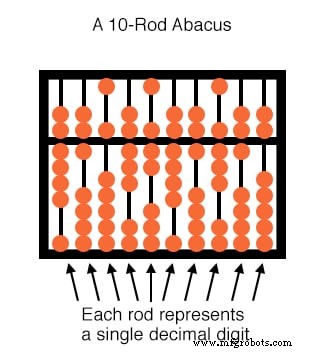
A ten‑rod abacus can only show ten‑digit decimal numbers, with a maximum value of 9,999,999,999. To represent larger numbers, additional rods are required. Similarly, in digital electronics, the chosen bit width dictates the range of representable values.
Early computers typically operated with 4‑ or 8‑bit groups, while contemporary systems use 32‑bit or larger clusters. To simplify communication, specific labels have been adopted for common bit groupings:
- Bit – the basic two‑state unit, equivalent to a decimal digit.
- Crumb, Tydbit, or Tayste – two bits.
- Nibble (or Nybble) – four bits.
- Nickle – five bits.
- Byte – eight bits.
- Deckle – ten bits.
- Playte – sixteen bits.
- Dynner – thirty‑two bits.
- Word – system‑dependent; the default word size of the architecture.
The term word is the most variable, as it reflects the native data width of a particular architecture. For example, a 32‑bit system defines a word as 32 bits, whereas a 16‑bit system defines it as 16 bits. Derived terms such as double word, longword, half‑word, and quad adjust the base word size by two, one, half, and four times, respectively. Even whimsical terms like chawmp (half‑word) and gawble (synonymous with word) appear in programming folklore.
These definitions originate from Eric S. Raymond’s “Jargon Lexicon,” an indexed reference to both common and obscure terminology in computer programming. Understanding these terms is crucial for clear communication in hardware design and documentation.
RELATED WORKSHEETS:
- Numeration Systems Worksheet
Industrial Technology
- Essential Troubleshooting Checklist: Strategies to Diagnose System Failures Quickly
- Designing Fail‑Safe Control Systems for Safety and Reliability
- Mastering C# Using Statements: Imports, Aliases, and Static Directives
- Comprehensive Guide to CNC Router Bit Types and Their Applications
- CNC Router Bits Explained: Straight, Up‑Cut, Down‑Cut & Compression
- Understanding Reactive Power: Key Insights for Power System Reliability
- Maximizing the Lifespan of Your Fire Suppression System
- Why Standardizing Fluid System Components Boosts Oil & Gas Project Success
- Optimize Conveyor Performance with Tailored Support Systems
- Swanton Welding: Advanced Powder Coating & Laser Cutting in Griffin, Georgia