



Waterjet Cutting Explained: 5 Common Myths Busted
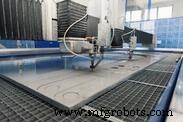 Waterjet cutting machines have the ability to cut through metal, plastics, and even carbon fiber without the risk of warping or distortion. Over the years, as the popularity of waterjet cutting has increased, there have been some myths and misunderstandings surrounding the technique that have left many confused as to what a waterjet machine is actually capable of. To help alleviate some of these misconceptions, we have written this post to help you better understand the process.
Abrasive Waterjets Are Noisy and Slow
We understand why people may assume that the results of waterjet cutting take a lot of time and effort to produce; yet, waterjet cutting uses a process of accelerated erosion to slice through material, typically in a very quick time frame. Surprisingly, this fast cutting speed doesn’t actually lead to any problems with mess or noise.
Cutting under a small amount of water can reduce the presence of mist, steam, or spray. Underwater cutting also helps to reduce noise levels. While it’s true that cutting above water can lead to 95 decibel sounds (this ultimately depends on the distance between the material and the mixing tube), underwater cutting only results in 75 decibel noises.
Waterjet Machines Have a Hard Time Cutting Complex Parts
Some people have been lead to believe that waterjet machines struggle to cut precise 3D components. The reality is that recent advancements in the realm of 3D cutting have maximized the versatility of waterjet cutting. Using a cutting head that can swerve in several directions) controlled with advanced software) allows waterjet machines to cut complicated 3D parts in a single, fluid motion. This removes the need for secondary cutting.
Waterjet Pumps can Blow Up
If you have purchased your pump through an accredited manufacturer, this shouldn’t be a concern for you. Consider this: water is far less compressible than air, so there is much less stored energy in a waterjet pump compared with a scuba tank.
Manufacturers must adhere to strict rules and industry standards throughout the design of the high-pressure pump. One aspect of these standards ensures that all high-pressure vessels are designed to leak before they break, meaning that pressure cannot be built up in areas where it could lead to catastrophic failure.
Garnet Mesh Size Doesn’t Have An Impact On Cut Speed
In fact, garnet mesh does have some impact on cutting speed. Here’s how it works. Larger mesh abrasive tends to cut slightly faster, yet it leaves a slightly rougher surface finish. 80 mesh is most commonly used for waterjet cutting, though 50 or 60 mesh might cut slightly faster. On thin sheet metal, abrasive size has a limited impact.
Lower Pressure Cutting Is More Efficient
Somehow, this has become a common misconception. Waterjets have been created to use more pressure over the years, as they are more efficient at higher pressures. The industry has never seen a trend of moving down in pressure; yet every time a new machine is released wit ha higher pressure level, we are often met with resistance to change (this is natural). Simply, pressure equals productivity.
Though the two processes are different, consider how difficult it would be to wash your back deck with a lower pressure water stream. The higher the pressure, the smaller the jet diameter, the less abrasive and water is used, the faster the water and the sand particles move, and the faster you cut. The only time you wouldn’t want higher pressure is when your motion equipment can’t move as fast as the material can be cut.
Industrial Technology
- The Truth About Manufacturing Jobs: Pay, Skills, and Gender Diversity
- Dynamic Balancing Unveiled: Myths Debunked & Real Advantages
- Debunking 5 Common Laser Cutting Myths: What You Really Need to Know
- Tracing the Evolution of Waterjet Cutting: From Ancient Roman Engineering to Modern Precision Technology
- Dispelling Five Common Myths About Process Automation
- Discover the Advantages of Waterjet Cutting: Precision, No Heat, and Versatility
- Waterjet Cutting: Precision, Efficiency, and Cost Savings Across Industries
- Expert Waterjet Cutting Services for Custom Signs
- Precision Steel Cutting with High-Pressure Waterjet Technology
- Debunking the 5 Most Common Waterjet Cutting Myths