



Key Criteria for Selecting High-Performance Thermal Interface Materials
From consumer electronics to aerospace, all electronic devices require active thermal management to effectively dissipate heat away from components. The bottleneck of thermal management is often the conduction between heat-generating components and cooling components. Unfortunately, many electronic devices cannot get sufficient cooling from heat sinks or fans due to limited space. In these applications, the performance of thermal interface materials is even more important.

The most common methods for extracting heat from a high-power computer processing unit (CPU) or a system on chip (SOC) are thermal paste or grease. While these solutions offer high performance, they come with disadvantages. They can be messy, time-consuming, and can have poor long-term reliability. Additionally, conventional high conductive (>20 W/mK) thermal interface materials (TIMs) are known to be expensive and come with manufacturing difficulties and challenges.
What are the primary functions of TIMs?
When a heat sink is placed on top of a heat-generating component, there are naturally occurring air gaps. These air gaps create high thermal resistance, which leads to overheating. TIMs solve this issue by replacing air gaps with thermally conductive materials. This creates a more efficient thermal path by reducing the overall thermal resistance in the system. TIMs can also provide electrical isolation or adhesive attachment with no need for additional mechanical fastening when needed.
TIMs must conform to surface irregularities, otherwise there will be increased thermal resistance at contact layers. Some contact resistance is unavoidable, but any thermally conductive materials would be more beneficial than air.
While design engineers want to have the thinnest gap possible to cut down thermal path length, sometimes a certain thickness must be maintained to have better wetting or contact on irregular substrate. Depending on polymer resin type, filler type, and filler loading level, the wetting capability can be different. Also, TIMs’ performance can be varied depending on thermal mechanical properties as well as application pressure, substrate surface finish, and environment.
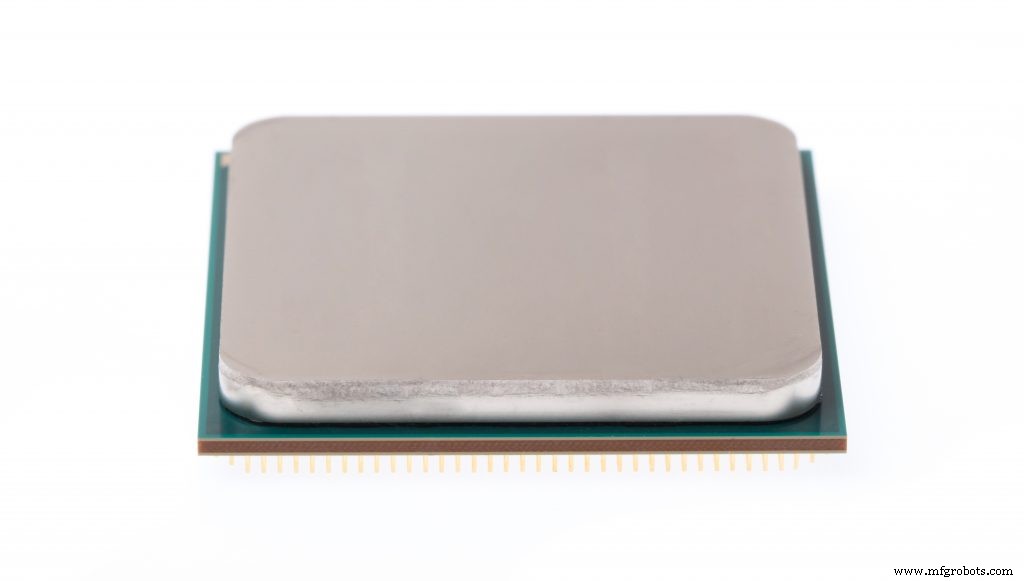
Factors to Consider When Choosing TIMs
Form Factor
There are many types of thermal interface materials such as grease, gel, pads, paste, tapes, phase change materials (PCM), and even metal. When selecting TIMs, it is important to be familiar with the product and its performance. For thin gap fillers, grease or PCM are commonly used, while for thick gap fillers, users look for pads, gel, or putty paste.
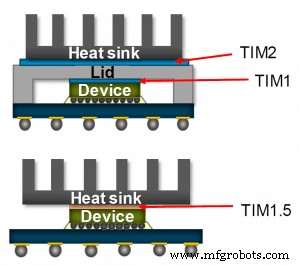
TIMs can also be categorized as a TIM 1, TIM 2, or TIM 1.5 application. This categorization is based on where they are used in reference to a device’s die chip and heat spreader or lid. For example, a TIM 1 application uses TIMs between the die chip and heat spreader or lid, and its main purpose is to reduce contact resistance and dissipate extreme heat directly from processors. Traditionally, metal solder is used for this application; however today, grease, gel, or PCMs can also be used.
On the other hand, a TIM 2 application is applied between the heat sink and heat spreader or package level SOC. This application typically uses thicker TIMs, like pads, since the package-level heat management is not extreme like a chip-level. A TIM 2 application may require rework ability and compressibility, which allows for more impact due to the attached heat sink’s needs.
In a TIM 1.5 application, the chip die is in direct contact with the cooling component without heat spreader. This category of TIM is commonly used in mobile devices.
Gel and paste are sometimes preferred to pads because their thinner bond lines can allow them to have higher compressibility and thermal performance in comparison to pads. Thermexit™ pads provide a solution to both issues by providing great conformability and thermal performance.
Thermal Conductivity
Another important factor to consider is thermal performance. In an electronic device, there are components generating heat and cooling components that determine how much heat can be dissipated. This means that the environment temperature and the presence of active cooling components can determine the thermal budget. Once you know your thermal budget, then you can decide what kind of thermal interface materials are needed, since TIMs can be easily customized to meet your thermal design.
Physical & Mechanical Properties
The mechanical properties of thermal interface materials such as hardness, deflection, and compression set, should also be considered. Some users prefer compounds or gels to protect their sensitive components even though these dispensable products may have disadvantages which will be discussed later. It is important to find the right TIM for your application pressure and gap thickness design.
Electrical Insulation
Another important factor is whether a TIM is electrically insulating or not. Some applications are very sensitive when it comes to electrical continuity. Most thermal gap pads provide great electrical insulation due to their relatively thick application, unlike grease, gel, or PCM products.
Application
When selecting a TIM, you should consider long-term reliability. Today, there are many electronic devices used in extremely harsh environments that require high power cycles. Additionally, it is important for TIMs in the automotive industry to be tested under mechanical vibration.
Application Factors
Each form factor is related to an application factor, like applied pressure, attachment method, bond line thickness, geometry, and environment. Simple factors such as ease of handling and environment can be easily neglected but cannot be ignored.
Think Beyond the Datasheet
While TIMs’ datasheets provide useful information, they should not be the only resource used when selecting TIMs. Much of the data from TIM suppliers is from industry standards or their own test methods to optimize the performance of the product. However, the same TIM product performs differently depending on the conditions. Typically, we would expect that higher thermal conductivity would result in better performance, but is this always the case? Also, we should ask whether a higher thermal conductivity TIM is needed when a lower thermal conductivity TIM might have adequate performance for the application. Sometimes if a higher thermal conductivity TIM is used in an application that does not require it, the TIM will not provide the same benefits.
Gap Pad Type
Finally, let’s say we decide to use a gap pad. Before we consider thermal conductivity or compressibility, we need to look at basic properties and requirements. For example, the application temperature of the device will determine the necessary resin chemistry. It is also important to know whether the device requires a high-temperature silicone TIM or if it can use an alternative resin system. Some gap pads have a fabric glass carrier, which may not be good for certain applications. Sometimes, having the correct thickness alone can solve many stringent thermal issues.
Thermexit™ Solutions
Thermexit™ develops high thermal conductivity gap pads that overcome thicker bond lines and outperform the thin bond thermal interface materials. Our unique non-silicone high-temperature resin can replace silicone resin chemistry and minimize oil contamination. Our resin system is also a non-curing system that provides great long-term performance.
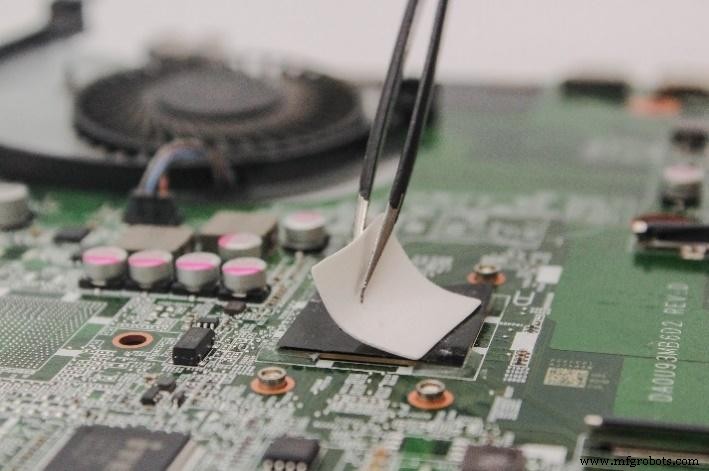
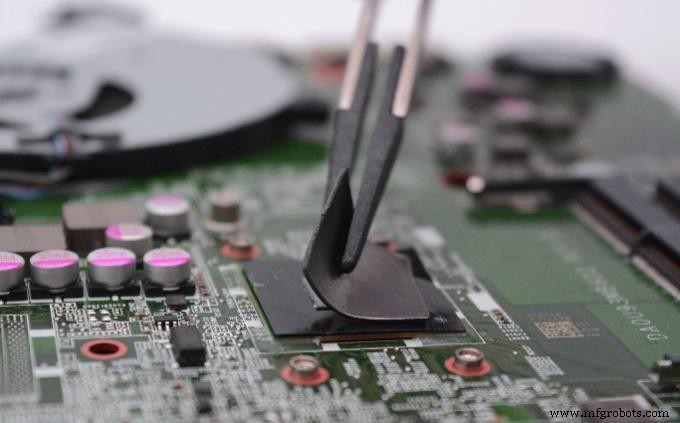
Thermexit™ pads are highly compressible to minimize contact resistance without high force and component stress. They have an easy pick and place application and are naturally sticky without the residue or mess of pastes or gels. Thermexit offers two product lines: Thermexit EI (Electrically Insulating) and Thermexit HP (High Performance). Both pads offer high thermal conductivity at >15 W/mK and 40 W/mK, respectively.
For more information, visit thermexit.com and get in touch at support@thermexit.com.
Industrial Technology
- 5 Key Factors for Selecting the Right Plastic Hinges
- Choosing the Right Pull Handles: 5 Key Factors to Consider
- 5 Key Factors to Decide Between Motor Rewind and Replacement
- Top 4 Criteria for Choosing the Right Electric Transformer
- Choosing Aluminum vs. Stainless Steel Fabrication: 6 Key Factors You Must Know
- Choosing the Right Industrial Fan: Key Factors for Optimal Facility Cooling
- Key Factors for Selecting the Ideal Warehouse Location
- Top 7 Criteria for Choosing a Long‑Range Barcode Scanner
- Prevent Galvanic Corrosion: Choosing Compatible Materials for Marine Equipment
- 5 Essential Considerations for Heat Treating Metal Parts