



AGVs & Robotics Parking Solutions: A Comprehensive Guide
Introduction
AGVs (Autonomous Guided Vehicles) are the most popular systems today which are based on an automated guided vehicle that follows a limited lane of movement along a steel railing. The railing follows a predestined path around the facility. An AGV system basically employs robots to help enable the movement of loads through an assembly, manufacturing or warehousing facility. 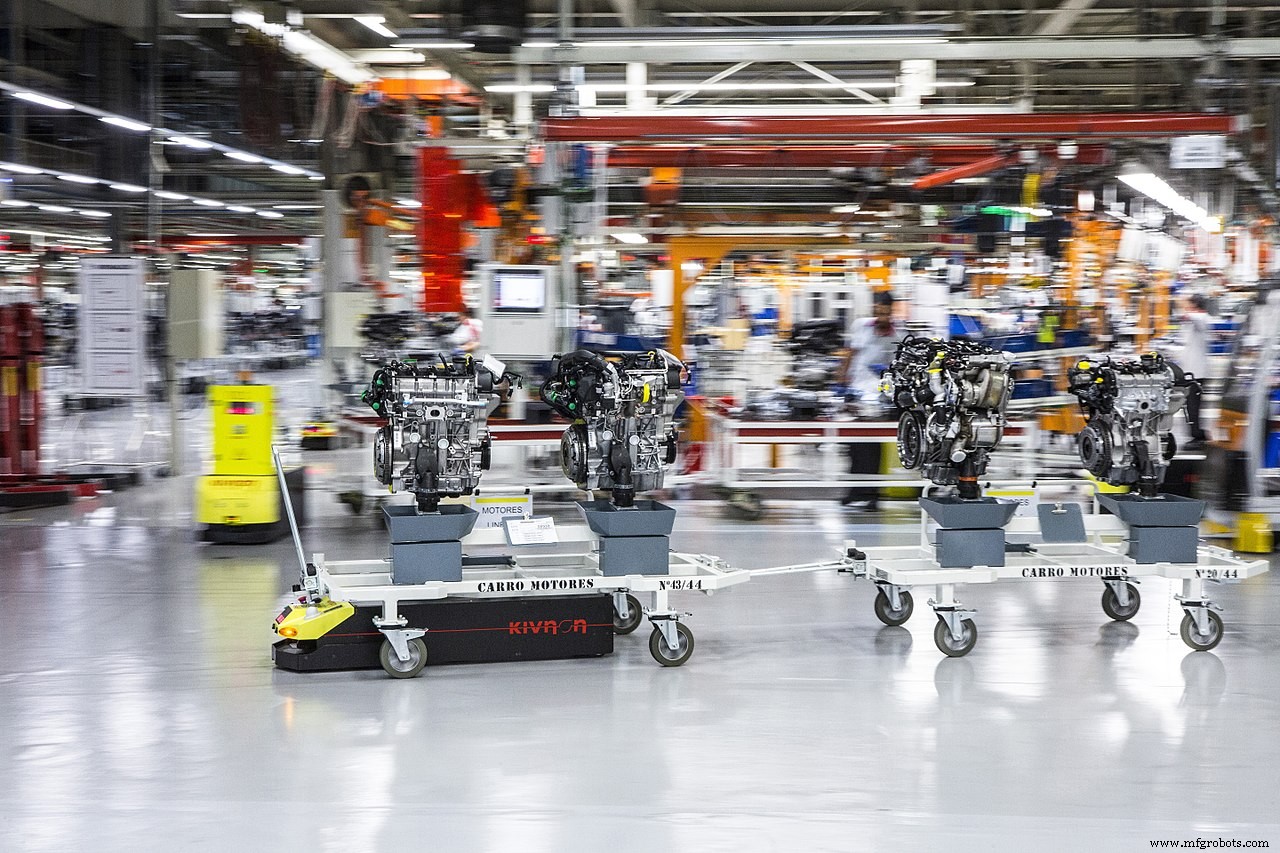
What are AGVs?
If we wish to define AGVs in a more standard way, we can say: “An AGV is a mobile robot forming a part of an elaborate transport system capable of functioning without a driver (hence called ‘automatic’ guided vehicles). The AGV takes use of markers and wires on the floors, some also take use of vision and lasers to move around.”
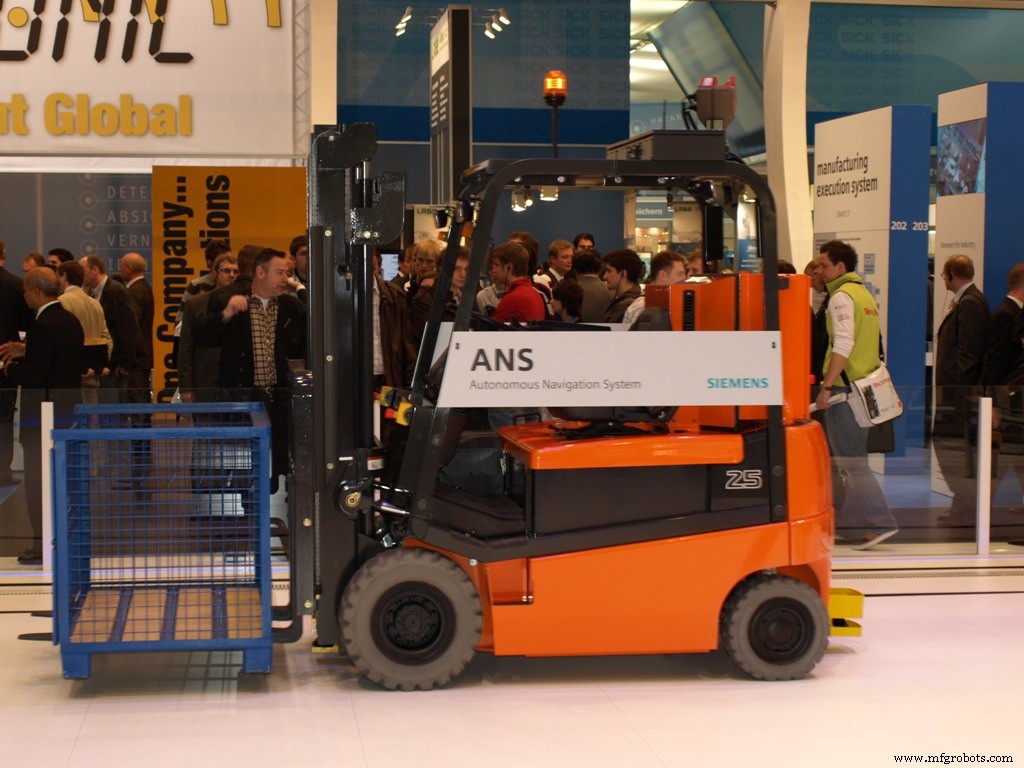
They are commonly used in industrial applications such as moving loads across a manufacturing facility/warehouse. These systems are used to increase efficiency wherever employed and to reduce the use of manual labor, instead AGVs undertake their tasks. To summarize, we can say “An AGV is a driverless vehicle used to move materials and loads efficiently in a facility”.
AGV AUTOMATED PARKING SYSTEM BY PARK PLUS
The PARK PLUS Fully Automated Guided Vehicle (AGV) Parking System consists of free-roaming, battery-operated, omni-directional robots using traffic management software, markers, vision systems and lasers for self-guidance to manage the automated storage and retrieval of vehicles.
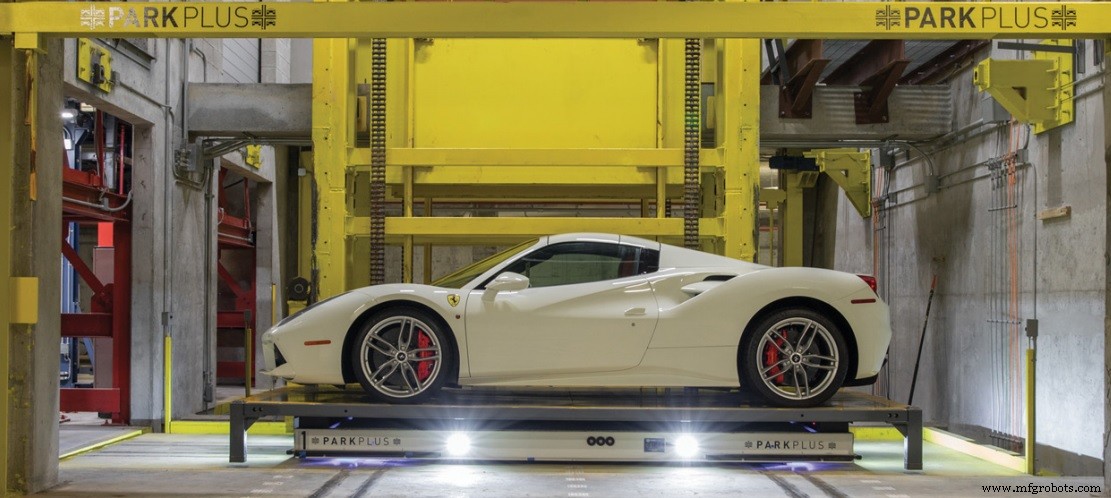
The PARKPLUS AGV Parking System is designed to be installed in an enclosed parking vault. In addition to the parking superstructure and storage area, the AGV system includes 6 main components:
1. Loading Zone: Entry/exit area where users leave/retrieve vehicles.
2. Control System: Manages automated storage and retrieval of the vehicle.
3. Vertical Reciprocating Conveyor (VRC): Car lift to transport vehicle between floors/levels.
4. Tray Accumulator: Stacks Trays to maximize storage.
5. Vehicle Storage Tray: Platform vehicles park on. Handled by AGV to transfer vehicle to/from storage vault.
6. Automated Guided Vehicle (AGV): Battery-operated robotic device.
The system can be installed in multiple regular and irregular configurations on multiple levels above, on and below grade to maximize parking efficiencies. Basic system design and components are determined by peak demand throughout the requirements of the parking system.
ADA requirements can be accommodated. Owner/Architect should review with local planning and building departments.
Parts of an AGV System
We can divide an AGV System into five distinguishable parts: Vehicle, Host software, Wireless communication, User interface and Battery/Charger.
- Vehicle:
The vehicle is what provides movement to the system. The number of vehicles in one system can vary from one to more than a hundred. You will also find a variety of vehicle types in these systems i.e. Masted vehicles (forked, clamp, single-double), Unit load (life deck, conveyor), Tow or Tuggers, Carts etc.
- Host Software:
Simples systems do not necessarily require host software, but can be used nevertheless. The host system is what controls the AGV movement, allowing it to efficiently move along pre-set pathways (just as a traffic cop would). It also sends the vehicle requests to move around material and control all external inputs and outputs. It also communicates with the software responsible for supervising the control of manufacturing and warehousing. It will also report the system performance over regular periods of time.
- Battery/Charger:
Batteries are used to power automated guided vehicles. The types of batteries used vary for example Lead acid, Nickel-Cadmium, Lithium-ion, Fuel cells etc. You can then charge these batteries in the following ways:
- Swapping: This can be done automatically or manually. The depleted battery is simply removed and the newly charged battery is inserted.
- Charging: Each vehicle reports to a charging station as its battery gets depleted where it is recharged.
- User Interface: The user interface is what allows the user to monitor and control (where required) an AGV system. The user interface helps the user make requests for a certain material movement, it helps the user manage alarms, and it helps to analyze system operations and help improve them.
Applications of AGV Systems
The main applications of AGV Systems are seen in manufacturing and warehousing.
- They are used in the handling of raw material
- In the delivery of parts and tools
- They are used to move finished goods around
- Used to remove wastes for recycling
- Used to retrieve and store Vehicles
- They are used in pallet handling
- They are used for loading trucks and trailers automatically
Industrial Technology
- Diodes and Rectifiers: Fundamentals, Operation, and Key Parameters
- Understanding Conductors and Insulators: From Quantum Mechanics to Practical Applications
- Industrial Robotics 101: Master the Basics of Automation
- Expert Guide to Planning & Designing Power Distribution Systems
- Real-Time RFID Attendance System Powered by Arduino & Google Sheets
- Cramer's Rule Calculator: Solve 2‑ and 3‑Equation Linear Systems Quickly
- Enhancing Library Operations with RFID Technology: A Comprehensive Overview
- FANUC America & Plus One Robotics Launch AI‑Driven Flexible Fulfillment System
- Understanding Grid Stations: How Electrical Power Distribution Works
- Leveraging AI and Robotics Across Multi-Inspection Systems for Flawless Production