



AC-DC Converters: Your Reliable Source for Consistent DC Power
AC DC converters provide power to electronic devices that need a conversion process from AC to DC. Various applications of this device may prove beneficial if you cannot access a DC wall outlet nearby. Nevertheless, understanding this technology can be confusing and overwhelming due to its complex nature. With this in-depth article, you will learn more about what these devices achieve and how they operate. At WellPCB, we provide you with information on the ideal applications for AC-DC converters. Therefore, you’ll understand how these converters work and how to utilize them safely. Everything provided here puts you on the right track, so continue reading!
1. What is an AC DC Converter?
AC-DC electronic power supplies draw an AC voltage from a power source and transform it into a DC output voltage for a battery-powered device. Moreover, this device converts low voltage values, ideal for everyday electronics that need an AC or DC output voltage. Each converter contains a different design but usually comes with single or multiple transformers, filters, and rectifiers. In addition, some AC-DC converters feature active-mode efficiency, which means they consume less energy.
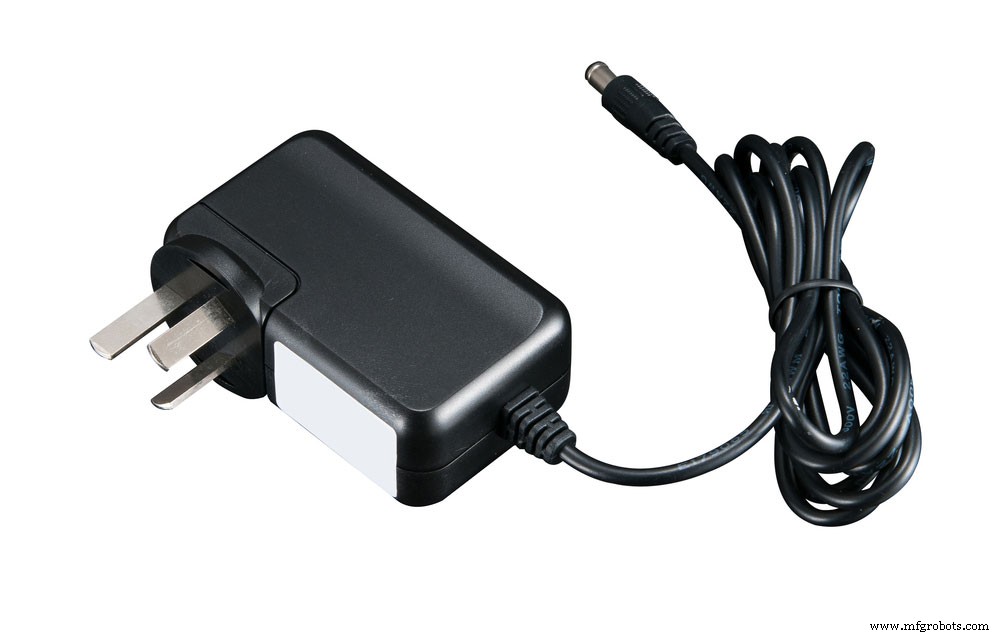
(DC power adapter)
It’s important not to get this confused with a DC power adapter. That’s because a DC power supply provides a device, such as a circuit board, with a constant current. It doesn’t convert AC to volt DC. Engineers typically utilize a DC power adapter for testing purposes. A DC-DC power supply also differs from these because it pulls in power from a battery and converts it to another voltage level.
Generally, you will discover that two types of AC-DC converters exist on the market today, linear and switching. Linear, an affordable and simple solution, loses extra energy as heat, creating issues for applications that cannot perform well in high temperatures. Switching power supplies, a more complex device, reduces energy loss with its ability to switch between full-on and full-off. These also provide higher power densities for data centers, networking, and server applications.
While lightweight, efficient, and smaller, these produce electrical noise without suppression. Simplistic designs could also provide a restricted power factor. For this reason, power factor correctors help solve that issue.
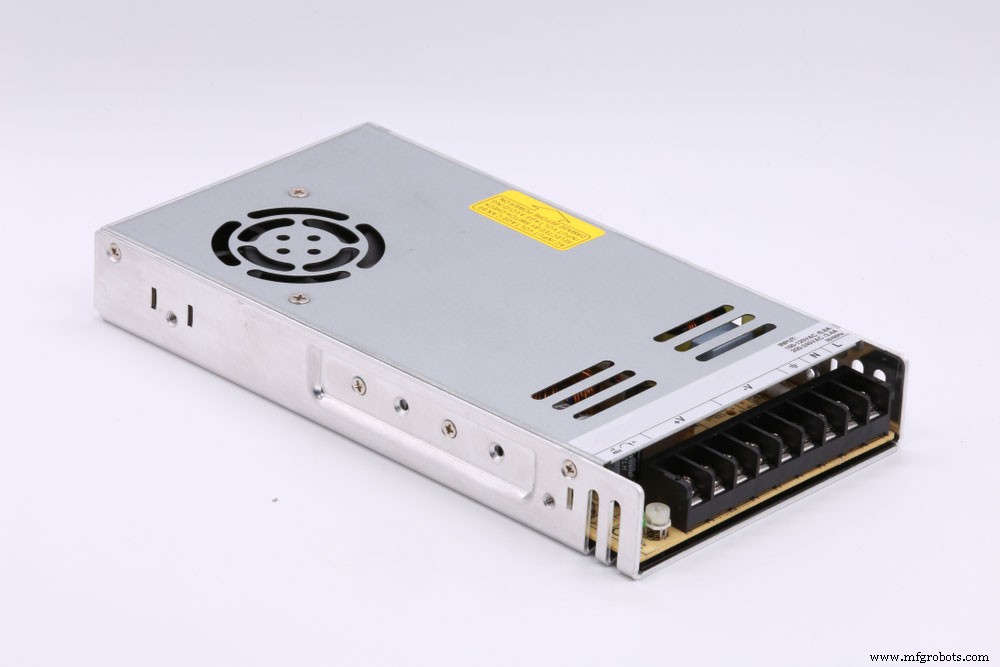
(Switching power supply, a complex device that switches from full-on to full-off.)
2. How AC DC Converter Works
Integrated transformers alternate the AC voltage, reducing/boosting voltage levels for improved DC supply functionality to a connected device. The conversion process, called rectification, involves utilizing a rectifier at the load end connection, converting AC power to DC power. Finally, filters cancel out the noise in AC power waves, resulting in smoother energy for a DC-source circuit.
Typically, the circuit takes on different forms but contains the necessary parts. Additionally, it provides one or more conversion stages.
Some devices may also include a cooling fan if a heat sink can’t efficiently cool down the unit. However, some fans take up space, so you should choose an ideal size. Using a cooling fan that quickly spins will ensure that it provides a better effect on heat dissipation.
3. AC-DC converter Applications
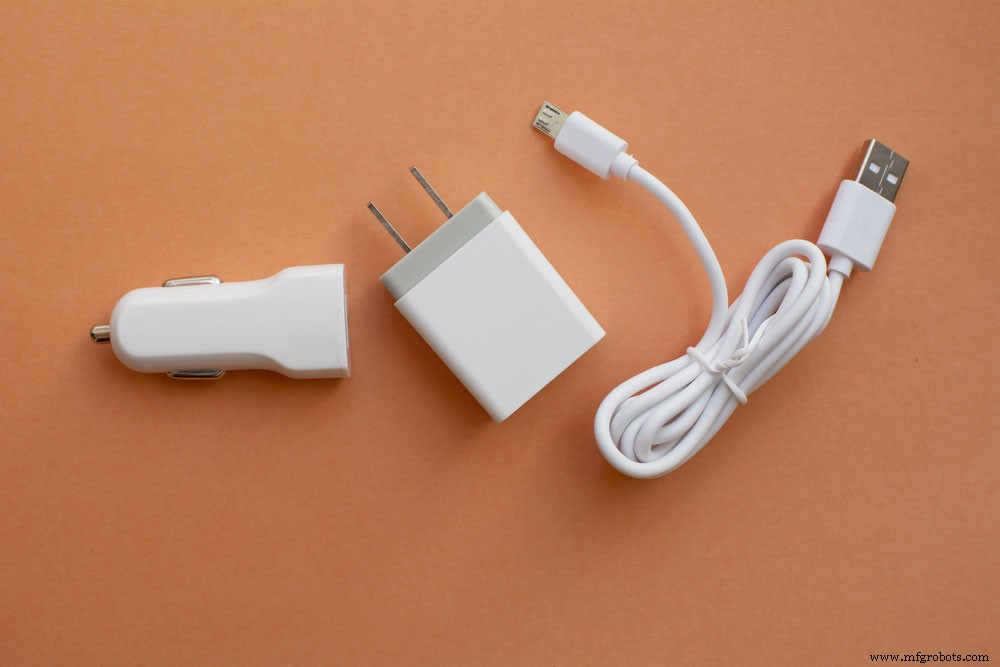
(Chargers contain an AC-DC converter)
Essentially, these devices convert AC to a volt DC for existing electronics in a wide variety of applications. They come in different forms, including external and internal adapters. Internal adapters consist of electronics like Blu-ray players, medical equipment (650W AC-DC power supplies), etc. Meanwhile, external adapters consist of devices such as laptops.

(Television and mobile phones have an AC-DC converter)
Other examples of applications include water heaters, fans, vacuum, television, mobile phones, chargers, and more. Furthermore, military and telecommunication equipment, industrial machinery (250W AC-DC power supplies), and kitchen appliances with DC motors take advantage of AC-DC electric power supplies.
Also, these devices feature overvoltage, overcurrent, and short-circuit protection to keep you and the device safe.
A DC power converter also provides amplitude modulated radio signal detection capabilities.
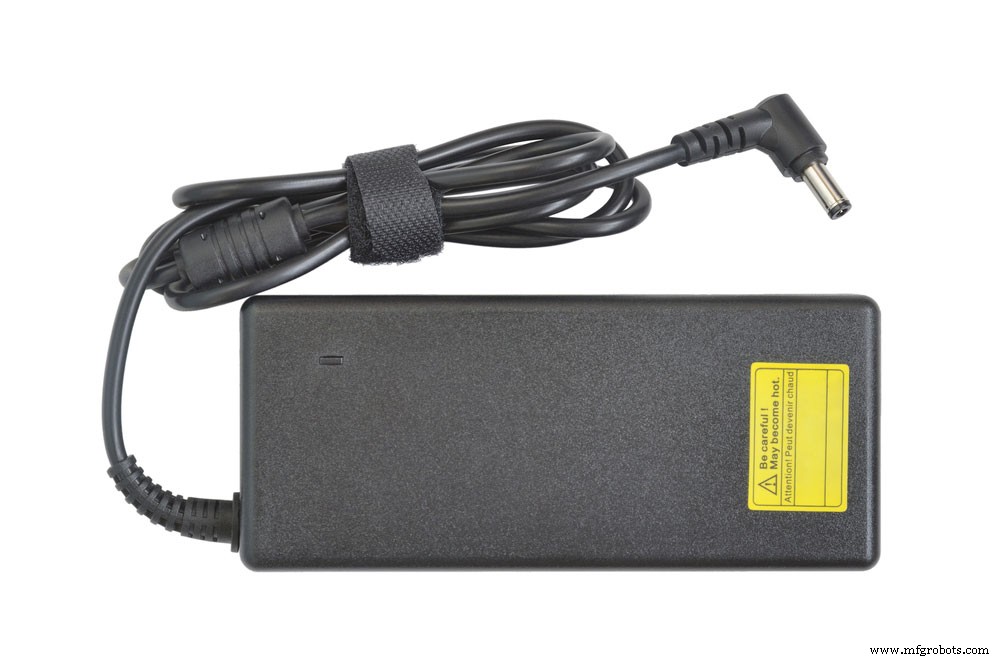
(AC-DC converter for a laptop)
4. How to Design an AC DC Converter?
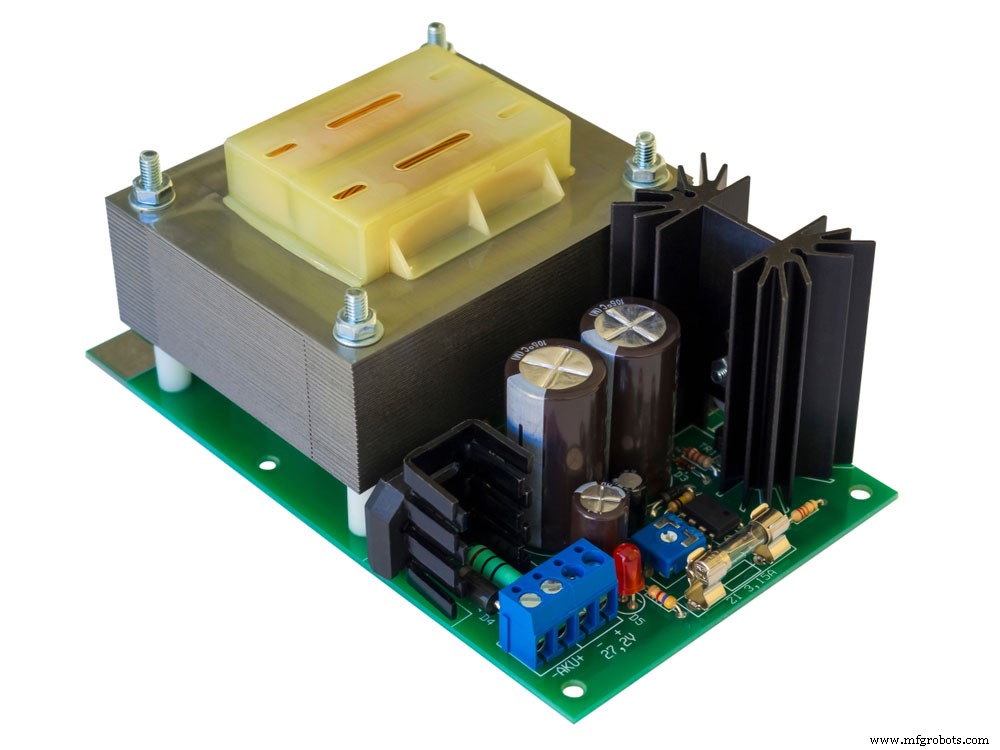
(An AC-DC converter circuit board with a transformer and electronic components.)
Before starting, you must take into consideration that the AC voltage output poses a lot of danger. So you must build your AC-DC converter with extreme caution and take your time. You should confirm the location of each exposed wire and ensure that the isolated work area remains safe. Then, double-check your connections before plugging in your DC converter. Otherwise, it will harm you and the device.
To design this DC power adapter, you will need these parts:
- Transformer
- Diodes 5x
- Capacitors 4x
- 78XX voltage regulator 1x
- Wires
- Heat sink
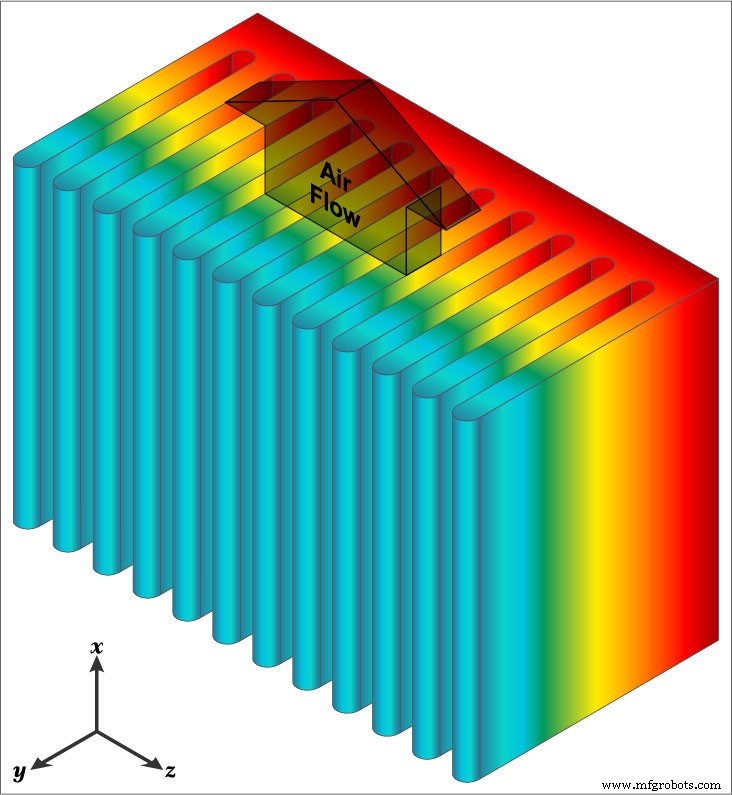
(Heat sink radiation)
Required tools:
- Solderless breadboard
- Soldering iron and solder
- Printed circuit board
- Wire cutters
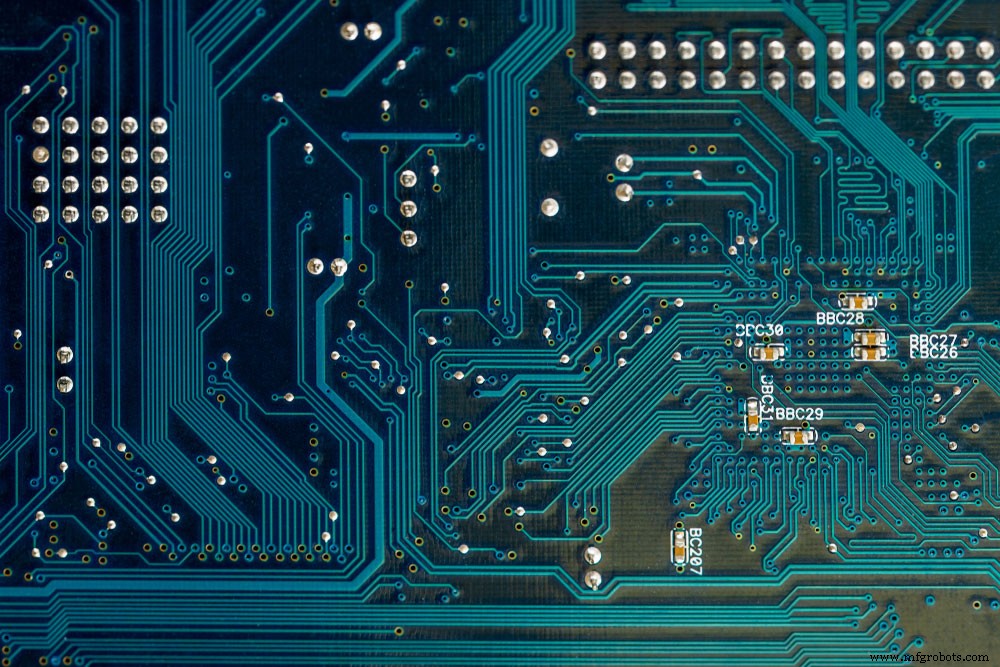
(Printed circuit board)
To start things off, you need to connect the AC power cable to the primary winding side. Then, click the secondary winding side to the bridge rectifier. A multi-meter helps to verify the secondary pins’ output voltage when connecting the power cable.
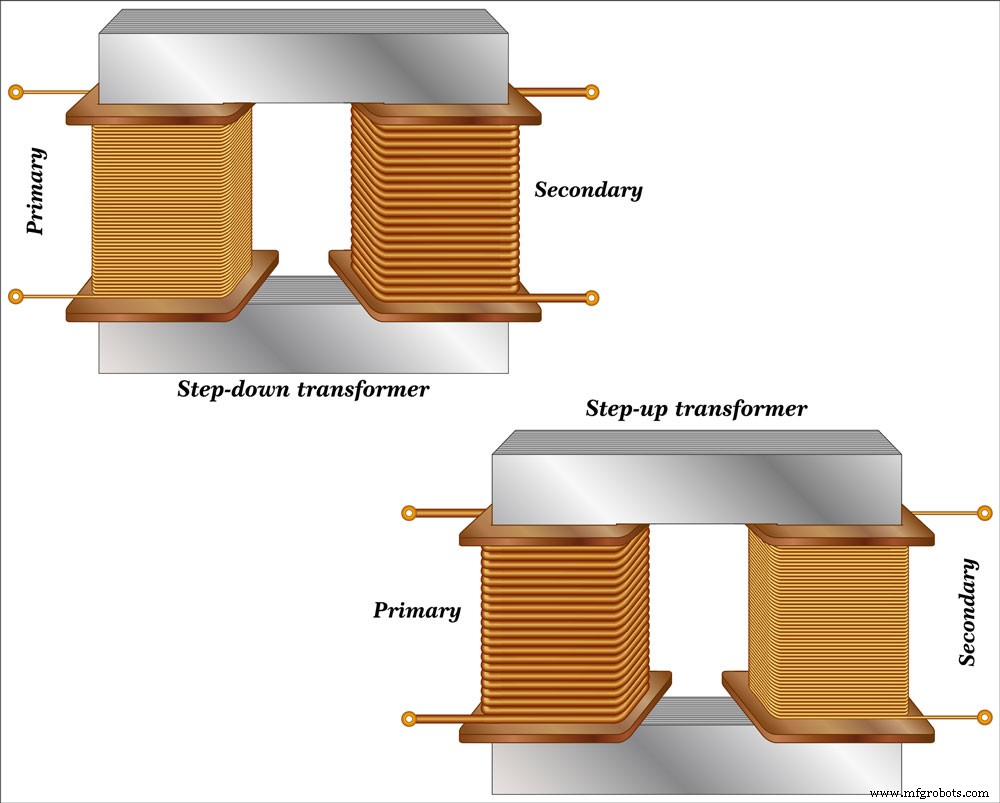
(Step-up and step-down transformer)
You should ensure that it has a 12-24VAC rating. However, a 220VAC mains requires a 10:1 step-down transformer. Take note of the circuit’s power consumption. An attached heat sink helps the voltage regulators source 1A of power.
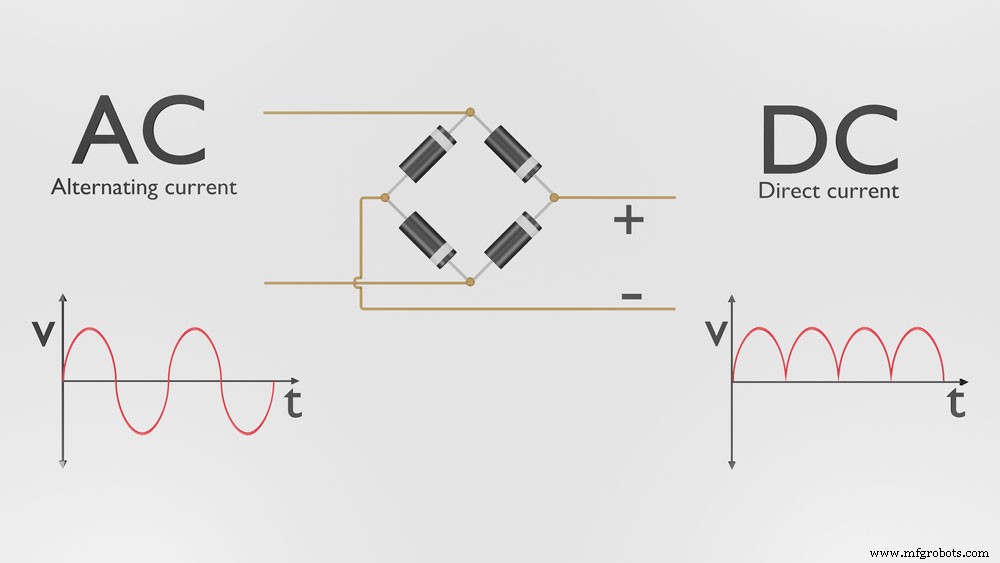
(An illustration showing the conversion process, also called rectification.)
4.1 AC-DC Converter Components
- Input Filtering Block – An input filtering block restrains the electric noise in the switching components, keeping it from affecting the mains power supply. This part also prevents noise from penetrating the circuits.
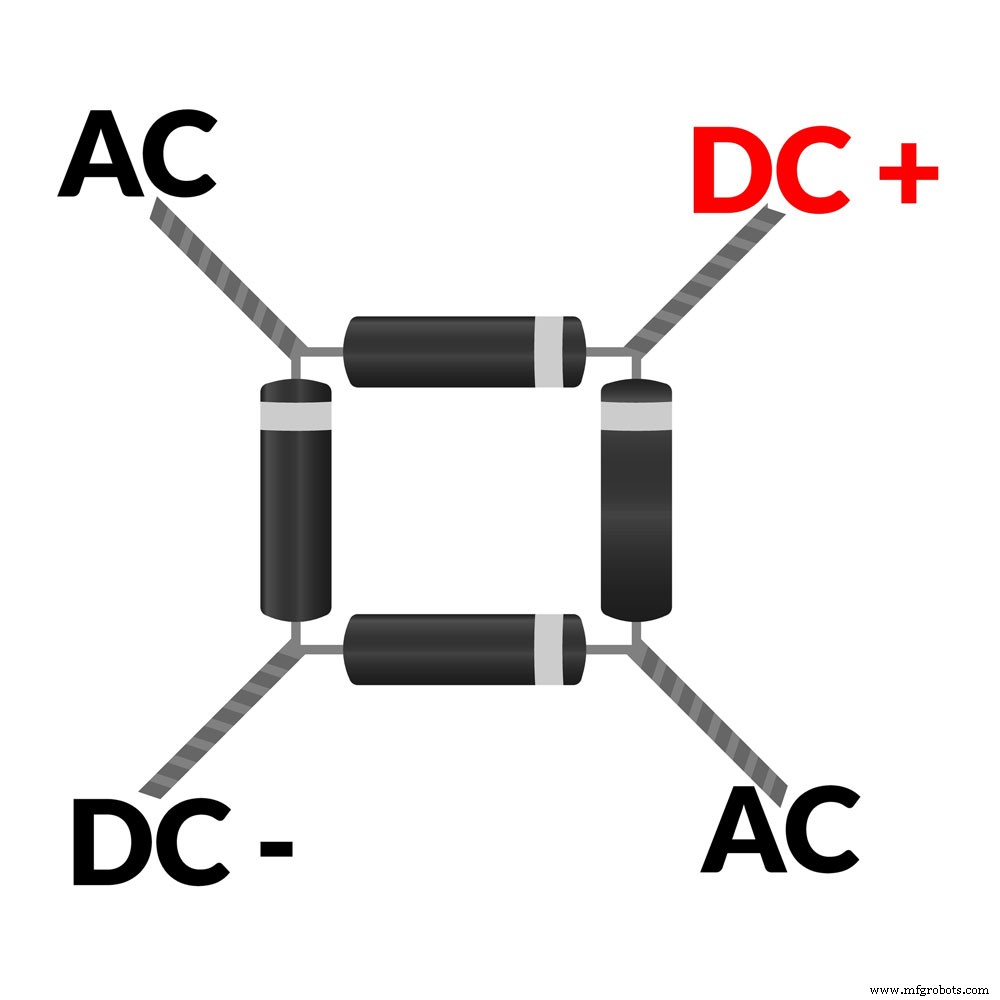
(Diode bridge rectifier)
- Rectification – AC-DC converters undergo rectification, which utilizes a rectifier to convert AC into DC.

(Power Factor Correction)
- Power Factor Correction (PFC) – A power factor correction makes the AC-DC converter more efficient. It reduces the current and AC circuit’s reactive power component. Some power factor correctors support continuous conduction mode and discontinuous conduction mode.
- Power Stage – A power stage regulates energy from the main to secondary side via the transformer. It comes with switches and an output filter that transitions at a high frequency.
- Transformer – Transformers contain wires wrapped around a foundation with electromagnetic induction forming a connection. Therefore, a high voltage connection will benefit from this feature.
- Output Circuits – The output circuits serve as an energy storage platform for each component. To provide a balanced output voltage level, energy delivered to each part goes through a feedback control loop.
- Regulation – Regulation provides a constant output voltage to each switch via a feedback control circuit, ensuring a recharged power source. Hence, setting a button to hard ON or hard OFF makes it more efficient.
- Voltage Control Mode – A regulation circuit detects output voltage, comparing it to a specific voltage. It results in a voltage level adjustment if an error occurs.
- Current Control Mode – Current control mode, an altered version of voltage control mode, detects the circuit’s inductor current. Detection occurs from the MOSFET’s high-side resistance. And, it provides a quicker change detection solution compared to the voltage control mode.
Converter Types – Flyback and buck-flyback, the most popular converter types, contain a small number of components. Additionally, these inexpensive topologies combine transformers.
5. AC-DC Converter Safety Guidelines
Before using the converter, you should take special care to ensure safety. We’ve discussed a few steps you can take that will prove beneficial:
- Coming in contact with the heat sink or case increases the risk of burns, so you should avoid touching these parts.
- Do not touch the input terminals and internal components. Doing so may result in electric shock or burns.
- While running the AC-DC converter, ensure that you keep your hands and face at a safe distance. Otherwise, you could end up with injuries if the device malfunctions.
- Installing a slow blow fuse at the converter’s input will also keep it safe during operation.
Conclusion:
AC-DC converters are very handy for everyday electronics. They reassure you that devices will receive the correct power type. Additionally, the machine makes the conversion process safe and efficient even if the number of components seems complex. Now that you’ve gained considerable knowledge on this topic, you should feel ready to get started!
Feel free to contact us if you have any questions relating to AC-DC converters!
Industrial Technology
- Understanding the R/2R Ladder Digital‑to‑Analog Converter
- How Maintenance KPIs Drive Asset Reliability and Business Value
- Understanding Brownouts vs. Blackouts: Key Differences and Business Impact
- Maximize ROI with IoT-Enabled Asset Monitoring Solutions
- Discover How Energy Monitoring Drives Efficiency in Industry 4.0 – Join Our Expert Webinar
- Boost Factory Efficiency: Mastering Teamwork for Superior Management
- Choosing the Right LED Power Supply: A Comprehensive Guide
- Side-Emitting LED Strips: Energy‑Efficient, Versatile Lighting for Any Space
- PCB Slots: Reliable, Efficient Component Fixing for Precise Electronics Assembly
- Snapmaker 2.0: The Ultimate All-In-One 3D Printer, CNC Machine, and Laser Engraver