



Single-Phase vs Three-Phase Power: Key Differences Explained
In the 21st Century, there’s no denying that electricity has made life a lot easier. From the application of single-phase power supply in residents and small-scale domestic use to large industries and firms using three-phase technology, there’s no denying that efficient work is sky-rocketing at the moment.
The question is; Why the preference of one power supply over the other in certain places? Do they differ as much?
In this article, we’re going to delve deeper into these two phases. Additionally, we will give you tips on means by which you can choose a suitable phase power.
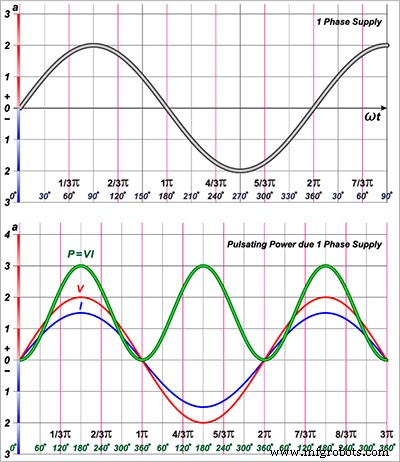
(a single-phase power waveform with a 360° angle)
1. What is Phase in Electricity?
A phase is a voltage or current that exists in a wire or a neutral cable. Most times, it produces electrical signals in a waveform. Then, the waveform undergoes interpretation by an oscilloscope. Moreover, you can determine a phase by the unit type by knowing the load they distribute.
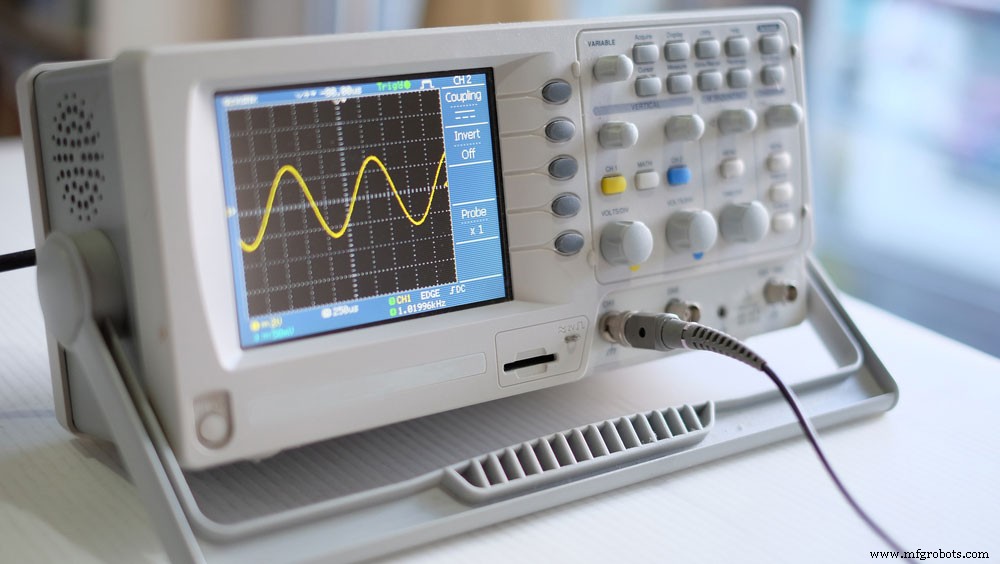
(sinewave reading on an oscilloscope)
2. What is Single-Phase Power Supply?
Also known as residential voltage, single-phase power works by changing the AC power voltage simultaneously. It does this via a coordinated system.
Further, it uses two wires, phase and neutral, when dispensing power. The neutral wire provides a pathway for returning currents while the phase wire distributes the standard current load. The type of power transmission forms a single sine wave with a voltage of about 230V. In addition, it reaches a frequency that approximates 50 Hz.
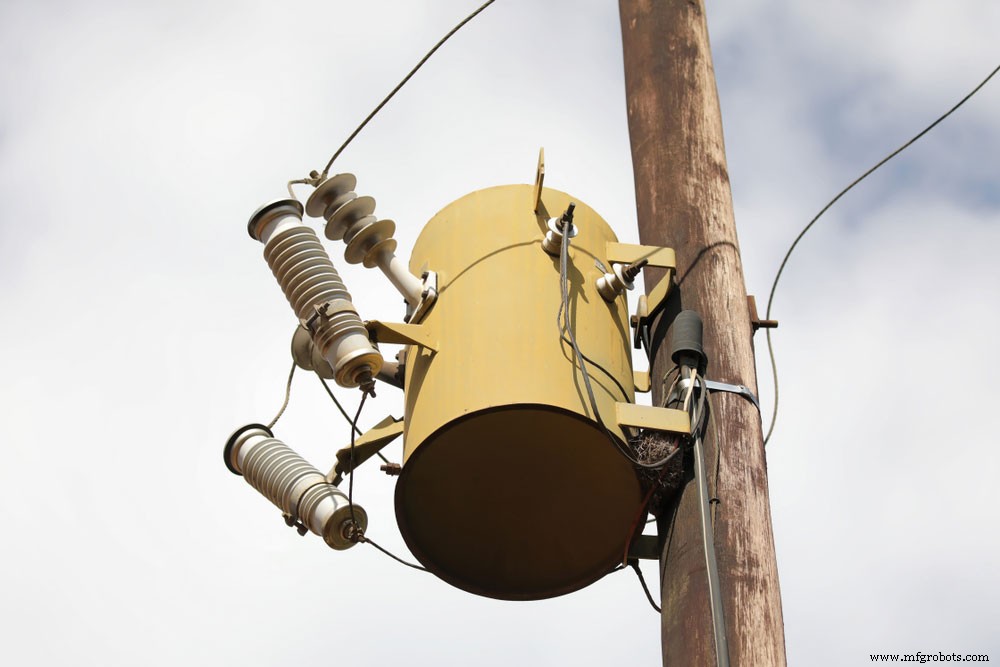
(application of a single-phase power supply in a residential area)
Some merits of single-phase power include;
- First, it distributes electricity for domestic uses and in residential homes. Second, it is because of the low power transmission, which is favorable for most appliances.
- Then, it is simple and appears ordinary. Also, the compact unit and lightweight favors only a small amount of transmission in cases where voltage is high.
- Lastly, it is best for low horsepower units amounting to 5HP.
Demerits
- Unfortunately, it can’t supply bulky electronic loads as in industries.
- Then, the motors of a single-phase run tend to have a shorter lifespan.
- Also, you might need to add another circuit since the initial power supply may be inefficient.
3. What is Three-Phase Power Supply?
As the name suggests, a three-phase power supply has three different power wires which offer electric services by alternating currents. The phase wires are mounted on a motor and produce three sine wave voltages. Eventually, it causes the power output to be constant and never dropping to zero. Furthermore, there is a 120° distance between each wire and an additional 1200 AC Power Signal in each of them.
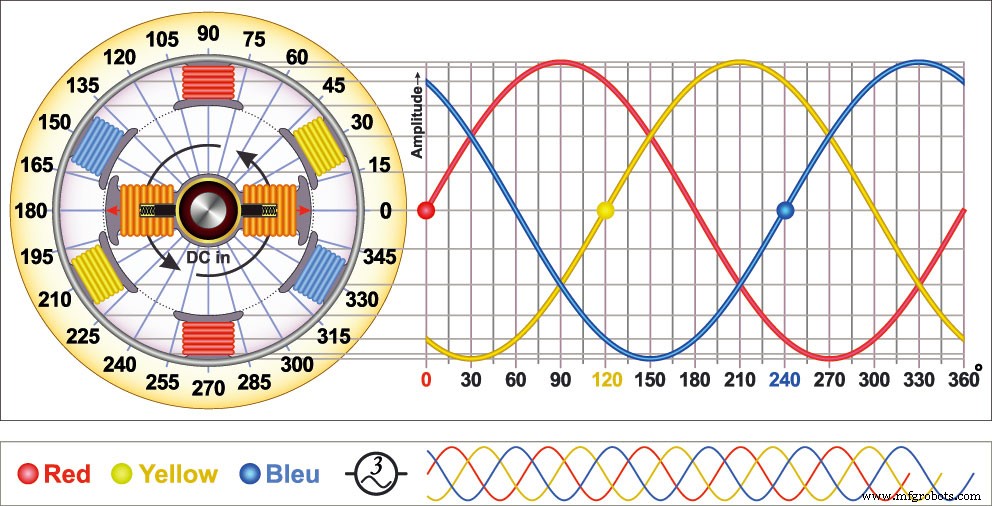
(A three-phase sine wave in a generator).
It has got two types, that is, Delta and Star.
Delta connections; do not need a neutral wire and are recommendable for high voltage systems.
Star/Wye/Y configurations; may or may not use a neutral wire. But it will require a ground wire.
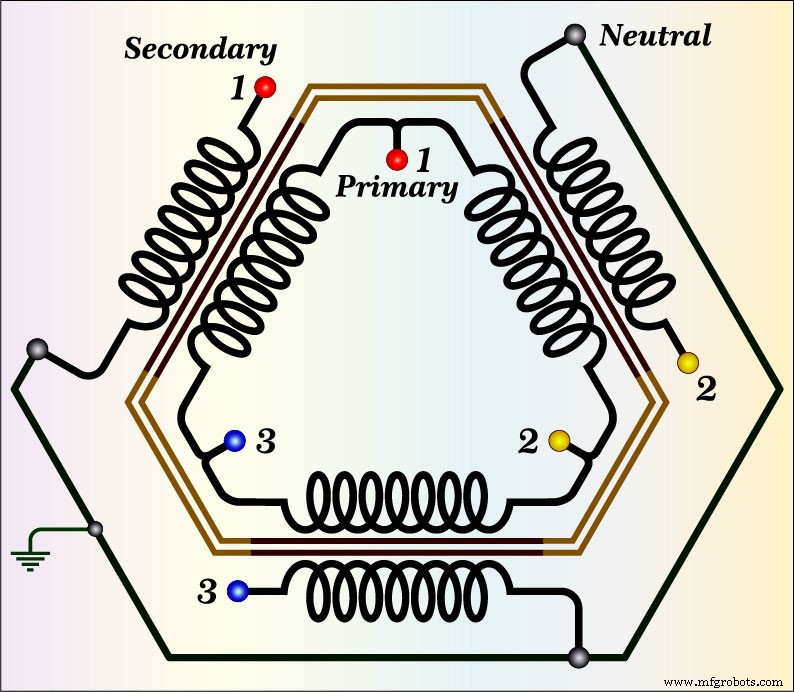
(A wye configuration with four wires with an additional neutral wire).
Merits
- It can convert about 97% of electrical energy into mechanical energy. Therefore, making it efficient for motors.
- Moreover, motors using three-phase have a longer lifespan.
- Then, there’s always a continuous and non-turbulent flow of power.
- Despite being expensive, it is relatively easy to manage and economical. Hence, making the large sum worth it.
- Finally, you can easily use it to run larger loads.
Demerits
- First of all, the three-phase power is unavailable in all locations. Therefore, you might need to consult a nearby power company on its availability.
- Secondly, it is expensive.
- Further, when improperly installed, the motors can experience rotation difficulties.
4. Difference between Single and Three Phase Power Supplies
Below is a summarized table of single-phase versus three-phase systems, with their differences.
| Single-phase power supply | Three-phase power supply |
| Often preferable for small-scale power supply. | You can use it to handle larger loads, such as an industrial motor. |
| Uses two conductors | Uses three conductors |
| Constant power dips and peaks in the voltage render it inconsistent when delivering power. | The presence of three conductors (120° apart) ensures a consistent and steady power delivery. It is because the three conductors complement each other whenever there are dips and peaks. |
| Conductors in the single-phase are known as phase and neutral. | All three conductors are known as phases. |
| The single wire contributes to one AC signal (Sinusoidal Wave). | Three different cables are supplying AC signals separately. Moreover, the signals have a 120° angle from each other. |
| There is the presence of neutral wire acting as a pathway for the loads. | A neutral wire is not much of a necessity here. For instance, Star connections may lack or have it, whereas the Delta connections lack it completely. |
| Inefficient in power delivery when compared to a three-phase power supply. | Mostly efficient because it supplies more power, which is three times better than a single phase. |
| The voltage of a single-phase supply is 230V. | The power voltage supply is at 415V. |
| Commonly applicable for domestic needs and in residential. | You will mostly use it in industries and large-scale commercial centers. |
| If the single-phase fails to work, there’s a higher chance of the power supply being faulty. | Chances of fault are minimal due to an extra two or one phase, in case the other phases fail. |
| It is costly. | Expensive to buy. |
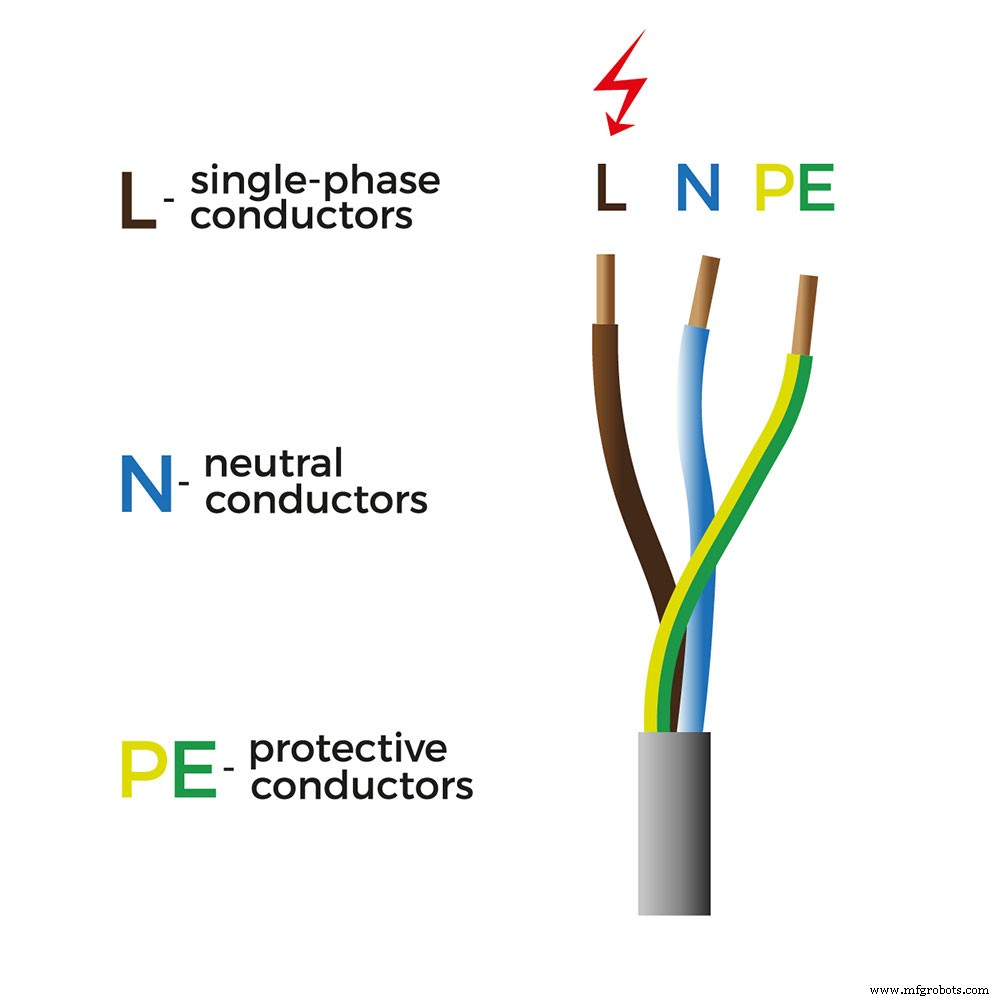
(types of conductors in the power supply).
5. How to Convert a Single Phase to Three Phase
Several converters may come in handy when you would wish to convert a single-phase to a three-phase. They include;
Static converter
It uses capacitors to run a single-phase power once it has started working. Since a three-phase power cannot start up a single phase, the capacitors aim to replace one of the three phases. However, it may reduce the lifespan of the motor and can be inefficient at times.
Rotary phase converter
A rotary phase converter has an idler motor. When turned on, it generates power that imitates the three-phase power system, thereby setting the machine in motion. The second converter works by substituting the three-phase motor while also using a separate generator.
Variable frequency drive converter (VFD)
With VFDs, you will find components known as inverters. Inverters create alternating currents at practically any wanted frequency and duplicate conditions exclusive of a typical three-phase motor.
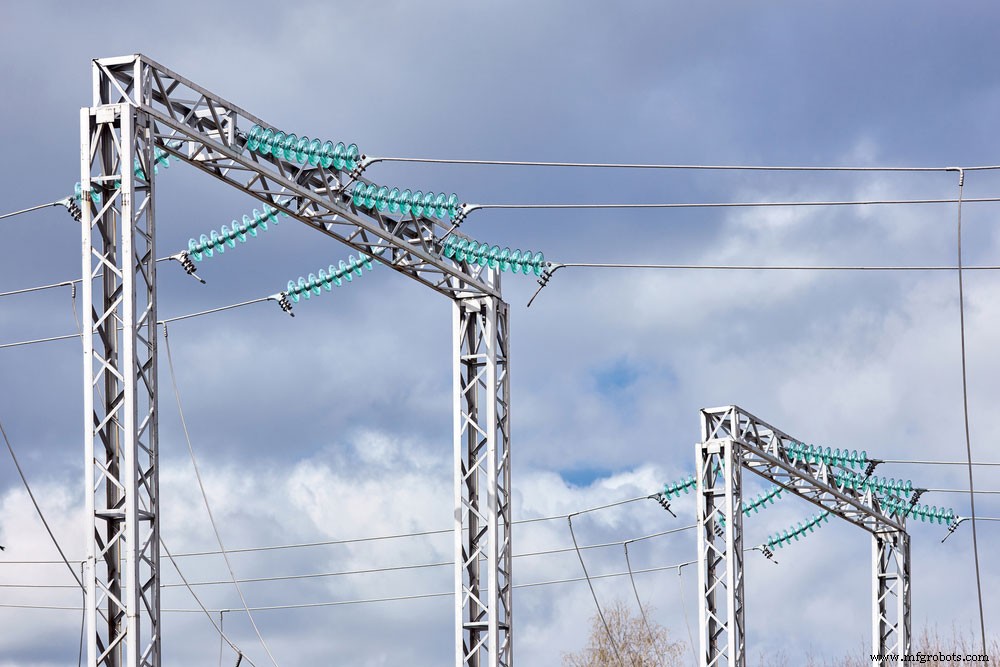
(Variable speed drive inverter converters)
6. How to Choose Between a Single-Phase and Three-Phase Power Supply
While both power phases have their ups and downs, you should base your choice on the following;
- Place of utility; Single-phase is best applicable in small ponds or residentials, whereas you will need three-phase for larger ponds, a larger home, or commercial sites.
- Application; you can use single-phase power for domestic appliances such as coolers, heaters, fans, and run lights. On the other hand, you’ll need an industrial setting to use the three-phase.
- Amount of voltage required; systems with 230V require a single-phase power, while 415V will fit three-phase power systems.
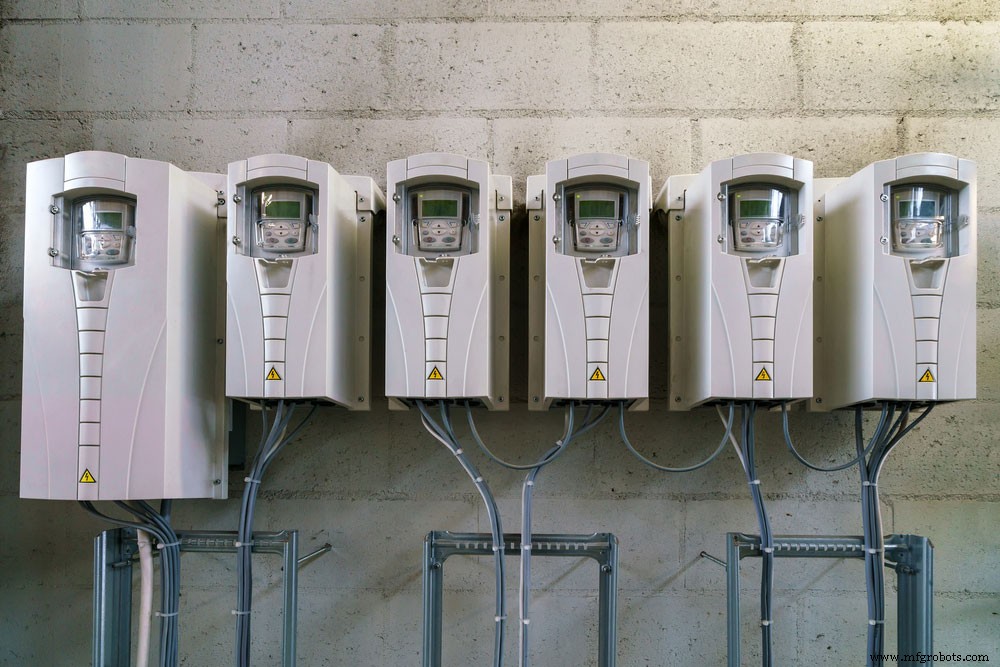
(Two electric high voltage transmission H-frame power towers with three-phases supported by insulators)
- Wirings needed for the power supply
- Performance quality; three-phase has better performing efficiency when compared to a single-phase. But again, it depends on which machines you are using.
- Type of unit; three-phase required for a high horsepower unit that is 5HP or more while a single-phase uses a horsepower unit that is less than 5HP.
Conclusion
To conclude, choosing a type of power unit should be in line with your immediate need. Also, the cost should be affordable. Undoubtedly, both power phases can benefit you or your project in many ways, but maintaining both single-phase power and three-phase power can be expensive.
Nonetheless, with the guide above, choosing between the two shouldn’t be a problem. But if there are still doubts you would like us to clear, kindly reach out to us on the same. We are always more than glad to set things straight.
Industrial Technology
- Transformer‑Based Power Supply: Building a Safe 12 VAC Step‑Down Circuit
- Power Supply Circuits: Types, Design Principles, and Performance
- Understanding Single‑Phase Power Systems: Efficiency, Safety, and Design
- Supply Chain Management vs. Logistics: Understanding Key Differences
- Understanding Brownouts vs. Blackouts: Key Differences and Business Impact
- How to Safely Connect a Portable Generator to Your Home Power System – 4 Proven Techniques
- Running a Three‑Phase Induction Motor from a Single‑Phase Power Supply: Proven Methods and Tips
- MIG vs. TIG Welding: Which Process Best Fits Your Project
- Choosing the Right LED Power Supply: A Comprehensive Guide
- Transformerless Power Supplies: Fundamentals, Operation, and Design Requirements