



Choosing an Internal AC‑DC Power Supply for Your Product
A common requirement in product development is selecting an internal AC‑DC power supply capable of delivering from a few watts up to several hundred watts.
Why choose an internal supply?
Consumers dislike bulky in‑line adapters, and as power densities increase, many wall‑wart units now fit inside the plug itself. Using an external supply also keeps high voltages away from the end‑product, simplifying safety certification.
However, cable length can introduce voltage drop, requiring additional regulation inside the device. External adapters also lack “smart” features such as sleep‑mode shutdown or dynamic voltage adjustment, and they complicate EMI compliance because the cable and adapter must be tested as part of the final system. For these reasons, many manufacturers opt to mount the adapter internally to streamline safety and EMI certification.
At higher power levels, or when control and advanced functionality are needed, an internal or “equipment” power supply is preferred. The decision should be made early in development, as late selection often leads to space constraints, cost increases, or the need for a custom design.
Safety, EMC, and environmental compliance are paramount
A built‑in supply must meet voltage and current requirements, but must also comply with the relevant safety, EMC, and environmental standards for its application—industrial, household, medical, building automation, rail, military, etc. New hazard‑based safety standards further require that the supply prevents misuse, which an internal module can guarantee by eliminating the possibility of an inappropriate external adapter.
Mechanical considerations
Beyond shape and size, connectors, mounting style, and cooling strategy must match the product’s layout. Open‑frame supplies are low‑cost and common, often with optional covers for technician access. DIN‑rail modules are widely used in panel wiring. Both types typically feature screw terminals or Molex‑style plug‑in connectors for AC input and output. The wiring, fuses, switches, and chassis connectors must be appropriately rated and certified.
Because AC input cables can pick up interference inside the product, a certified filter may be required close to the inlet. Grounding is critical: if the power module is unplugged, the chassis must remain grounded to avoid a live wire fault. Ground connections should not be pluggable unless unplugging simultaneously removes all live connections, or they must be secured with a permanent fixture and anti‑vibration measures.
Careful inlet fusing is essential
When a chassis connector supplies the AC input, a fuse must be placed at the inlet. The fuse should protect the internal supply while allowing the external AC cable to carry its rated current. Fuse coordination—ensuring that the inlet fuse opens before any upstream fuse—prevents simultaneous disconnection of multiple circuits (see Figure 2).
click for full size image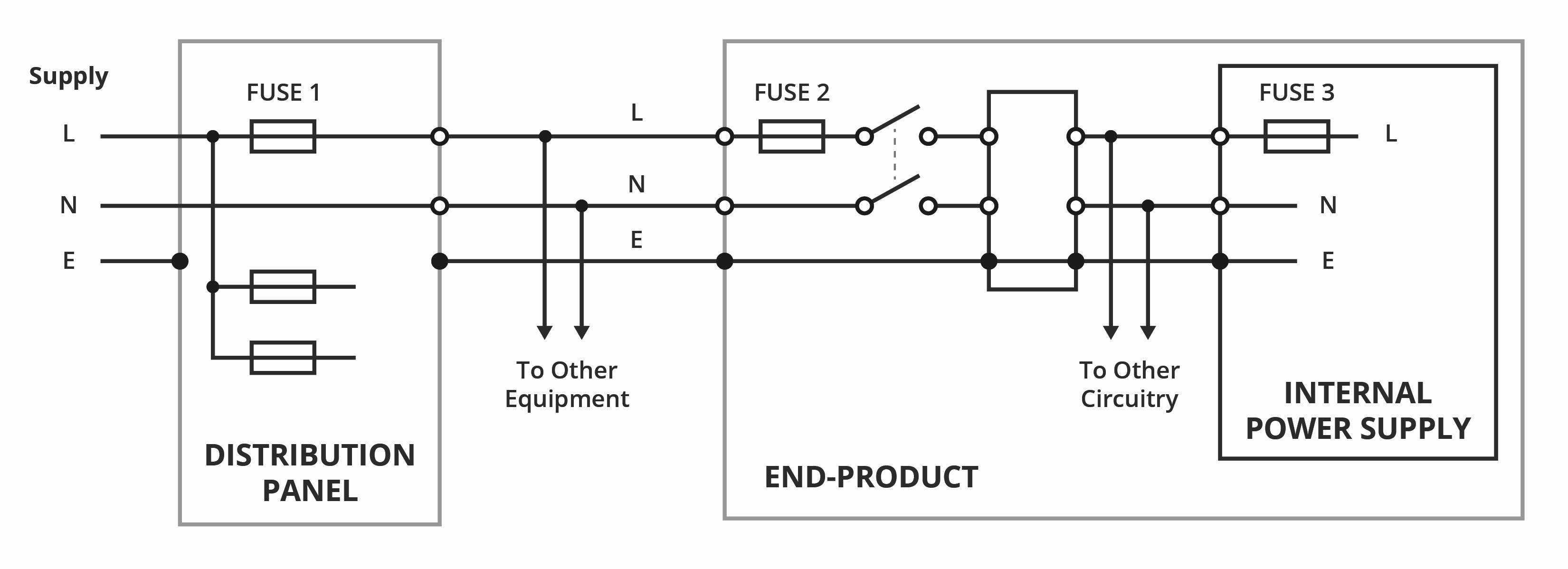
Figure 2: Fuse values in a system should be “coordinated”: value Fuse 1 > Fuse 2 > Fuse 3. (Source CUI)
When evaluating AC connection options, consider overall system cost, not just the cheapest open‑frame module. An under‑qualified supply may necessitate additional filtering, driving up the total cost.
Cooling strategy determines supply type
Fans, natural convection, or baseplate cooling are the primary options. Fan‑cooled units are smaller but may be unsuitable in noisy or hard‑to‑replace environments. When using a fan, define inlet and exhaust paths to avoid dead spots, especially when other system fans are present. Manufacturers such as CUI provide airflow recommendations in their datasheets (see Figure 3).
click for full size image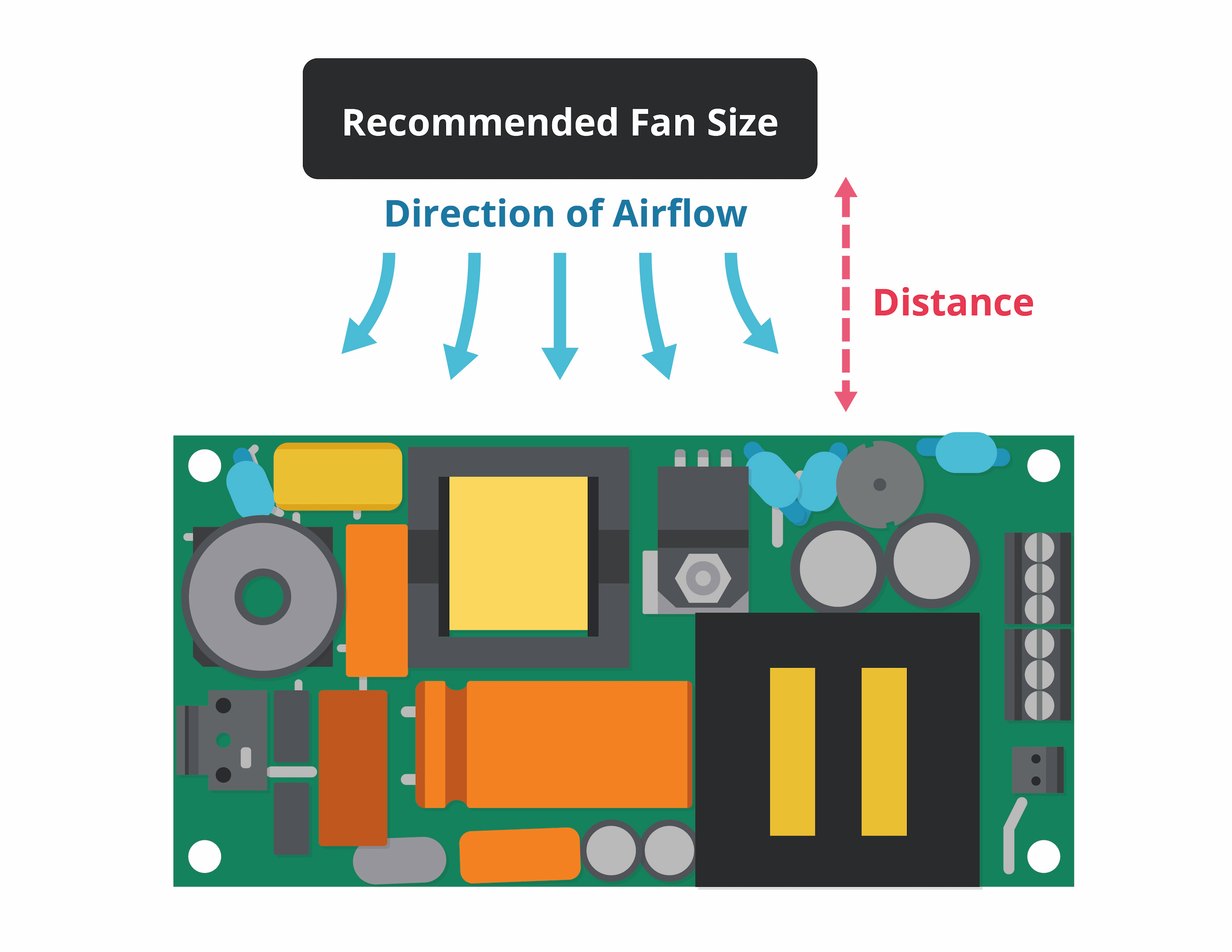
Figure 3: Recommendations for fan size, direction, and distance should be considered to avoid air “dead spots”. (Source CUI)
Convection‑cooled supplies are sensitive to orientation and must be positioned away from other heat sources. Baseplate‑cooled units eliminate uncertainty in the heat path but require a cold wall and robust mounting. When sizing a supply, compare continuous and peak power. An inexpensive unit with a high surge rating can often meet intermittent load requirements.
Leverage expert guidance
With the breadth of available internal supplies, the optimal choice depends on safety, compliance, cooling, mechanical fit, and cost. Identifying the supply type early—aligned with standards, application, and integration constraints—reduces risk and keeps the project on schedule.
 Ron Stull is a Power Systems Engineer at CUI Inc. Ron has gathered a range of knowledge and experience in the areas of analog and digital power as well as ac‑dc and dc‑dc power conversion since joining CUI in 2009. He has played a key role on CUI’s Engineering team with responsibilities including application support, test and validation, and design. Outside of power engineering Ron can be found playing guitar, running, and touring the outdoors with his wife, where their goal is to visit all of the U.S. National Parks.
Related Contents:
- Selecting an external power supply
- How USB Type‑C can reduce consumer power adapter confusion – and cut global e‑waste
- Combining power and data wires, Part 1
- USB Type‑C and power delivery 101 – Power delivery protocol
- Using wired data connections to power demanding IoT devices
- Untangling in‑vehicle wireless power design challenges
For more Embedded, subscribe to Embedded’s weekly email newsletter.
Embedded
- Transformer‑Based Power Supply: Building a Safe 12 VAC Step‑Down Circuit
- Power Supply Circuits: Types, Design Principles, and Performance
- How to Choose the Right External AC/DC Power Supply for Your Product
- CNC Power Supply Troubleshooting Guide
- Professional Lambda Power Supply Repair Services – Trusted Expertise
- Expert Fanuc Power Supply Repair Services
- Is Your Industrial Power Supply Worth Repairing?
- Expert Power Supply Repair & Maintenance by Tectrol – Trusted Canadian Engineering Since 1968
- Top 5 Causes of Power Supply Failures in 2020 — Insights & Prevention
- Power Supply Rails Explained: The Backbone of Modern Electronics