



Inductor Types Explained: A Comprehensive Guide
Inductors have a reputation for being large and sluggish. Thus, some hobbyists may avoid them – especially when starting. However, they’re a critical passive component and worth learning. Additionally, not all inductors are inflexible and cumbersome, and they can be one of the most vital electronic components for your circuit board. But first, you’ll need to know which type of inductors are the most suitable for your project.
Types of Inductors
Inductors come in various shapes and sizes. In this section of the guide, we’ll explore all the types of inductors available to you, and we’ll discuss the features, applications, and construction.
Coupled Inductor
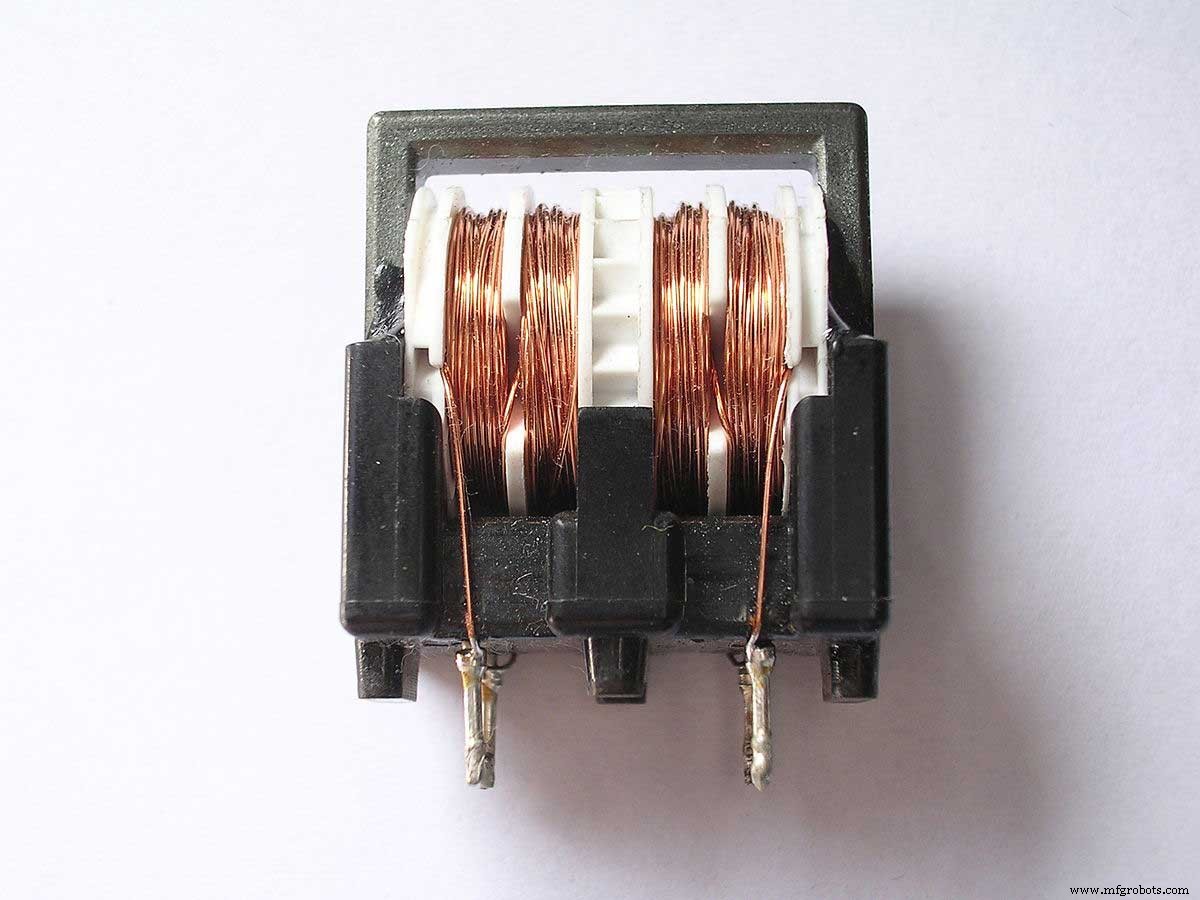
Source: Wikimedia Commons
Coupled Inductor/Small transformer
Construction
Coupled inductors consist of an ideal transformer and an inductor with magnetizing Inductance, and these two components combine to form the coupled inductor. As with most inductors, the coupled inductor uses the magnetized inductor component to store energy while the transformer transfers it. However, both coils of the inductor increase overall electromagnetic permeability through a phenomenon we know as mutual inductance/induction.
Uses
We typically use coupled inductors in buck-boost DC-DC converters such as:
- Single-ended primary-inductor converters
- Flyback converters
- Ćuk converter
Example Specifications
- Core Volume: 0.121 litre
- Gap length:
- Side: 0 mm
- Center: 26.6 mm
- Total Weight: 910g
Diagram
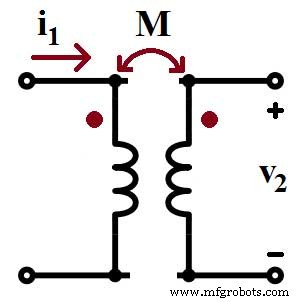
Coupled Inductor Diagram
Source: Wikimedia Commons
Air Core Inductor
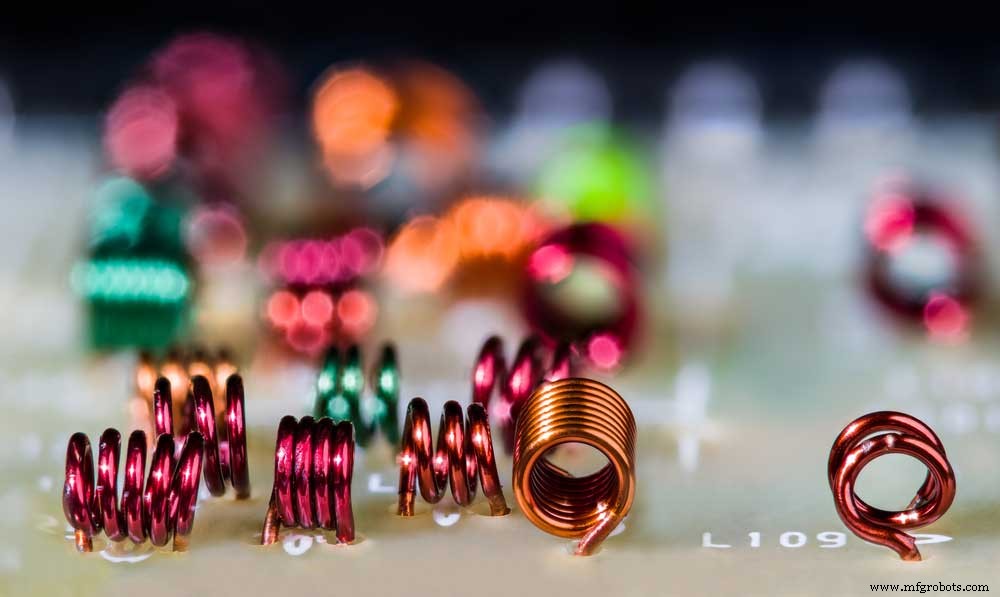
Colored air coil inductors
Construction
The air core inductor is one of the most common types of inductors. It often uses a ceramic core, and thus, we typically refer to it as a ceramic core inductor. However, air inductors may also be coreless.
Nevertheless, ceramic non-magnetic core air inductors are preferable. This is because the ceramic core gives the inductor its shape and supports it. Additionally, ceramic is an ideal material because of its low thermal coefficient expansion, and thus, it can provide high levels of stability when the coil is in use. You’ll find it unsurprising that ceramic is one of the most ubiquitous core materials.
Additionally, ceramic is devoid of magnetic properties. Therefore, it has zero permeability and will not store residual energy or interfere with the component’s overall Inductance. During the production process, manufacturers will dip the inductor in wax or varnish to stabilize it further. This process is essential for coreless air inductors.
Uses
We can use air-core inductors in high-frequency applications such as televisions. Other notable applications include:
- Interstage coupling
- low-frequency applications between 20 Hz and 1 MHz
- RF and IF tuning coils
- Filter circuits
Example Specifications
- Operating Temperature: -40°C to 125°C (+)
- Tolerance: ± 2%, 5% and 10%
- Range: 1.65nH to 538nH
- DC Resistance: 0.4 Ω
- Wire Gauge: 18 AWG
Diagram
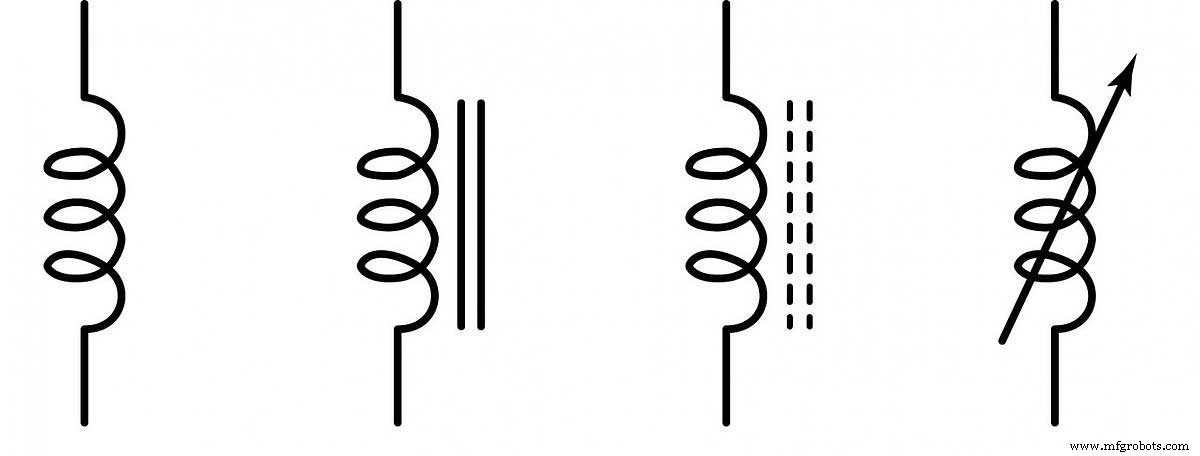
Air Core Inductor Symbol
Source: Wikimedia Commons
Laminated Core Inductor
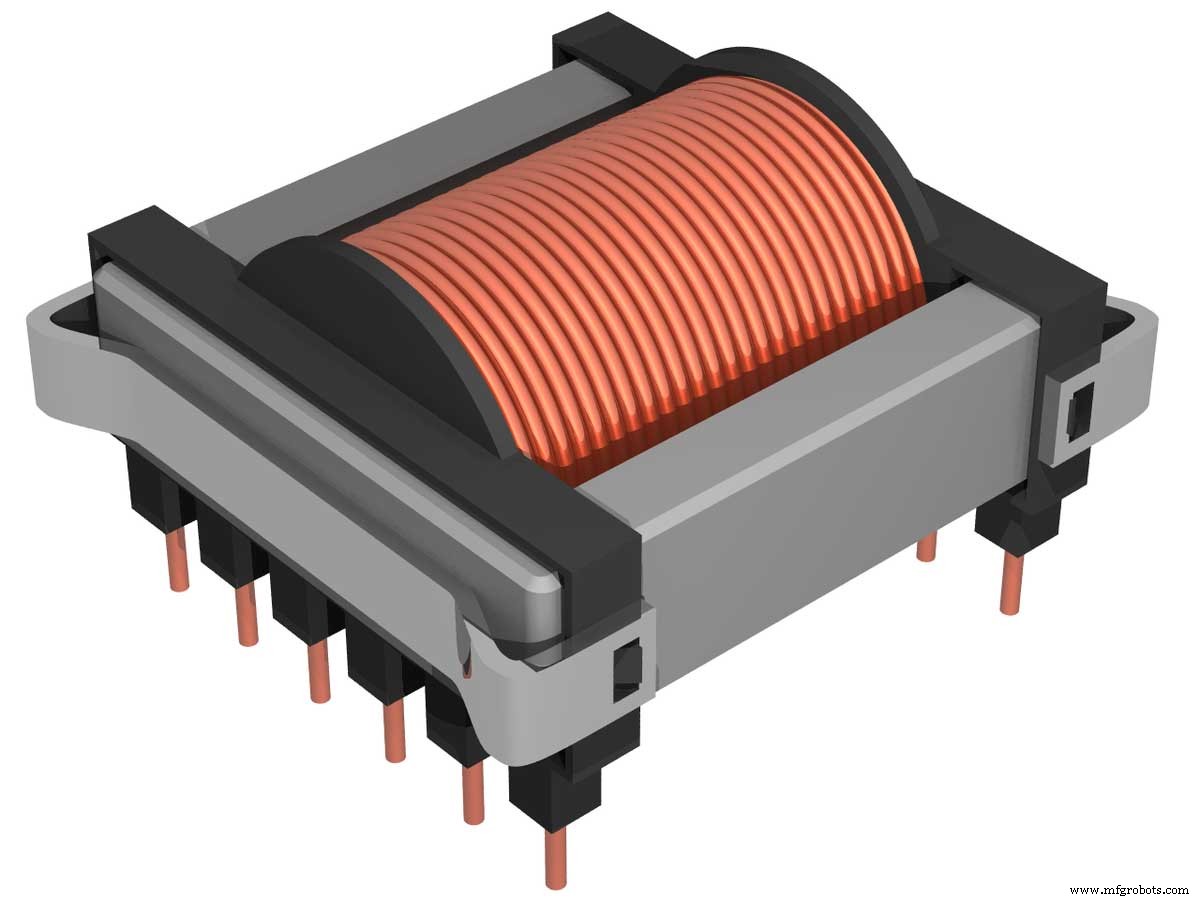
ER Core Assembly
Source: Wikimedia Commons
Construction
Manufacturers construct the core of these inductors by organizing a stack of laminations on top of each other. The materials that these laminations comprise depend on the specifications and purpose of the inductor. Therefore, it may consist of a plethora of materials, all with different thicknesses.
However, the laminations tend to be steel-based and feature an insulating material between them. Thus, the manufacturer must arrange these laminations parallel to the magnetic field to prevent eddy current losses. Additionally, the other critical components of the laminated core inductor include a coil wrapped around a bobbin.
Uses
We usually use laminated inductors in transformers. However, you can also use them in a wide range of applications such as:
- Line filters
- Noise filters
- Filter chokes
- Chargers/converters for electric vehicles
Example Specifications
- DC Current Range: 1.0 ADC to 200 ADC
- Inductance Range: 0.12 mHy to 100 mH
- Operating Temperature: up to 130°C
Diagram
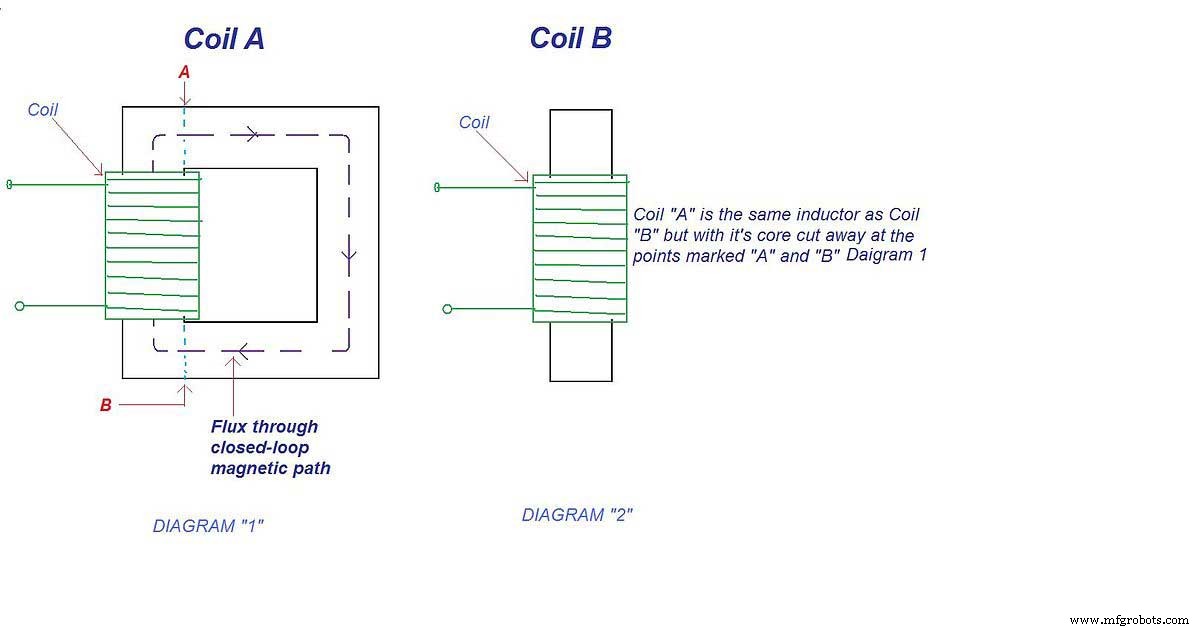
Laminated core inductor
Source: Wikimedia Commons
Ferrite Core Inductor
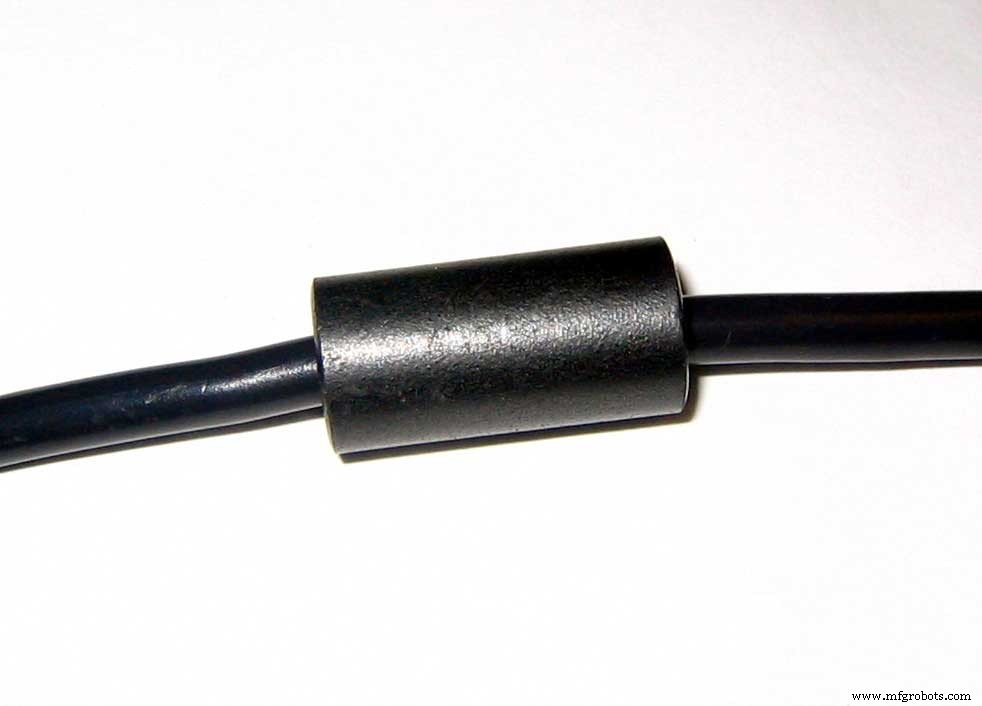
Ferrite bead no shell
Source: Wikimedia Commons
Construction
In appearance, ferrite resembles ceramic material. However, unlike ceramic, it’s a ferrous material (ferromagnetic). This means that it magnetizes when it is in a magnetic field, and it still retains this magnetism when the area is removed.
Consequently, it has high electromagnetic permeability and a low reluctance path to the magnetic flux. Because the core materials consist of iron oxide, we may also refer to iron core inductors.
There are two types of ferrite cores:
- Soft Ferrite: It only carries electromagnetism temporarily. Consequently, when the magnetic field recedes, the ferrite loses its magnetism. Thus, it can reverse magnetic polarity. Accordingly, this is why we often refer to it as a transient or temporary magnet.
- Hard Ferrite: A dense and robust material that can operate in temperatures up to 180°C. However, unlike soft ferrite, it retains its magnetism after the magnetic field is removed from it. Therefore, we refer to them as permanent magnets.
Uses
We can use ferrite core inductors in the following applications:
- Pi Filters
- Switching circuits
- Different range of frequencies
Example Specifications
- Inductance: 1400±25% nH
- Operating Frequency Range: ≥ 150 kHz
- Operating Temperature: -25°C to ±180°C
- Weight: 1.4g to 27.6g
Diagram
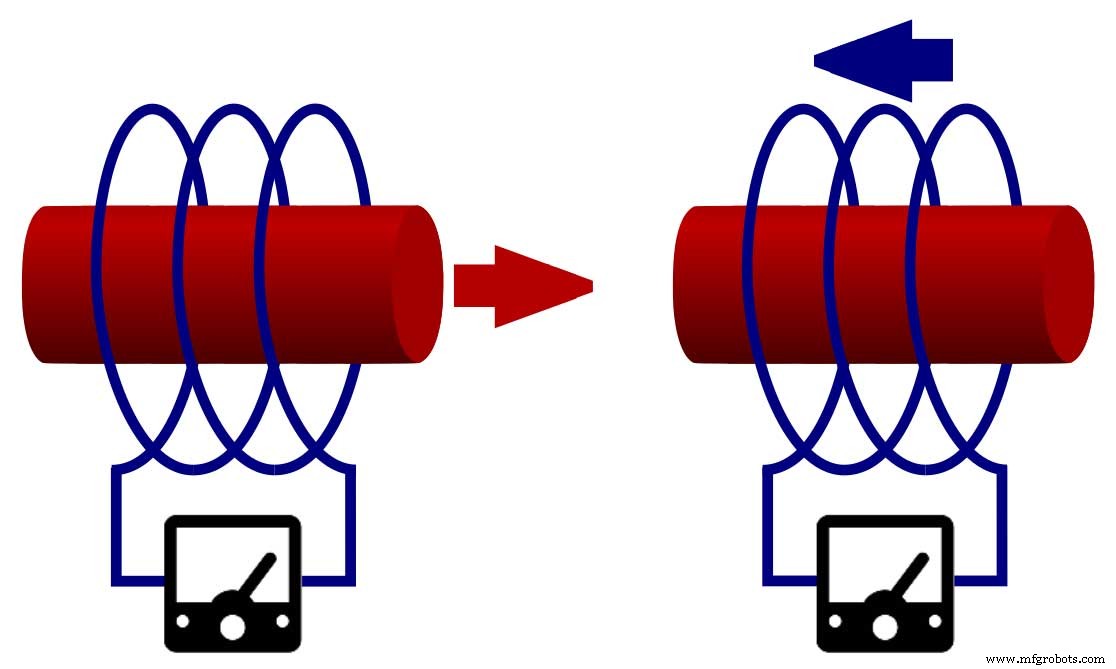
Magnetic ferrite inductor diagram
Source: Wikimedia Commons
Types of Inductors– Toroidal Core Inductors
Toroidal core inductors use toroids as their core. Consequently, you’ll notice that most of the inductor types on this list base their name on the material that the body uses. However, toroidal refers to the shape of the core more than it does the material.
Toroids are donut-shaped structures – circular with a hole in the middle. Accordingly, inductor toroids come in a variety of sizes and materials. Consequently, you can find toroidal-based inductors with ferrite material or powdered core products such as Kool Mµ.
The reason we have different materials is that they behave differently with different frequencies and inductance values. Nevertheless, regardless of the material, the toroidal core inductor’s most significant advantage over other inductor types is lower electromagnetic interference (EMI).
While you can create your toroidal core inductor at home, you’ll require a unique winding matching during the manufacturing process.
Uses
Applications of toroidal core inductors may include:
- Power supplies
- Electronic circuits
- Analog circuits
- Communication systems
- Medical devices
Example Specifications
- Material Types:
- Molypermalloy Powder
- High Flux (nickel-iron alloy powder)
- Kool Mµ (iron, aluminum, silicon alloy powder)
- XFlux (silicon-iron alloy powder)
- Kool Mµ Max (iron, silicon, and aluminum alloy)
- Permeability: 14 – 300 H/m
- Saturation: 0.7 to 1.6T
AC Core Loss: Shallow to high
Diagram
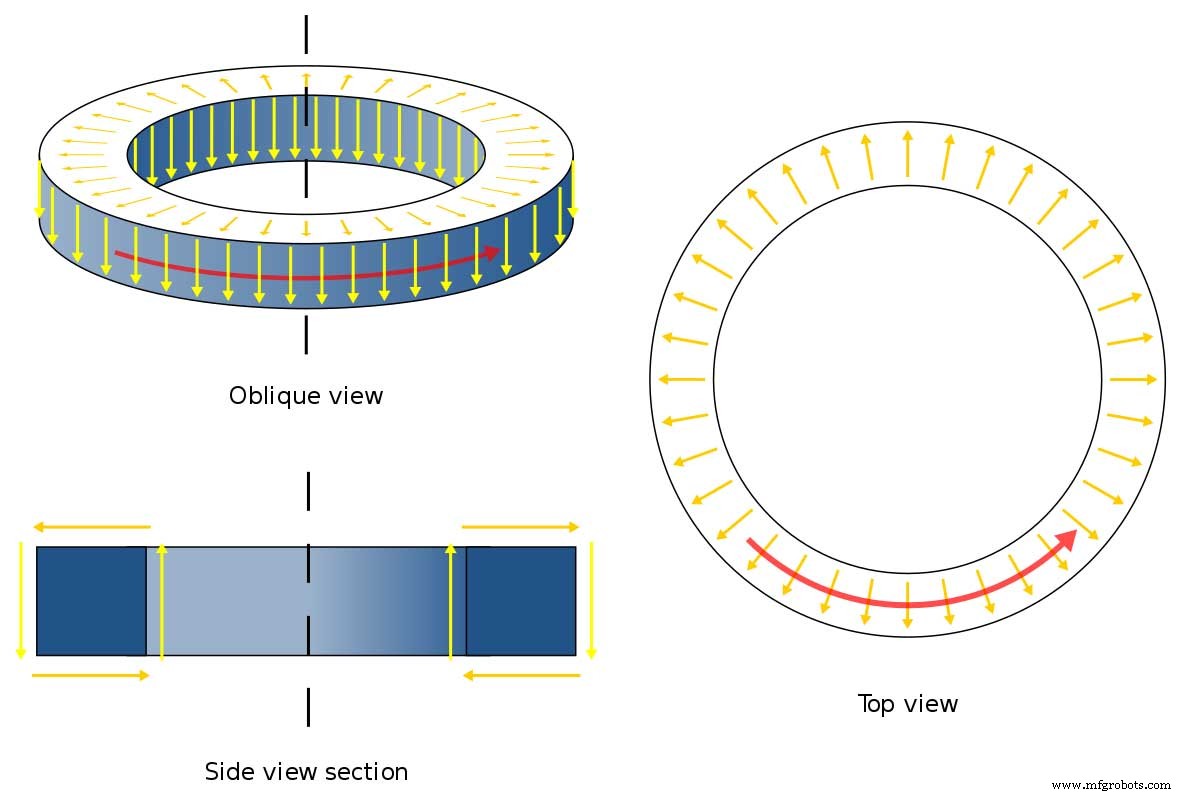
Toroidal Core Inductor With Fully Coined Magnetic Field
Source: Wikimedia Commons
Types of Inductors– Bobbin Inductor
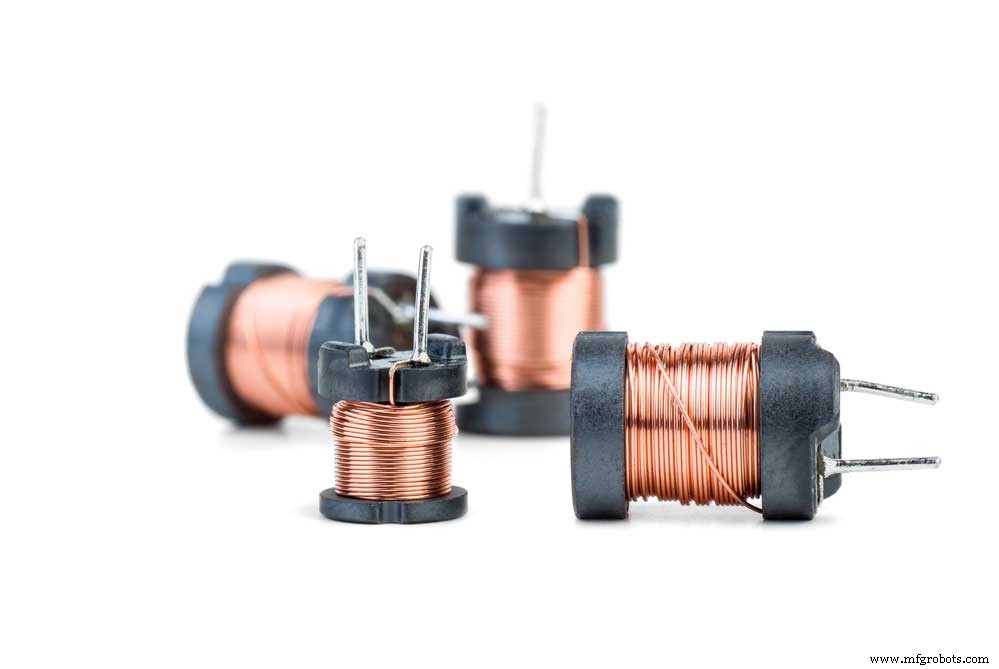
A collection of bobbin inductors
Source: Wikimedia Commons
A bobbin is a piece of cylindrical material that allows you to wrap thread, tape, or copper coil around it. Again, the name describes the shape of the material as opposed to the material itself. Consequently, we may also refer to this type of inductor as a drum core inductor because of its shape.
Once we wind the coil around the drum, we secure it using a shrink tube to the body. The bobbin can come in various shapes and material types. For instance, it may consist of ferromagnetic material, powdered iron, or nickel-iron alloys.
Uses
We primarily use bobbin-based inductors on mounted printed circuit boards. Other inductance applications include:
- Power adapter
- Pi Filters
- Filter circuit
- Switched-mode power supply circuits
Example Specifications
- Material Type:
- Nickel-iron alloy
- Cobalt alloy
- Powdered iron and nickel
- Ferrite
Standard Inductance: +/- 10%
Form Factors: Vertical and horizontal
Diagram
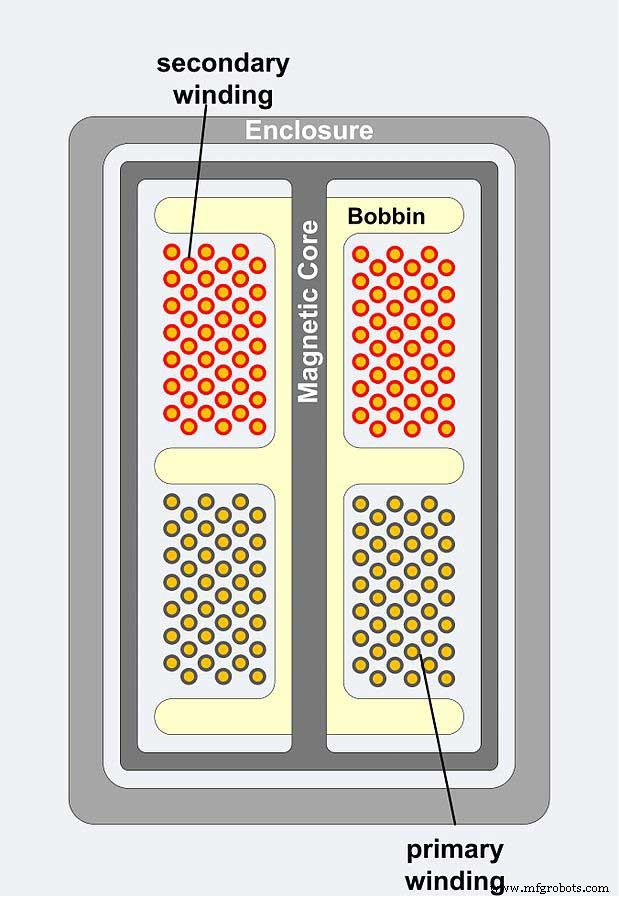
A transformer that showcases the basic construction of a bobbin based inductor
Source: Wikimedia Commons
Types of Inductors– Axial Fixed Inductors
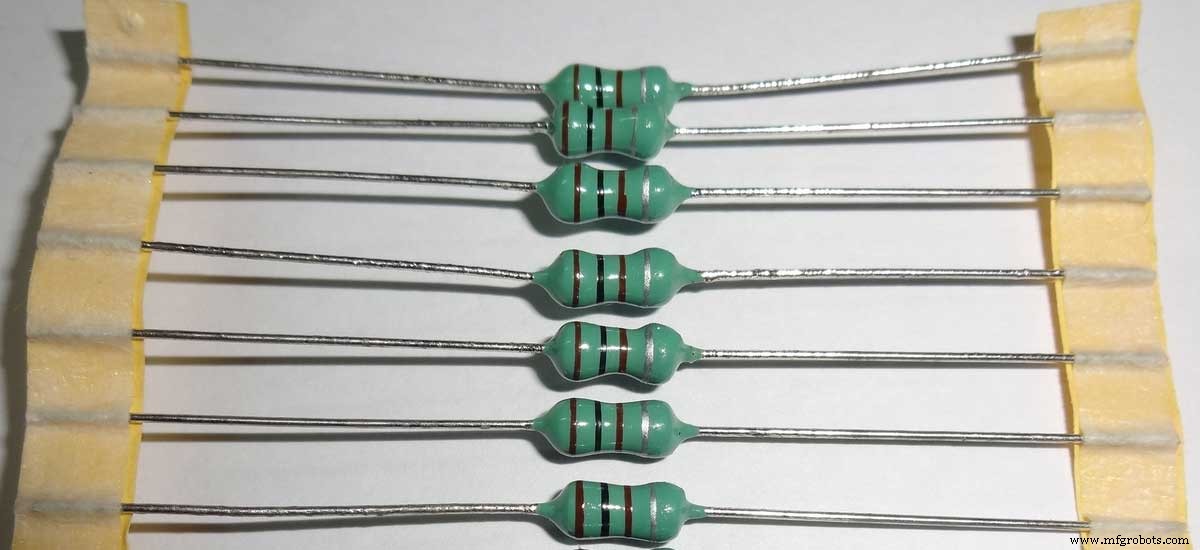
A collection of axial fixed inductors
Construction
Axial inductors look a lot like resistors, and therefore, we may also refer to them as color ring inductors. Nevertheless, they often feature a thin coil around a miniature curved bobbin-like ferrite material. Once we wrap the loop around the core, we connect leads to both ends of the structure. Next, we mold it with green ceramic or plastic insulation. Finally, we mark it with rings/bands according to the Electronic Industries Association (EIA) specifications and standards.
These rings allow us to discern the value of the inductor or its Inductance. Typically, you can find them as 4-ring or 5-ring inductors. Nevertheless, to calculate an inductor’s importance, you should refer to the EIA color sheet.
Uses
Axial inductors are generally high-frequency inductors. Because of their size and general robustness, we can use them in several applications such as:
- Circuit boards
- RF Applications
- Resonant circuits
- Buck-boost converters
- Normalizing the flow of current in an electrical circuit
- Filters circuits and other designs
Example Specifications
- Operating Temperature: -55°C to ± 105°C
- Inductor Product Types:
- General Purpose Inductors
- RF Inductors
- Power Inductors
- Coil and Material Types:
- Choke (Power, RF, Hash, and HF)
- Molded
- Wirewound
- RFI Coil
- Inductance Ranges: 1 nH to 680 mH
- Tolerance: 1% to 20%
- Range of Maximum DC: 2 mA to 188 A
- DC Resistance Range: 35 uΩ to 1.2KΩ
Types of Inductors– Diagram
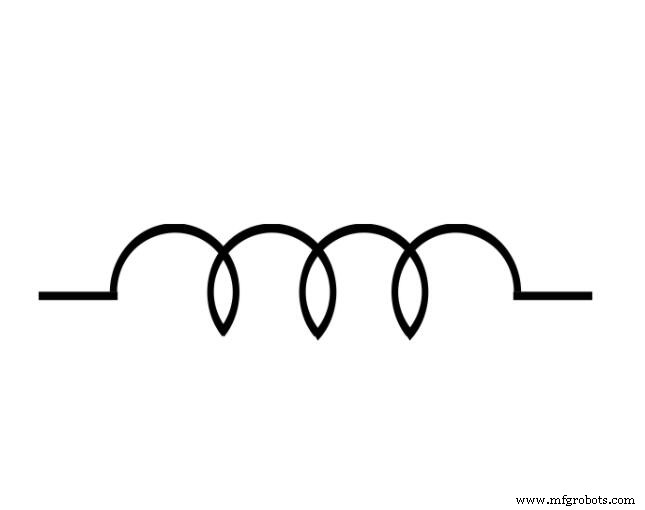
General RSA inductor symbol
Source: Free SVGs
Types of Inductors– Multilayer Chip Inductors
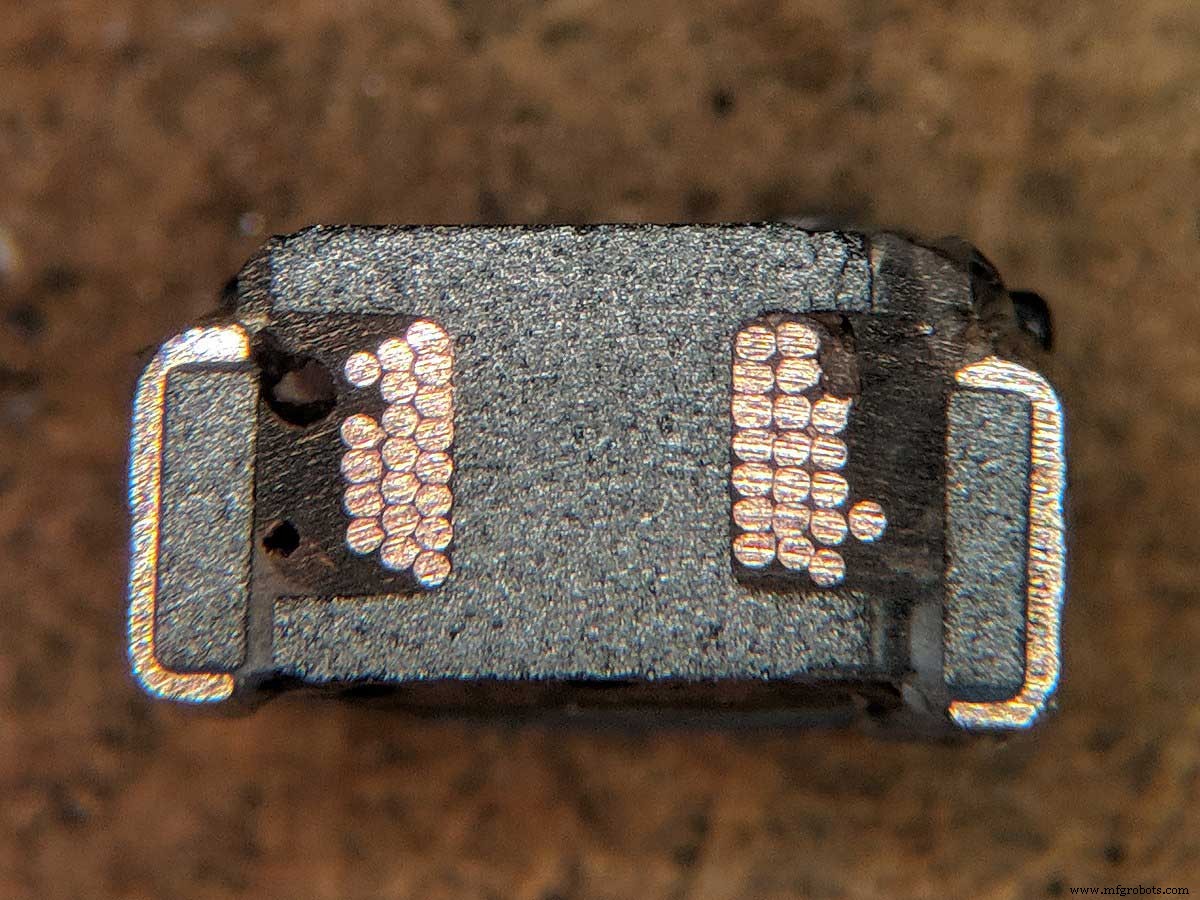
Surface Mount Multilayer Inductor Cross Section
Source: Wikimedia commons
Types of Inductors– Construction
As the name implies, multilayer chip inductors consist of multiple layers. As such, these layers usually consist of ferromagnetic material on top of ceramic dielectric materials. Furthermore, manufacturers will print the induction coil on these ferromagnetic sheets using a metallic paste.
Once the manufacturer correctly places these layers, the patterns form a singular coil. The manufacturer will then mold and coat the total package. On each side of the MLCIs package, there are connecting terminals. Nevertheless, we may also refer to these types of inductors simply as multilayer inductors.
Uses
Their compactness allows us to use multilayer chip inductors in a variety of applications such as:
- Wearables
- Bluetooth devices
- Mobile devices
- Session border controller (SBC)
- Computer motherboards
- Network adapters
- Communications equipment
Example Specifications
- Range of Inductance: 0.3 nH to 470 nH
- Operating Temperature Range: -55°C to 125°C+
- Frequency Range: 12 MHz to +65 MHz
Diagram
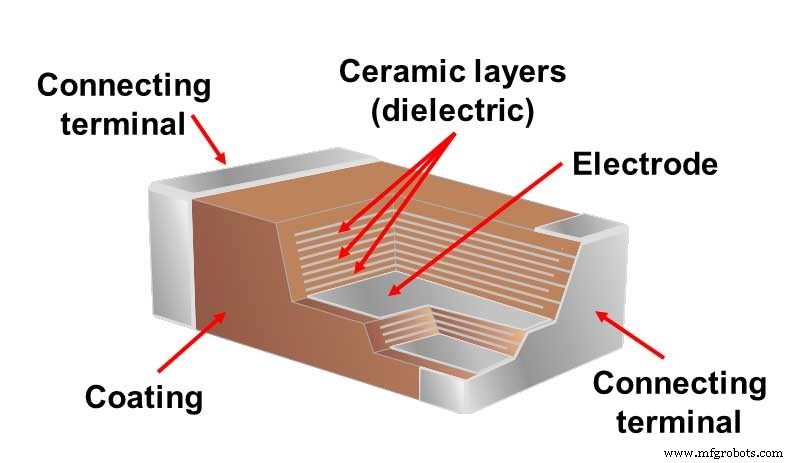
Multilayer Ceramic chip inductors construction
Source: Wikimedia commons
Other Notable Types of Inductors
- Wireless charging coils: They consist of strands of copper wire wound around a ferrite core. Generally, we use them for wirelessly charging mobile devices.
- Powdered iron core inductors: They are ferromagnetic core inductors separated by air gaps. Thus, the magnetic materials in the core encourage high levels of electromagnetic permeability.
- Film Inductor: They use a thin film-based material as the coil. Additionally, they are incredibly small and lightweight. Therefore, we can use them in applications such as DC to DC converters in mobile phones and other portable devices. Furthermore, we may use these types of inductors to create a resonant circuit.
- Variable Inductor: Adjustable inductors that feature a mobile magnetic core. Accordingly, the magnetic core moves in and out of the inductor coil. Thus, this allows the device to alter the level of inductance. Furthermore, we may also refer to them as variable ferrite core inductors. Typically, the variable inductance can range from 10 μH to 100 mH.
Conclusion
In this guide, we explored some of the most common types of inductors. You might have noticed that the critical determinant of an inductor type is its core. If you’ve reached this part of the guide, you should have a basic understanding of all the inductor types and how they can conform to your next project. Either way, we hope that you’ve found this guide to be helpful. Thank you for reading.
Industrial Technology
- AIaaS Demystified: The Definitive Guide to AI as a Service
- Comprehensive Guide to Coupling Types for Efficient Project Outcomes
- Master Maintenance Management: Boost Efficiency & Cut Costs
- Mastering Supply Chain Management: A Comprehensive Guide
- Your Comprehensive CMMS Buying Guide: Maximize Asset Performance
- Mastering LED Drivers: A Comprehensive Guide to Efficient Lighting
- Complete Guide to HID Lighting Ballasts: Types, Functions & Maintenance
- Understanding Fuses: A Comprehensive Guide to Protecting Your Circuits
- Mastering Opamp Hysteresis: A Comprehensive Professional Guide
- Comprehensive Guide to CNC Machining: Techniques, Applications & Best Practices