



2600 mAh Lithium‑Ion Battery: Specs, Function, Circuit Design, and Practical Tips
A Li-ion battery/ Li-ion battery is a rechargeable battery whereby lithium ions move from a negative to a positive electrode. The medium is a battery electrolyte, which occurs during charging and discharging. Lithium-ion batteries are commonly applicable in electric vehicles and portable electronic devices as a power bank. And the reason for their popularity is no memory effect, low self-discharge, and high energy density. An example of such a li-ion rechargeable battery is a 2600mAh battery, which will focus on today. The popular li-ion cell, 2600mAh, has efficient power delivery, and its compactness is favorable for users.
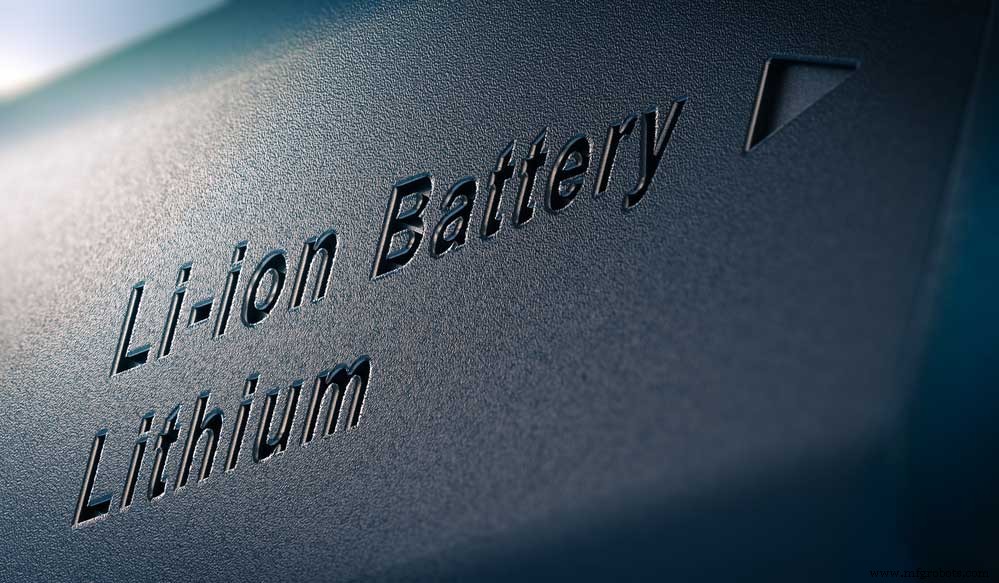
(illustration of a li-ion protected battery pack)
What Does 2600mAh Mean?
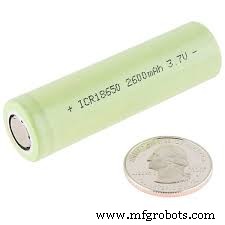
Polymer 2600mAh li-ion battery
mAh/mAhr stands for milliamp hours.
1 amp = 1000 milliamperes, therefore 2600mAh = 2.6 Ampere hour. For that reason, the battery discharges 1 amp every 2.6 hours.
From the above calculation, mAh measures how much current a Power Bank can deliver in an hour. As such, depending on the charge depletion and phone battery capacity, the hours in charging your phone may vary. For instance, an empty 2000mamps battery may take almost 2 hours to charge your phone entirely.
Electrical Data Sheets and Specifications of 2600mAh
A 2600mAh battery has the following specifications and datasheet:
- First, the minimum low voltage cut-off limit is 3V.
- Then, the maximum Ah rating is 2600 mAh.
- Thirdly, the recommended maximum charge cutoff voltage of the full charge limit is 4.2V.
- The allowable case range of temperature during charging is between 0°C to 45°C. Similarly, the allowable case temperature range during discharging is -20°C to 60°C.
- Further, the recommended rate of discharging and charging is 0.52 Amps.
- At controlled case temperature, the possible fast discharging and fast charging rate is 1.3 amps.
- You can use it in integrated battery overcharge/ discharge protection circuits. Unfortunately, 2600 mAh batteries that lack protection have high discharge performance.
- Also, the nominal voltage is 3.7V with an internal impedance of 70 Milliohms.
- Lastly, the maximum allowable discharging and charging rate under controlled case/pulsed form temperature is 2.6 Amps.
Takeaway; Always check the potential dangers of the 2600mAh batteries before purchase and usage.
How to Charge a 2600mAh Battery?
To charge a 2600 mAh battery, you must ensure a constant current constant voltage (CC/CV) rate. Here, you’ll need a continuous 0.52 Amp current and a charger voltage rated at a 4.2V regular. After the battery’s terminal voltage reaches 4.2V, you’ll need to cut off the charging supply.
Likewise, you’ll follow the same pattern while discharging but with different values. In other words, you should rate the connected load such that it consumes a current of fewer than 0.52 Amps. Additionally, you’ll need to disconnect the battery before reaching approximately 3.1V.
A Simple Circuit using a 2600mAh Battery
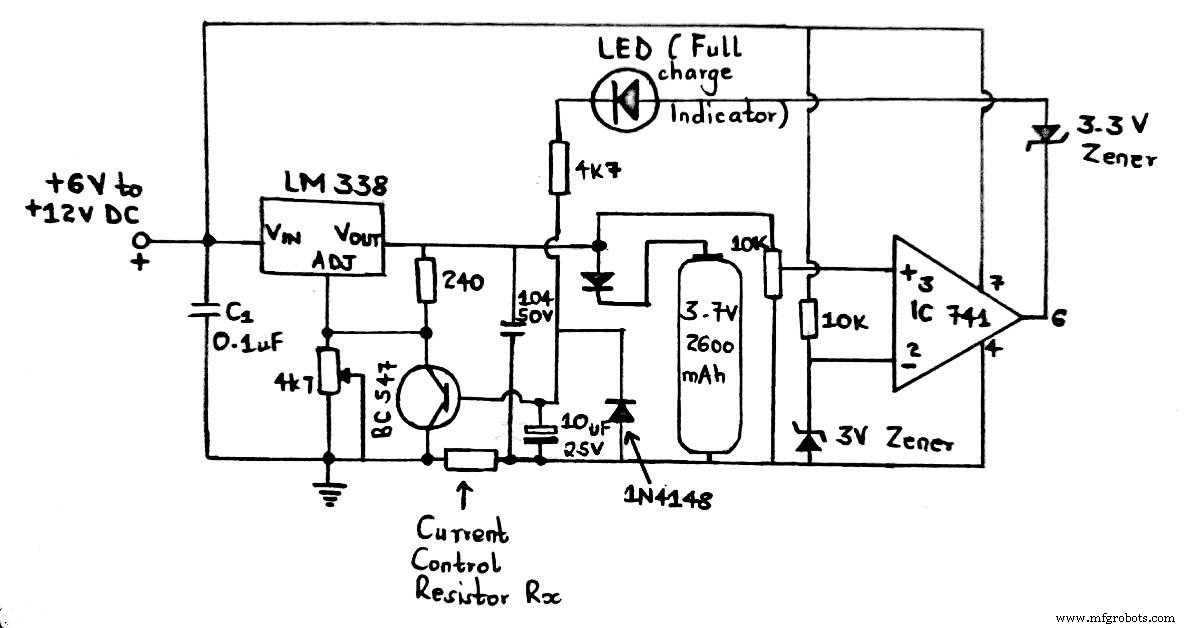
Circuit diagram of a multipurpose charger with 2600mAh battery
The above circuit diagram has an IC 741 based op-amp, an LM338 IC regulator, and a 2600mAh battery.
The formula below helps us calculate Rx:
Rx = 1.2/0.6 = 2 ohm/0.5 Watt
If you need a fixed resistor value, use the formula below:
VO = VREF (1 + R2/R1) + (IADJ × R2)
Whereby;
R1 = 240 ohms,
R2 = value of 4k7 preset, and
VREF = 1.25V
Adjust (ADJ) current is often 50 µA, and you may do away with it since the value is small.
2600mAh Battery: Steps on Circuit design
- Always maintain the 10K preset slider at a ground position.
- Next, supply a minimum voltage of 6V at the input.
- Proceed by adjusting the 47K pot to ensure accurate production of 4.2V. It should be across the points you’re supposed to connect the battery.
- In a like manner, gradually adjust the 10k preset till the LED starts lighting up. Then, use epoxy glue to seal the preset.
Don’t connect the battery in the above process to achieve an auto cut-off system.
When confirming whether the battery is fully charged for usage, attach a 2600mAh battery across the indicated points. Then, switch the power supply ON and wait for the LED to light up to show the charged battery.
- How long does the 2600mah battery last?
A 2600mah battery often lasts two years with constant use. During that period, you’ll gain more than 500 cycles of discharging and charging.
Where Can the 2600mAh Battery Be Used?
You can use this type of battery in several battery-based applications with consistent power usage like;
- DC drill machines,
- LED flashlights,
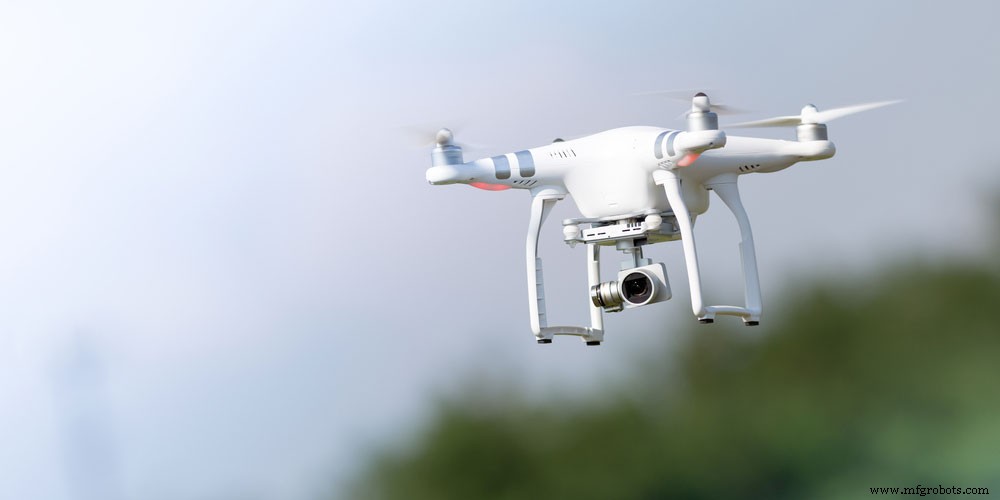
- Drones and quadcopters,
(a flying drone in action)
- Emergency lights, and
- Hair trimmers.
One practical use of these Lithium-ion batteries is in power bank circuits. Power banks are flexible for users because you can carry them outdoors for emergency charging usage.
A power back circuit has a configured output terminal that charges a cellphone. Additionally, it has two connected 18650 2600 mAh batteries in a compact enclosure.
- Before using the power bank, you should charge it with its input voltage at 8.4V.
- After it’s fully charged, remove it from the charger. At this point, there will be a voltage level of 3.8V, which is a standard level. And each drop results in a total voltage of 7.6V.
- The diodes in the power bank circuit enable a voltage drop to 5.2V during the final output. At the same time, a 2-ohm resistor ensures the output has a current control feature.
Note; Depending on the cellphone at the output, you’ll need to adjust the value of the resistor. In that way, you’ll efficiently and optimally implement the charging process.
- Finally, you can now use the power bank after achieving the standby state.
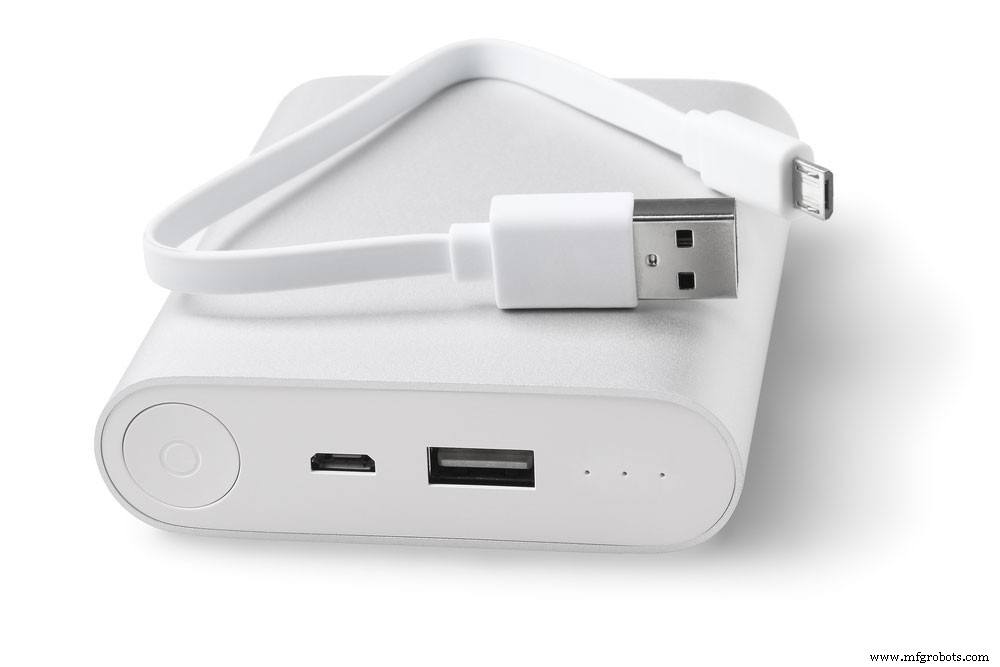
(power bank and cable)
Conclusion
In conclusiona 2600mAh is an undisputed option for batteries when it comes to batteries. Often, you’ll find iyou’llgrated into systems requiring proper protection circuitry (as additional protection) or as a battery pack.
The mix-up can affect the durability of your battery. The mix-up can affect the durability of your battery. However, during youdon’tchase of batteries, ensure that you don’t mix used and unused batteries, new and old ones, etc. Also, avoid using the batteries in E-cigarette or vaping devices.
Have any questions concerning the 2600 mAh battery? Please get in touch with us.
Industrial Technology
- Ion Beam Machining (IBM): Principles, Process, and Industrial Applications
- Laser Welding Explained: Techniques, Types, and Industrial Applications
- Extrusion Explained: Process, Types, and Practical Applications
- Friction Welding Explained: Process, Benefits, and Applications
- Electronic Circuit Breaker: Design, Schematic, and Operation Explained
- Comprehensive Guide to Blue PCB Boards: Availability, Features & Applications
- Alarm Circuit Explained: Construction, Operation, and Working Principles
- LM338 Voltage Regulator: Datasheet, Pinout & Practical Applications
- Relay Drives Explained: Function, Design, and Practical Circuit Applications
- Low-Voltage Cutoff Circuit: Design, Operation, and DIY Guide