



Complete Buzzer Datasheet Guide: Pinouts, Specs, and Use Cases
A buzzer is a practical sound feature used in various electronic devices and applications. It is a small 2-pin component that can fit on a breadboard. This is one of the reasons why it finds use in many electronic applications. This article will shed more light on the buzzer datasheet. You will learn about its pin configuration systems, how to use a buzzer, its features, and applications.
Buzzer Pin Configuration
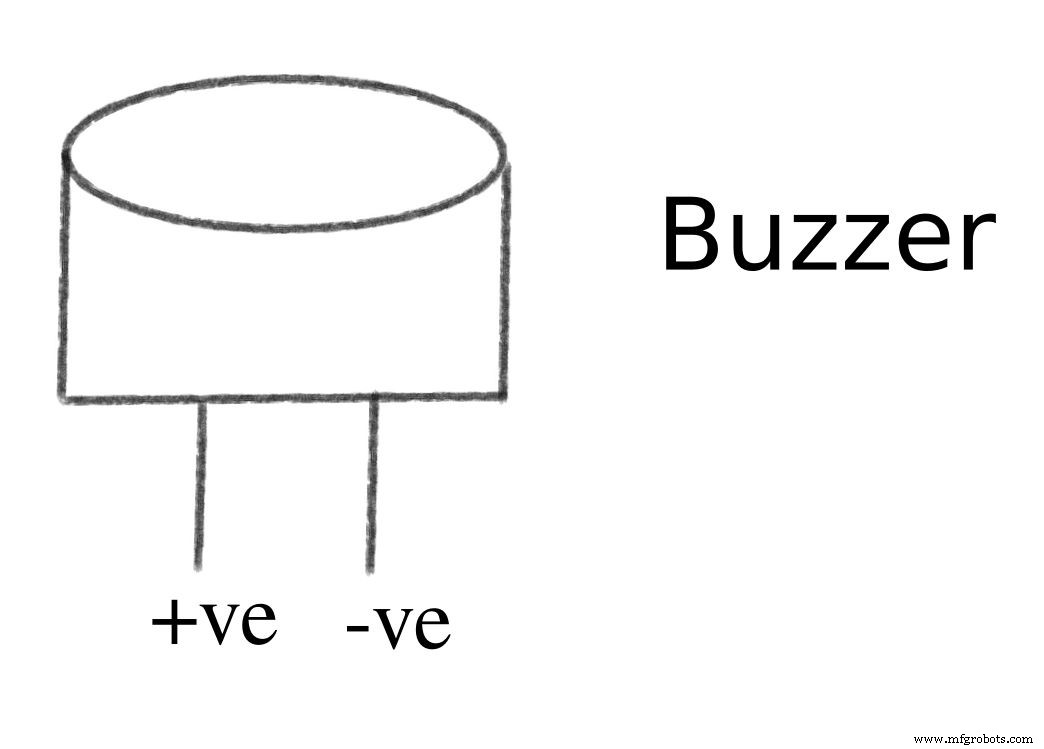
Diagram: A Buzzer
Source: Created using Krita
The buzzer had two pins. First, one pin is positive and has the positive sign (+). A 6V DC voltage powers pin 1.
The second pin is the negative pin identified by the (-) symbol. In addition, this pin has a short terminal lead. It is usually connected to the ground terminal of the electronic circuit.
The Features of Buzzer
First, a buzzer usually has a rated DC voltage of 6V. However, its operating DC voltage ranges between 4 to 8V. In addition, it has a rated current of less than 30mA.
Also, note that the buzzer has a resonant frequency of about 2300 Hz to 3300 Hz.
Other specifications of a buzzer include:
- Operating temperatures of between -20°C to 60°C
- A sound pressure level of 85dBA
How to use a Buzzer
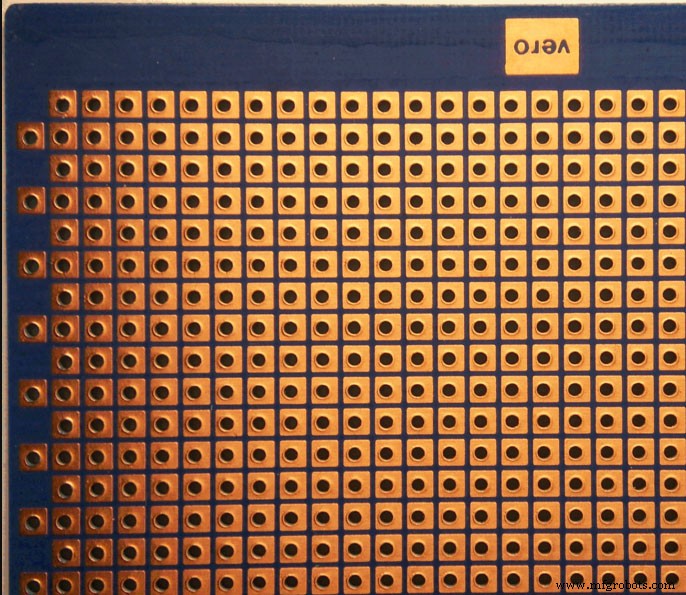
Description: A perf board
Buzzers exist in two types. The first type produces a continuous beep sound. Also, you can refer to this type of buzzer as an active buzzer. Next, the second type of buzzer is the ready-made buzzer.
The readymade buzzer is different from the active buzzer, such that it is much bulkier. Also, this type of buzzer works with an internal oscillating circuit, and it produces a beep.
For this buzzer, the power range should be between 4V and 9V. Therefore, you should use a 9V battery and regulate the supply between +5V and +6V.
Generally, the circuit which has the buzzer usually has an 0N/OF switch which you can use as the control.
The most commonly used buzzer is the one that produces a continuous sound. This is because it is easy to customize to fit several applications compared to the readymade buzzer.
Buzzer Alternatives
The equivalents for passive buzzers include:
- Piezo Electric buzzer
- Speaker
- Active Passive Buzzers with Module
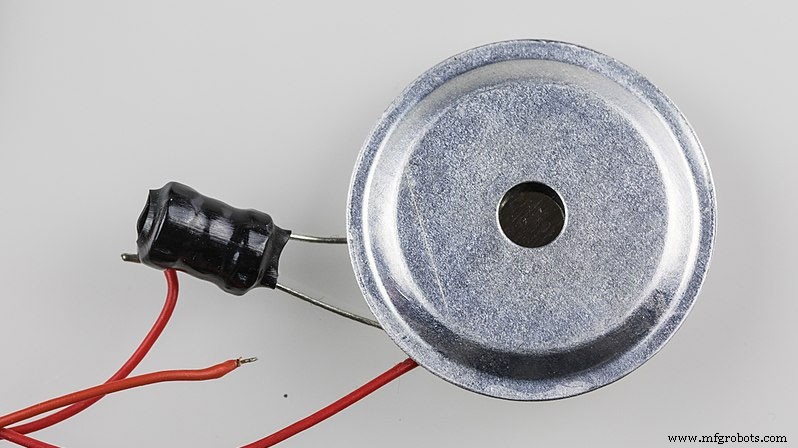
Description: Piezoelectric buzzer
Applications
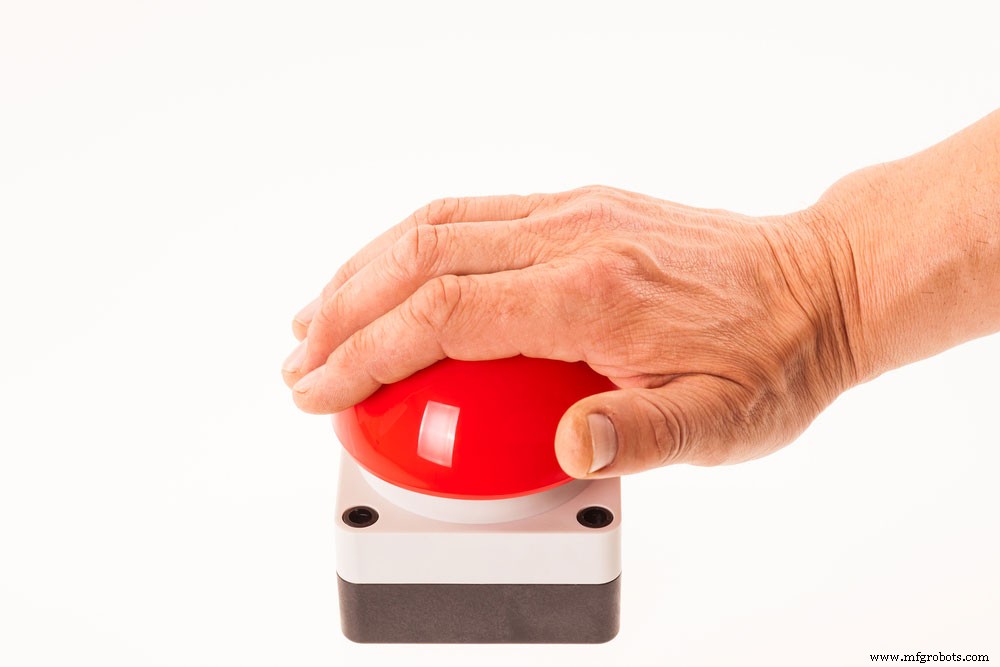
Description: Hand pushing a buzzer
You can use buzzers in a variety of circuit applications. These include:
- Alarm circuits
- Communication equipment
- Electronics in Automobile
- In portable equipment, due to the compact size of the buzzer
- user input devices, e.g., mouse

Description: A computer mouse
Conclusion
We tell you all about buzzers. If you have any questions, you can contact us on our page.
Industrial Technology
- Casting Explained: A Comprehensive Guide to Metal Casting Processes
- Extrusion Explained: Process, Benefits, and Limitations – A Technical Overview
- GTAW/TIG Welding Explained: Process, Benefits & Applications
- LM338 Voltage Regulator: Datasheet, Pinout & Practical Applications
- Comprehensive Guide to Voltage Sensors: Accuracy, Reliability, and Eco-Friendly Solutions
- S8550 Transistor Explained: Key Features & Applications
- Mastering the ATMega328P: Features, Pinout, and Applications
- Attiny84 Datasheet – Pin Layout & Programming Guide
- Mastering the AD9850 Module: Comprehensive Guide & Practical Steps
- Build Your Own NAS with a Raspberry Pi: A Complete Step‑by‑Step Guide