



Zero‑Ohm Resistors: Key Advantages and Real‑World Uses
About zero ohms resistor, Resistors are passive two-terminal electrical devices whose circuit element is electrical resistance. In electronic circuit boards, further, terminate transmission lines, active bias elements, divide voltages, reduce current flow, etc.
Other than the standard resistors, there are zero-ohm link/resistors. Ideally, the latter aren’t real resistors but rather packaged like one.
So, what are zero-ohm or wire link resistors? How are they useful?
Let’s get into the article to know more.
What is a Zero Ohms Resistor?
A zero-ohm (0-Ω) resistor (or jumper resistor), in simple terms, is a jumper wire packaged similarly to a standard resistor.
As the name suggests, 0-Ω resistors, when measured, have a zero-resistance value, although not as actual as semiconductors. They also have a ± tolerance and an index of error accuracy. Furthermore, they’re common in the applications like debugging, as a fuse or jumper, in mixed circuits, etc.
Types of Zero Ohm Resistors
There are two types of zero-ohm resistors available in the market.
Wire Wound Zero Ohm Resistor
A wire-wound zero resistor has the shape of an ordinary/standard resistor. However, unlike a normal resistor, its surface print is only a single black band (a black line).
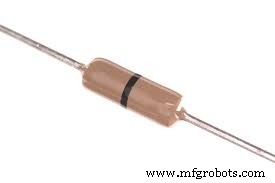
Wire wound zero-ohm resistor.
Surface Mount Device (SMD) Zero Ohm Resistor
Recently, designers and manufacturers have switched to SMD resistors because they cover a wide surface area on PCBs and are simple and affordable. You can identify an SMD chip resistor by finding three zeros “000” or a single zero “0” print on its surface.
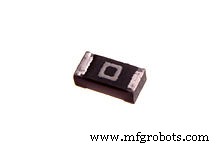
Zero-ohm SMD resistor
Why Do You Need Zero Ohm Resistors?
You might be wondering, why use a zero-ohm resistor when there are much better options like jumper wires?
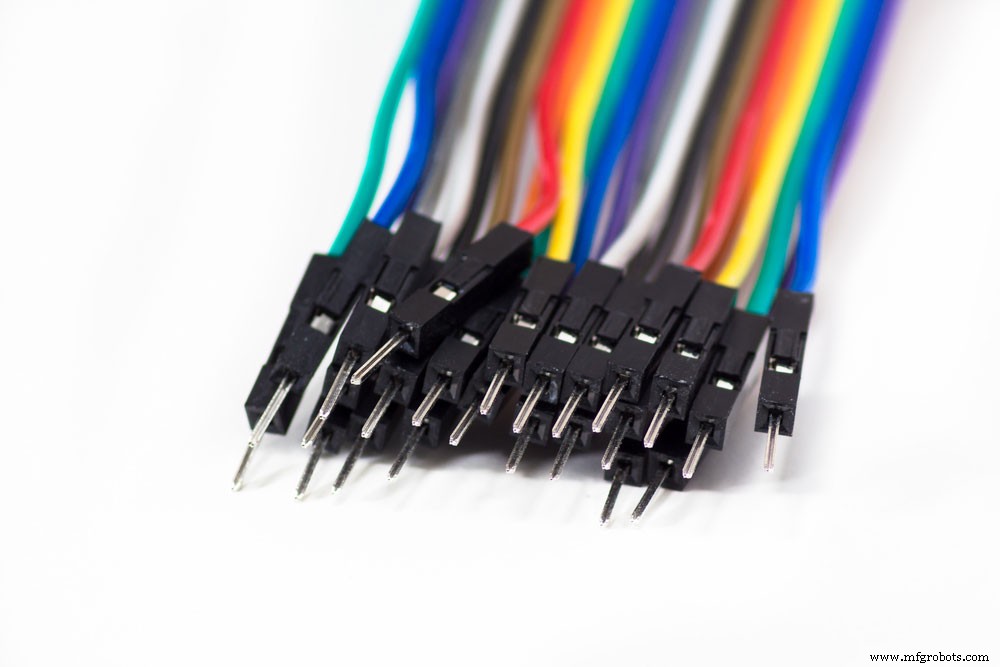
(jumper wire connectors)
Well, the following three reasons are among the main factors.
- Preventing reverse engineering
A designer’s worst fear is copycats who copy a printed circuit board design while using a reverse engineering method. Thus, manufacturers confuse the copycats by placing zero-ohm resistors with different color codes or zero markings to correct the situation.
- Single-layer design
In PCB design and assembly, a single layer PCB is less expensive when compared to a double layer PCB design. Mostly, using wires in assembling single PCBs requires making holes that ultimately turn the products into double-layer PCBs.
Therefore, utilizing zero-ohm resistors instead guarantees a single-layer board structure of a lower cost.
- Automatic placement
Manufacturers use automatic insertion machines in PCB production to pick and position devices and components like resistors, inductors, etc.
Despite jumpers and wires being an option, they often force the manufacturers to place the components manually. Furthermore, you’ll need two separate machines, one for wires/jumpers and the other for components, which is expensive plus time-consuming.
The better approach is using zero ohm resistors due to their low cost, automation, and quick work. In addition, they enable specific connections on your printed circuit board.
Design Considerations When Using Zero Ohm Resistors
Generally, zero-ohm resistors aren’t idyllic components despite lacking a complicated process. That’s to say, much like other conductive traces or wires, it’ll also show some tiny amount of resistance. The resistance further means heat dissipation when there’s current flow in the resistor.
Often, the thermal characteristic of the zero-ohm resistor’s size and material determines its maximum power rating. Therefore, choose a zero-ohm resistor that can withstand the current without burning.
Advantages of Zero-Ohm Resistors
Inarguably, there are better ways to detect a voltage amplitude and route the signal. For instance, you can use MEMS switches, SPDT mechanical switches, or solid-state switches.
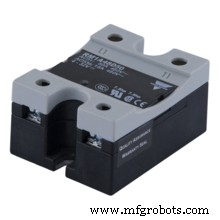
Solid-state relay
Nonetheless, zero-ohm resistors still offer some solutions and lack complications like added software testing and debugging, high on-state resistance, etc.
Some of the advantages of 0-Ω resistors include;
- It is cost-effective.
- Then, it has an excellent electrical performance making them effective.
- Also, they’re fully compatible with automated assembly.
- It can serve as a capacitor inductor and reduces electrical noise.
- Besides having a reserve resistance position, it also has easy wiring.
- Lastly, it has ground Dupont wire link isolation.
Should You Use a Zero-Ohm Resistor or Jumper Wire?
When you’re working on a brand, which technically means having a mass production, use 0-Ω resistors and not jumpers.
However, if you’re a tech enthusiast who enjoys constructing your circuits and PCB designs, consider using a jumper wire. Here, using a soldering iron to place the wire is better than using the 0-ohm resistors with a little resistance.
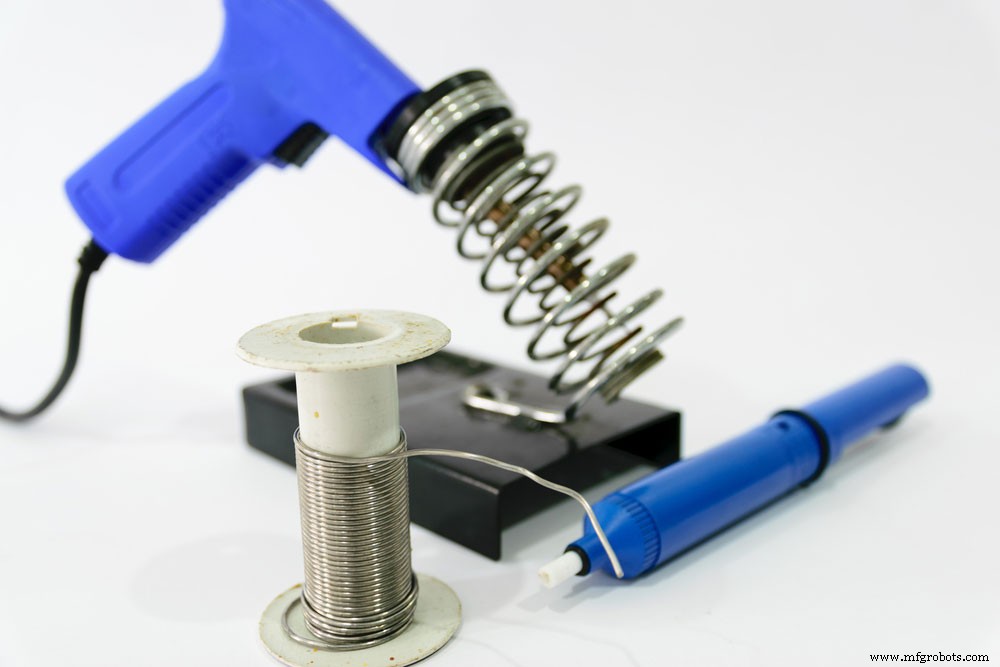
(soldering iron)
Conclusion
A 0-ohm resistor has unique features and is an ideal component compared to an ordinary resistor. While you can replace it with a regular jumper wire in PCBs, it has advantages like keeping away copycats. Additionally, they are cheap, and you can easily wire them for a digital circuit operation.
For more information on 0-ohm resistors, kindly contact us.
Industrial Technology
- 4 Key Applications of Hafnium: From Electronics to Aerospace
- Robot Integration in the Workplace: Benefits and Challenges
- Decode SMD Resistor Codes: Quick Guide to Determining Resistance Values
- Master Resistor Circuit Diagrams: Expert Guide to Series, Parallel, and Hybrid Connections
- Trimpot Pinout Explained: Features, Applications, and Configuration Guide
- TL072 Pinout: Audio IC Applications, Features, and Design Tips
- Resistor Applications: Essential Uses & Types in Electronics
- Agile Manufacturing: Key Benefits and How to Overcome Common Challenges
- Stainless Steel Recycling: Benefits, Challenges, and Best Practices
- Glass‑Filled Nylon: Strength, Heat Resistance, and Engineering Benefits – A Comprehensive Overview