



Effective Deburring Techniques: Applications & Process Types
During precision machining operations, parts undergo an initial machining process. This process removes materials from a specific metal until the part is produced. The tools that are used may turn, cut, mill, and drill the metal based on the customer’s component specifications. Occasionally, these machining processes leave behind unwanted pieces and raised edges caused by the tools which are called burrs.
There are many types of burrs that can be created by how the tool enters, exits, or cuts into the material. Some burr types include:
- roll-over burr: when the metal shears and curls when the tool exits the material when making the cut
- cut-off burr: a leftover piece of metal when a cut piece of material separates from the main part
- tear burr: a jagged edge created from a punched hole as the burrs are along the sides of the cut material
- thermal burr: molten metal created by a machining process as the molten metal builds up and then cools uncontrollably.
- Poisson burr: burrs created when the tool creates shearing and compressive forces that cause the metal to deform and elongate
The part will undergo another machining process, called deburring, to remove the unwanted materials. There are different deburring procedures that may be used. Selecting the right deburring process depends on part material and how the deburring process will impact the final surface quality and dimensions.
Deburring Method Types
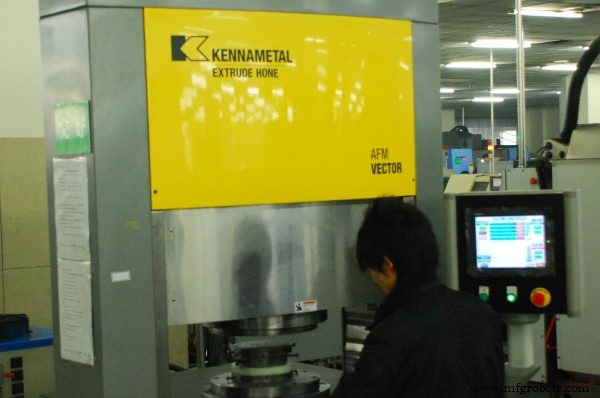
Abrasive Flow Deburring
The abrasive flow deburring process uses an abrasive material directed at the burr. The abrasive material removes surface irregularities and can also be used to create a specific textured surface on the part. For a smoother part surface, micro-abrasive blasting may be used.
Thermal Energy Deburring
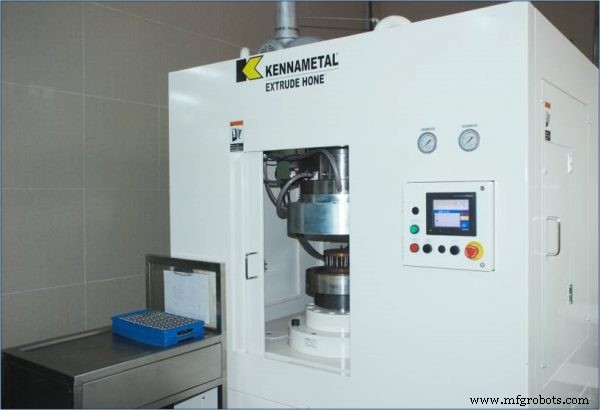
Thermal energy deburring uses heat to vaporize the burr. Hot and corrosive gases are directed at the burr in short bursts. The heat builds up in the part and causes it to dissolve. The part itself is unaffected by the hot gasses as it is able to effectively disperse the heat and is not exposed to the gas for long periods. Materials that contain low conductivity obtain positive results from the thermal energy deburring process.
Electrochemical Deburring
Electrochemical deburring uses electrolysis to remove the burrs. The part is attached to a circuit and submerged in an electrolyte. An insulated tool acts as a cathode while the part is the anode. Electricity helps to remove the burr as it dissolves away. Electrochemical deburring can be a highly accurate process based on the special tooling that is designed.
Whichever process is used, deburring techniques help to remove deformities and metal pieces on parts so that the components obtain dimensional accuracy. Removing the burrs on the part ensures that corrosion will not occur and also prevents metal fatigue or cracks that could cause the part to fail in the application. For information regarding Impro’s deburring process, contact us today.
Industrial Technology
- Arduino Sensors: Types, Applications, and Real‑World Projects
- Broaching Explained: Process, Mechanism, and Key Types
- Forging Explained: Process, Types, and Materials
- Hot Extrusion Process Explained: Types, Benefits, and Applications
- Understanding Manufacturing Processes: Definitions, Types, and Key Components
- Electrical Earthing Explained: Methods, Types, and Installation Guidelines
- Mastering the Business Production Process: Definition, Types, and Key Characteristics
- Polyimide PCBs: Advanced Materials for High-Performance Electronics
- Understanding Glass Types and Their Manufacturing Processes
- Choosing the Right Access Platform: Types, Uses, and Safety Benefits