



AI Model Detects Depression from Natural Conversations with 77% Accuracy
- Researchers at MIT developed a neural network that automatically identifies depressive patterns from raw audio and text, without predefined questions.
- The model is "context‑free," meaning it can analyze any casual conversation and extract linguistic and acoustic cues linked to depression.
- In a validation study it achieved an overall accuracy of 77 %, outperforming conventional Q&A‑based AI tools.
Traditionally, the Patient Health Questionnaire (PHQ‑9) is the gold standard for depression screening. It asks a fixed set of nine questions about mood, sleep, appetite, and energy levels to calculate a score from 0 to 27, with scores above 20 indicating severe depression.
Over the past few years, machine‑learning approaches have successfully mined speech for tell‑tale markers—intonation, speech rate, and specific lexical choices—suggesting depressive states. However, most of these models rely on responses to the PHQ‑9 or similar structured interviews, limiting their applicability in real‑world settings.
MIT’s new neural network removes that constraint. By feeding it recordings of free‑form interviews, the system learns to recognize subtle patterns—such as the frequent use of words like "down," "low," or "sad," paired with flattened or monotone vocal quality and slower speaking rate—that are strongly associated with depression.
How the Model Works
The algorithm treats speech as a sequence of time‑stamped audio frames and transcribed words. It employs a deep sequence‑modeling architecture that jointly analyzes acoustic features (pitch, energy, speaking rate) and linguistic content. Because it does not depend on a fixed questionnaire, it can be applied to any conversational data, from clinical interviews to everyday phone calls.
Authors refer to this as "context‑free modeling" because it captures depression indicators independent of the specific questions asked.
Training, Validation, and Performance
The model was trained on 142 interactions drawn from the Distress Analysis Interview Corpus (DAIC), which includes audio, video, and text of conversations with both healthy participants and individuals diagnosed with mental disorders.
Each subject’s depression severity was quantified using the PHQ‑9 score (0–27). In the study, 28 participants were classified as depressed (scores ≥20). The network was evaluated on precision and recall: it achieved 71 % precision and 83 % recall, yielding an overall accuracy of 77 %—a notable improvement over earlier AI approaches that typically hovered around 60–65 % accuracy.
Future work will extend the network to other conditions such as dementia and explore the specific acoustic‑linguistic patterns that drive its predictions.
In the long term, the technology could be integrated into mobile apps to passively monitor users’ voice and text for signs of distress, offering early alerts for those who face barriers to accessing mental‑health care.
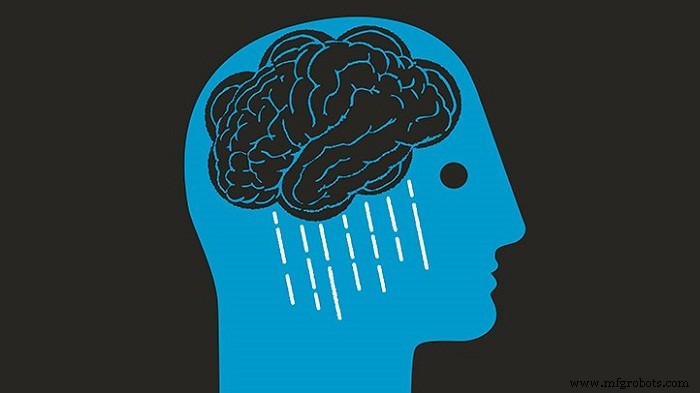
Read: Brain Stimulation Can Decrease a Person’s Intention To Commit a Violent Act
Industrial Technology
- OSHA Urges Eligible Employers to File 2020 Injury & Illness Records by March 2, 2021
- Understanding CMMS Software: Benefits & How to Select the Right Program
- How Work Instructions Drive Efficiency and Compliance in Your Company
- Understanding Mutual Inductors: Principles, Symbols, and Their Role in Transformers
- Prioritizing Employee Work‑Life Balance: Why It Matters for Your Business
- Aluminum Explained: Properties, Types & Uses – Expert Guide
- Implementing Industry 4.0: Practical Steps for Machine and Component Manufacturers
- Be the Top Choice: 26 Essential Checklist Items for B2B Buying Success
- Unlock Efficiency: Automate Your Business with RPA Solutions
- Transform Maintenance with Digital Data Collection for Technicians