



14 Cutting-Edge Spacecraft Propulsion Concepts That Could Revolutionize Spaceflight
Launching a rocket into space is both costly and complex, demanding precision engineering and teamwork. While traditional chemical rockets dominate today’s fleet, a wave of innovative propulsion concepts promises to extend humanity’s reach, reduce launch mass, and cut travel times to distant worlds.
Every propulsion system has its strengths and limitations. The most common approach—expelling high‑speed gas through a de Laval nozzle—has powered countless missions, but it relies on carrying its own oxidizer, adding weight. Emerging technologies aim to overcome these constraints by harnessing atmospheric air, magnetic fields, antimatter, or even the very structure of spacetime.
14. Synergistic Turbojet
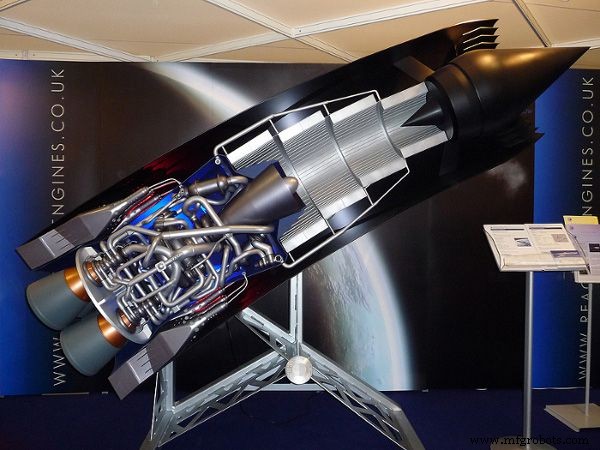
The Synergistic Turbojet is a hybrid engine that combines air‑breathing turbojet principles with rocket propulsion, enabling single‑stage‑to‑orbit flight without dropping stages. By drawing in atmospheric air and compressing it through a lightweight precooler, the engine feeds high‑pressure, high‑temperature air into a combustion chamber where liquid hydrogen is ignited. This eliminates the need for a heavy onboard oxidizer, lowering launch mass and boosting overall efficiency.
Developed by British firm Reaction Engine Limited for the Skylon spaceplane, the design demonstrates how integrating atmospheric intake and onboard combustion can yield powerful, clean thrust at high altitudes.
13. Electromagnetic Coilgun Launcher
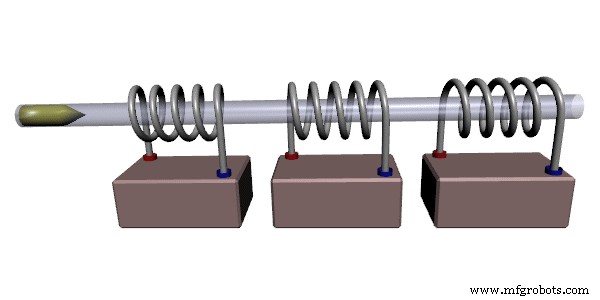
An electromagnetic coilgun accelerates payloads using pulsed magnetic fields, eliminating physical contact and reducing arcing. By energizing a series of solenoidal coils in rapid succession, the device imparts kinetic energy to a mass traveling along a rail or track. Although a track several miles long would be required to achieve orbital velocities—an investment in the billions—advances in high‑power switching and conductor materials make the concept increasingly viable.
12. Vacuum to Antimatter Rocket Interstellar Explorer System (VARIES)
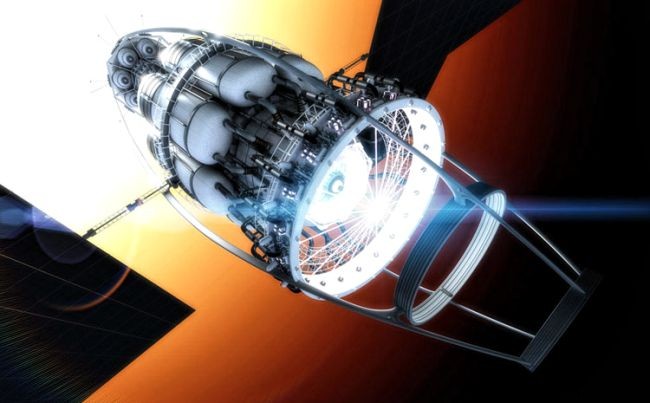
VARIES proposes using large solar arrays to power high‑intensity lasers that create antimatter via Schwinger pair production. The resulting antimatter would be stored in magnetic “bottles” and later released in controlled annihilation reactions to generate thrust. While the concept offers extraordinary specific impulse—potentially a fraction of light speed—it requires robust magnetic confinement, gamma‑ray shielding, and advanced materials to survive the intense radiation environment of interstellar travel.
11. Nuclear Thermal Rocket
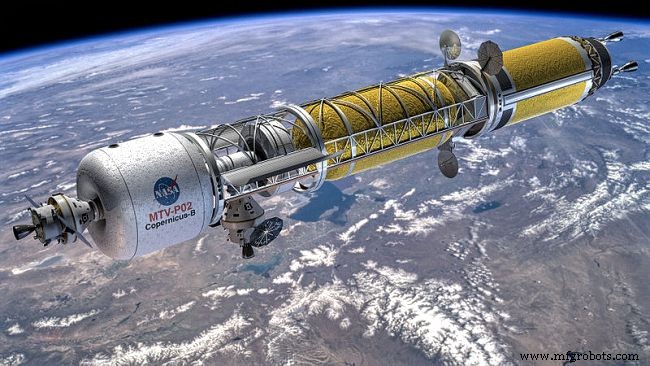
In a nuclear thermal rocket, a reactor heats hydrogen to temperatures far exceeding those of chemical engines, then expands it through a nozzle to produce thrust. This yields specific impulses roughly twice that of conventional chemical rockets. Rosatom’s prototype is projected to reduce Earth‑to‑Mars travel from 18 months to 45 days, a dramatic improvement that could enable rapid crewed missions and deep‑space logistics.
10. Ducted Rocket
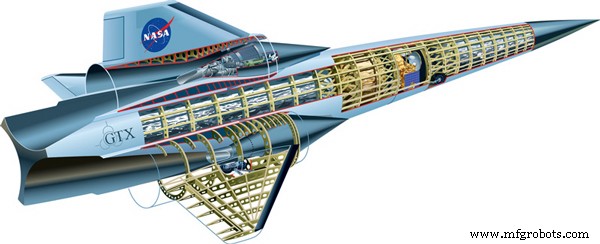
A ducted rocket captures and recirculates atmospheric air using a ram‑intake, compressing it with the rocket’s own exhaust. This synergistic effect boosts effective exhaust velocity, allowing a given fuel load to achieve specific impulses above 500 s—double the performance of the best chemical engines. The system, however, demands precisely engineered intakes that integrate seamlessly with the vehicle’s airframe and must accommodate the diminishing air supply as the craft ascends.
9. Stellar Windjammer
Solar wind—high‑energy charged particles streaming from the Sun—can be harnessed for propulsion. A magnetic sail, such as the superconducting loop used in the Andrews Zubrin magsail, intercepts this plasma, deflecting it to generate thrust while shielding the spacecraft from harmful particles. Adjusting the magnetic field orientation allows steering, offering a fuel‑free method to navigate the inner solar system. NASA’s 2018 Asteroid Scout flyby demonstrated a basic solar sail, paving the way for more ambitious wind‑powered missions.
8. Nested‑Channel Hall Thrusters
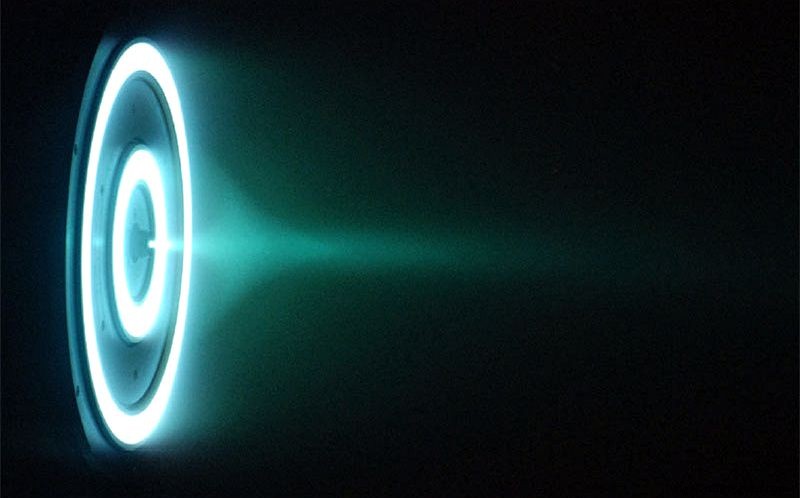
Traditional Hall thrusters are limited by the size of a single discharge channel. Nested‑channel designs stack multiple channels, enabling higher power densities while reducing overall mass. By selectively activating channels, operators can throttle thrust and adjust the exit area, offering versatile control for deep‑space missions where efficiency and longevity are paramount.
7. Antimatter Rocket
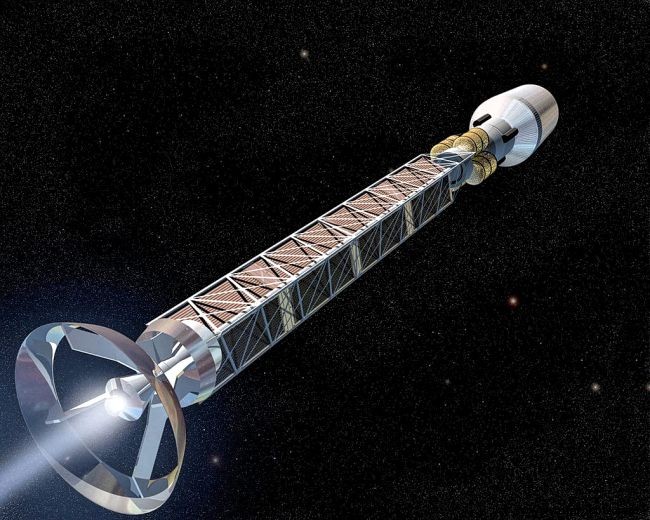
Antimatter annihilation releases energy at a density orders of magnitude greater than chemical reactions. A mere 100 mg of antimatter could propel a spacecraft from Earth to Mars, compared with the tons of propellant required by current rockets. The challenge lies in safe production, storage, and controlled annihilation, as the process emits high‑energy gamma rays capable of damaging electronics and shielding. NASA’s NIAC is exploring designs that mitigate these hazards.
6. External Pulsed Plasma Propulsion
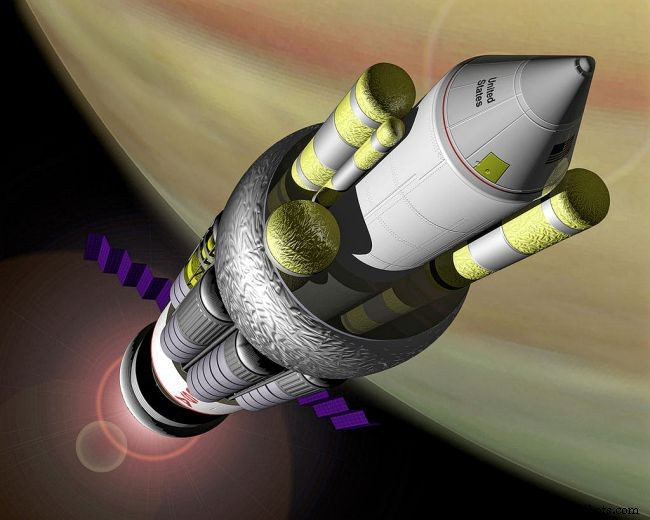
Inspired by Project Orion, this approach uses small nuclear detonations behind the vehicle to generate thrust. Early designs achieved specific impulses of 6,000 s, far surpassing conventional engines. Theoretically, further refinements could reach 100,000 s, making rapid interplanetary travel feasible. While political and environmental constraints halted the original program, modern research focuses on safer, more controlled pulse mechanisms.
5. Project Daedalus
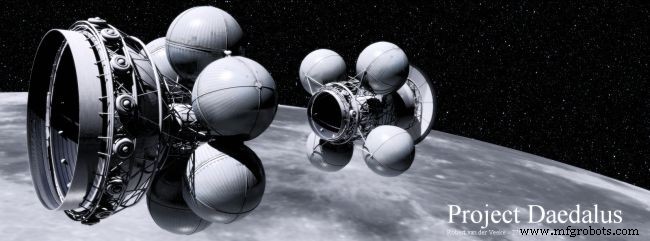
Commissioned by the British Interplanetary Society in the 1970s, Project Daedalus envisioned a 5‑year design study for an unmanned interstellar probe capable of reaching Barnard’s Star (5.9 light‑years) in 50 years. The 2‑stage vehicle would accelerate to 12 % the speed of light using inertial confinement fusion fueled by tritium‑deuterium pellets. Structural materials—molybdenum alloys blended with carbon, zirconium, and titanium—were selected to withstand extreme temperatures ranging from cryogenic to 1,600 K.
4. Cubesat Ambipolar Thruster (CAT)
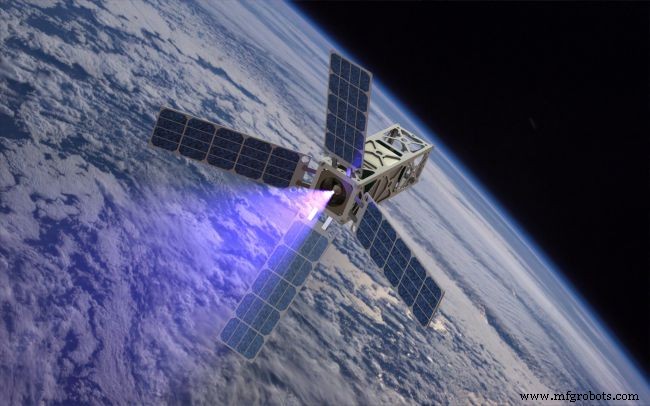
The CAT is a miniature plasma engine designed for 1U or 3U cubesats. It employs a DC‑to‑RF oscillator and an RF antenna to generate a helicon wave that heats electrons, which in turn ionize the surrounding gas. A rare‑earth magnetic nozzle then accelerates the ions, producing thrust while the electrons remain confined. This technology promises autonomous station‑keeping and deep‑space missions for low‑cost satellites.
3. Nanoparticle Micropropulsion
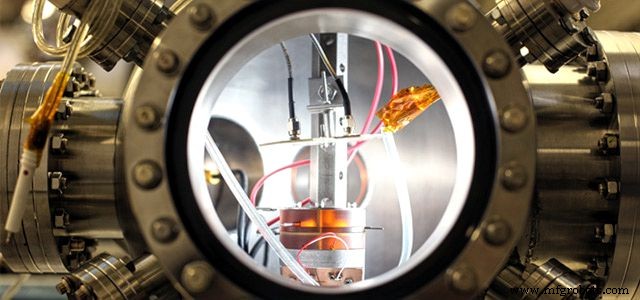
The NanoFET (Nanoparticle Field Extraction Thruster) uses electrostatic fields to accelerate nano‑ and micro‑particles, achieving high thrust per unit mass. This approach is attractive for micro‑satellites and can also be adapted for environmental remediation or biomedical applications. The Evolutionary Xenon Thruster (NEXT) demonstrated ion engines could reduce propellant mass from 10,000 kg to 860 kg for equivalent momentum, underscoring the efficiency of electric propulsion.
2. Photonic Laser Thruster
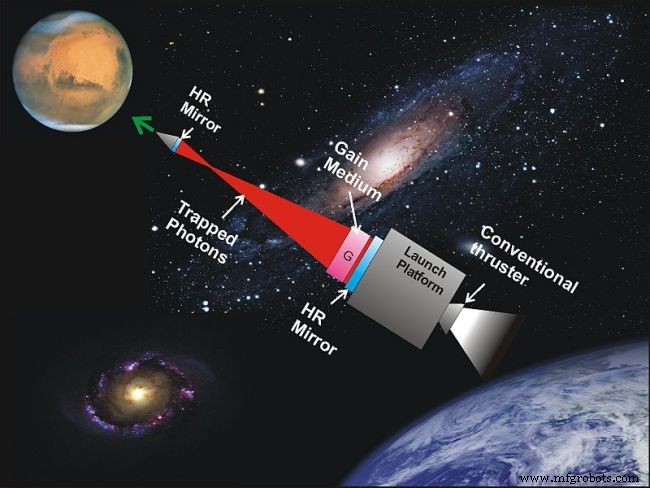
Dr. K. Bae’s photonic laser thruster eliminates onboard propellant by repeatedly reflecting a laser beam off a spacecraft‑mounted mirror. Each reflection amplifies the photon momentum, enabling a 1 N thrust with only 15 kW of laser power and 10,000 cycles of reflection—equivalent to the thrust of a 100 kW solar panel. This “photon recycling” technique offers precise, high‑speed maneuvering for lightweight probes and could serve as a form of in‑space refueling.
1. Alcubierre Warp Drive
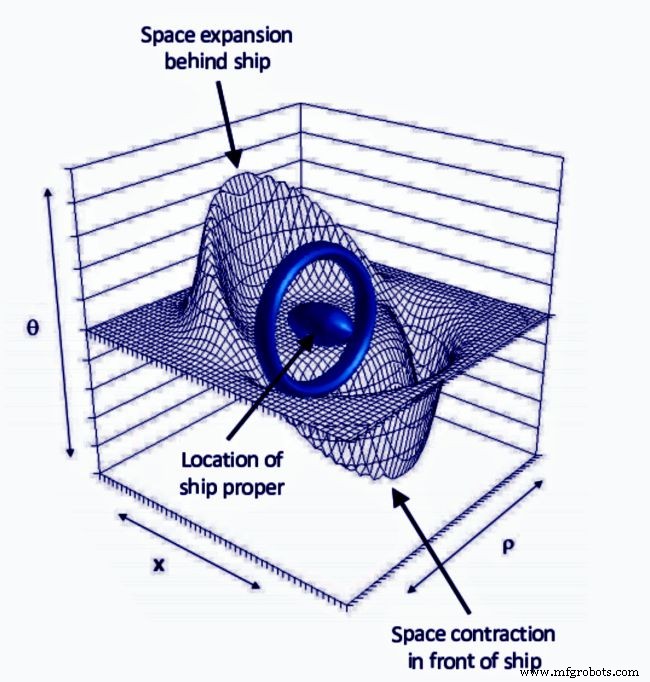
Physicist Miguel Alcubierre proposed a theoretical framework in which a spacecraft could move faster than light by contracting space ahead of it and expanding space behind. Though the mathematics allow such a warp bubble without violating relativity, the practical realization would require exotic matter with negative energy density—an ingredient not yet available. Nonetheless, the concept stimulates research into quantum field manipulation and the fundamental limits of spacetime.
Industrial Technology
- Top 5 Key Insights Into Calendaring: From Handcrafted Beginnings to Modern Applications
- Why Ceiling Fans Slow Down: Understanding Capacitance and Voltage Issues
- Metallurgical Glossary: Essential Terms Every Fabricator & Machinist Must Know
- Strengthen Your Concrete Silo with Cost‑Effective Steel Reinforcement
- How NIST Traceable Standards Drive Precision & Quality
- Compare CMMS Software Prices – Find the Ideal Solution for Your Business
- HC-06 Bluetooth Module: Pinout, Features, Applications & Working Principle Explained
- Revolutionizing Data Storage: Next‑Generation Magnetic Nanostructures with Invisibility Cloaks
- Aluminum vs. Steel Tooling: Which Is Right for Your Injection Molding Needs
- Maximizing Value: How Procurement Management Boosts Your Company's Success