



Understanding Marketing ROI: How to Measure and Prove Your Impact
In today’s competitive landscape, marketing leaders must drive the highest possible return on every dollar spent. Yet many organizations struggle to pin down a definitive ROI for their campaigns. While there’s no one-size-fits-all answer, certain proven tactics deliver clearer, more measurable results.

What Is the Meaning of ROI in Marketing?
Historically, sales teams were the primary drivers of new business. In an era before the web, prospects relied on sales reps for detailed product insights. Today, buyers seek comprehensive information online before they even pick up the phone, demanding that marketing deliver deep, technical answers that can be tracked for impact.
For example, product manufacturers must promote part‑level specifications, tolerances and other technical details. Custom manufacturers need to highlight their technical portfolios, capabilities and expertise. If your marketing mix lacks tactics that provide this information, you may be missing out on the full potential of your campaigns.
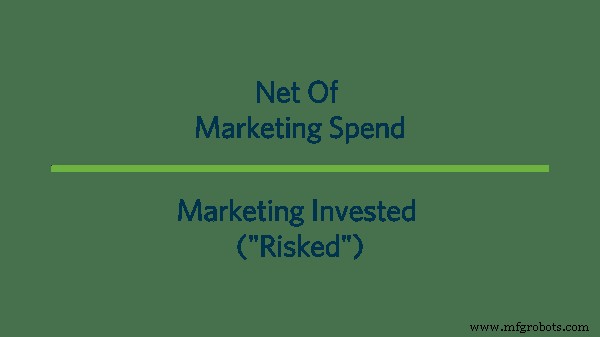
The purpose of marketing ROI is to quantify how much of your marketing spend directly translates into profit. In practice, the formula is: (Revenue attributed to marketing – Marketing spend) ÷ Marketing spend.
How to Prove ROI
Track Phone Calls to Validate Online Marketing ROI
You might wonder why phone calls matter when we talk about digital campaigns. The answer lies in the buying behavior of industrial prospects. Consider this startling statistic:
Industrial suppliers track phone sales inquiries for less than 3 percent of their leads on average. In other words, they ask the caller where they heard about the company in fewer than 3 out of every 100 calls.
Without knowing where a caller first found you, you cannot accurately attribute the revenue to any marketing effort. Many industrial marketers mistakenly assume that all success shows up in web analytics—visits, emails, RFIs—while overlooking the fact that most qualified buyers still reach out by phone once they’re ready to engage.
Fun Fact: On Thomasnet.com, 3 out of every 5 sales inquiries made to advertisers come via phone.
If your website traffic mirrors that of Thomasnet, you could be ignoring over 50 percent of your marketing ROI simply by not asking phone leads how they found you. Make sure every incoming lead is prompted for the source.
“If it weren’t for the thorough ROI tracking that comes with our Thomasnet.com program, we never would have known that one of our biggest accounts originally found us on Thomasnet.com. Getting found by this customer opened the education market for us in a big way—a brand‑new market for our company.” – Consolidated Electronic Wire & Cable, manufacturer of wire and cable.

Measure Based on User Intent
Clicks and page views do not equate to business value. The true metric for any online marketing program is the number of genuine new business opportunities it creates. Too many industrial marketers still focus on vanity metrics—traffic, conversions, and page views—that are useful for B2C but can be misleading in B2B.
SEO experts know that most site visitors are not actively evaluating suppliers. A large portion of visits comes from existing contacts, low‑quality traffic, or bots. Therefore, measuring ROI must be anchored in user intent.
Industrial marketers who stay ahead recognize that the “who” and the “why” matter more than sheer volume when evaluating marketing performance.
Want to know the who? Get a free, custom report that lists companies that recently searched the Thomas Network for the products and services you offer.

Align Your ROI Benchmarks with the B2B Buying Cycle
Historically, the interval between a prospect discovering a brand online and initiating contact could span months. Once contact was made, the sales process often extended for months or even a year. The internet has made information readily available, enabling buyers to conduct thorough research and evaluate suppliers anonymously. As a result, many buyers reach out to sales reps sooner, rather than staying silent for months.
According to the 2019 B2B Buyer Behavior Survey by Demand Gen, 42 percent of buyers engaged with a vendor’s rep within the first month—up from 33 percent in 2018.
Yet the overall buying cycle remains lengthening. Key findings from the 2019 survey include:
- 57 percent reported an increased purchase cycle length over the past year.
- 35 percent sought peer or existing user input within the first month.
- 68 percent noted they saw ads from the chosen solution provider during research.
- 75 percent spent more time researching purchases.
- 56 percent involved four or more stakeholders in the decision.
Set Realistic Expectations for Your Marketing ROI
When setting ROI targets, it’s crucial to ground expectations in the actual size of your addressable market. Most suppliers operate within constraints such as industry focus, geography, company size, capacity, and capabilities. Conversations with thousands of suppliers reveal that many underestimate the true potential of their customer base.
Consider why your last opportunity materialized. New suppliers are rarely added unless:
- There are quality, reliability, or pricing issues with the current supplier.
- They are launching a new product line or service.
- A supplier has gone out of business.
- They require new or replacement capital equipment.
- They are reshoring operations back to North America.
If you received 100 RFQs online last year and 95 two years ago, don’t expect 1,000 this year unless trends justify it.

Common ROI Terminology
Digital marketing tactics—social media, display ads, email, and your website—share a common trait: they are trackable. Yet many professionals get lost in vanity metrics like clicks, likes, and visits, which don’t always translate into ROI. Here are five metrics that better reflect value.
Cost Per Lead (CPL)
Knowing the number of leads isn’t enough; you must evaluate the cost that produces each lead.
Calculation: Marketing spend ÷ Number of leads.
Customer Acquisition Cost (CAC)
CAC extends CPL by including sales and overhead costs, showing the total spend to acquire a customer.
Calculation: (Sales + Marketing salaries + Overhead) ÷ Number of customers acquired in a given period.
Lead‑to‑Customer Conversion Rate
Measure how many leads become paying customers. This metric informs the ROI of specific campaigns and tactics.
Lifetime Customer Value (LTV)
Use LTV to balance CAC and plan budgets. It reflects the long‑term revenue from a customer.
Calculation: Avg. sale per customer × Number of purchases per customer × Average retention period.
Visitor‑to‑Lead Conversion Rate
Track the proportion of site visitors who turn into leads. Remember, this figure often underestimates true ROI because a phone lead may result from multiple touchpoints.
Call‑tracking services—using unique phone numbers on specific marketing materials—help close this data gap by linking leads back to their source.
Measure ROI for Manufacturers & Distributors
Listing your business on the Thomas Network is one of the simplest ways to generate high‑quality leads, increase visibility, and measure marketing ROI. The company profile is free.
“Thomasnet.com has been a worthwhile investment for our company, substantially increasing brand recognition and allowing the right prospects to connect with us.” – Blisterpak, Inc., a regional and national supplier.

If you need help getting started, contact us. Our marketing experts, backed by degreed engineers, understand the intricacies of manufacturing and industrial distribution.
“The average order size of customers that find us on Thomasnet.com is five times higher than our overall average, and they tend to return for repeat business. When a Tokyo manufacturer needed urgent supplies, they placed three orders each more than ten times our typical size.”
Industrial Technology
- PEMBREE Launches Sustainable Mountain Bike Parts, Empowering Riders with Eco‑Friendly Innovation
- Three Key Certainties for This Year’s Peak Retail Season
- Supply‑Chain Leaders Reassess Core Best Practices to Navigate Post‑Pandemic Uncertainty
- How Manufacturers Leverage Automation to Scale E‑Commerce Fulfillment
- Choosing the Right 3D Printing Technology: Expert Tips from Fast Radius
- Accelerated Metal Cutting: 2‑Week Delivery for Burr‑Free Precision
- Automated Railway Gate Controller: Arduino Circuit & Source Code
- 15 Essential PCB Components Every Electronics Enthusiast Should Know
- Apple & IBM Watson Join Forces to Power Enterprise Mobile Machine Learning
- 13 Leading U.S. Semiconductor Companies in 2026