



Advanced Tooling: Accelerate Quality and Cost Savings in Machining
Elevate your manufacturing speed, quality, and savings with cutting‑edge tooling. Discover how Autodesk Fusion for Manufacturing unlocks unprecedented efficiency and superior results.

Elevate Your Design and Manufacturing with Autodesk Fusion
The demand for high‑quality parts delivered fast and affordably has never been higher. Manufacturers are constantly exploring new ways to boost productivity, enhance surface finishes, and cut operating costs. One of the most transformative advances in recent years is the adoption of advanced tooling—a suite of precision tool profiles and machining strategies that move beyond the limits of traditional ball cutters. When combined with Autodesk Fusion for Manufacturing, these tools can dramatically improve efficiency and achieve superior results.
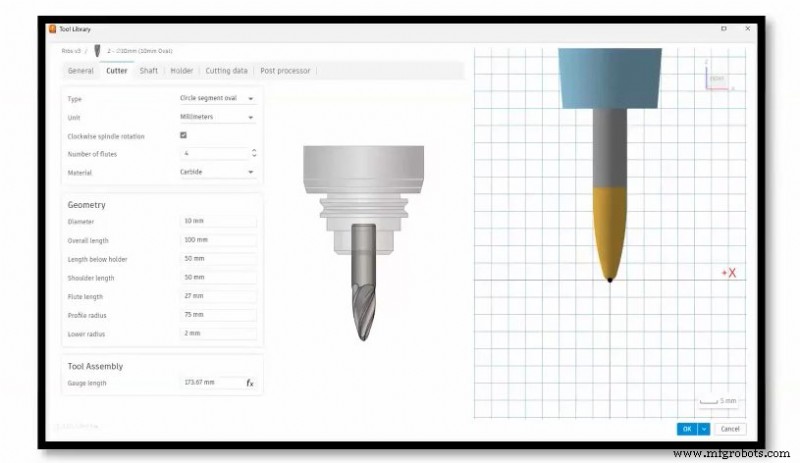
Advanced tooling utilizes sophisticated tool geometries—lens, oval, taper, and barrel profiles—to allow larger stepovers and stepdowns while maintaining or improving surface quality. Compared to conventional ball cutters, each profile offers distinct advantages:
- Lens – Features a rounded segment at the base, enabling twice the stepover of a standard ball cutter. This reduces the number of passes and speeds up machining.
- Oval & Taper – Provide greater radii on the sides, allowing even larger stepovers and simplifying toolpaths for faster, more efficient machining.
- Barrel – Designed for undercutting and complex geometries, barrel tools excel where traditional cutters struggle, unlocking new design possibilities.
When paired with multi‑axis machining and advanced toolpath strategies, barrel tools can deliver up to 10× the effective stepover of traditional methods. The result is a direct impact on three critical business metrics:
- Faster cycle times – Larger stepovers mean fewer passes and reduced machine movement, cutting part completion time dramatically.
- Higher profit margins – Shorter machining times and lower tool wear reduce operating costs, boosting profitability.
- Quicker delivery – Reduced cycle times enable faster turnaround, helping manufacturers meet tight deadlines and exceed customer expectations.
For example, switching from a standard ball cutter to a taper barrel tool can increase the stepover from 0.6 mm to 6 mm, slashing machine time from over an hour to just minutes.
To harness the full power of advanced tooling, manufacturers need three essential components:
- Multi‑axis capability – Precise control over the tool‑workpiece contact point is essential for optimal engagement and results.
- Specialist tooling – Selecting the appropriate barrel profile (lens, oval, taper, or barrel) based on part geometry and finish requirements is critical.
- Advanced toolpath strategies – Modern CAM software must support sophisticated toolpath generation, multi‑axis movements, and complex geometry handling to maximize efficiency and surface quality.
The impact of advanced tooling on machining efficiency and quality is profound. By leveraging barrel tools such as lens, taper, and oval profiles, manufacturers can:
- Increase stepover distance – Shift from fractions of a millimeter to several millimeters, dramatically cutting machining time and toolpath count.
- Double efficiency on complex surfaces – Optimized tool geometry enables more effective machining of curved and intricate features, reducing production time by up to 50%.
- Enable deeper stepdowns – Advanced profiles improve access to internal features, minimizing the need for additional toolpaths and streamlining the manufacturing process.
With higher machining efficiency, your shop can take on more work, deliver superior quality, and stay competitive.
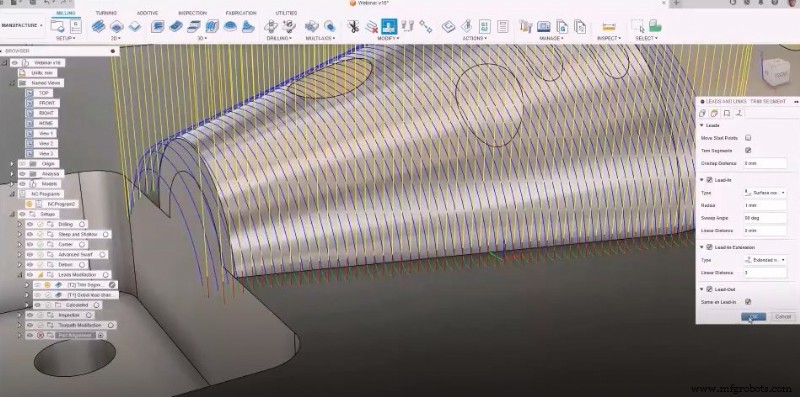
Autodesk Fusion for Manufacturing equips your team to unlock the full potential of advanced tooling. Programmers gain precise control over every machining detail:
- Surface selection – Easily choose specific walls and floors to machine, ensuring targeted material removal and optimal tool engagement.
- Contact point adjustment – Fine‑tune the tool’s contact point for the best cutting conditions and superior surface finishes.
- Flexible toolpath modification – Trim, delete, or refine toolpath segments to experiment with different strategies and optimize processes for each unique part.
In practice, machine time for a typical part can drop from over an hour to just eight minutes, while toolpath travel distance can be reduced by more than 125 m—demonstrating the dramatic gains achievable through advanced tooling and Fusion’s intelligent control.
Transform Your Shop Today
By embracing innovative tool profiles and intelligent CAM workflows, manufacturers can achieve unprecedented speed, quality, and cost‑effectiveness. Autodesk Fusion for Manufacturing provides the tools you need to realize these benefits, making it easier than ever to optimize processes and deliver superior results.
Industrial Technology
- Boost Efficiency: Transition from EDM to CNC Milling for Mold Tooling
- Mastering Preventive Maintenance: Boost Equipment Lifespan & ROI in Manufacturing
- Turn Manufacturing Day into a Year-Long Industry Celebration
- How to Determine the Best Sampling Solution for Your Facility
- Comprehensive Guide to Surface Classifications in Molded Product Design
- Chip Formation Explained: Types of Metal Cutting Chips
- Mastering Stainless Steel Welding: A Comprehensive Guide
- Navigating the Future of Robotics in Manufacturing: Trends & Opportunities
- Medical Machining: Expert Guidance on Cutting Tools for Precision & Success
- Augmented Reality: Revolutionizing Manufacturing for Efficiency & Innovation