



Industrial DataOps: Empowering Industry 4.0 with Rapid, Reliable Insights
In today’s competitive manufacturing landscape, raw data is only the first step. Industrial DataOps turns that data into actionable insights with speed, precision, and security, enabling factories to stay agile and ahead of market shifts.
Why Industrial DataOps Matters for Modern Manufacturers
Data alone does not guarantee advantage. It is the ability to automate analysis, enforce statistical process control, and apply agile workflows that delivers rapid, high‑accuracy insights. This approach lets manufacturers turn sensor streams into confident decisions before trends shift or inventory builds unnecessarily.
Think of data as crude oil—untapped potential. Industrial DataOps refines that raw material, converting it into “fuel” that powers predictive models, real‑time dashboards, and continuous improvement cycles. The result is a lean, responsive operation that can react to supply‑chain changes, demand swings, and equipment health in real time.
What Is Industrial DataOps?
Industrial DataOps is a structured methodology that manages data from collection to consumption with a focus on speed, quality, and usability. It encompasses:
- Automated data pipelines that reduce manual effort.
- Statistical monitoring that flags anomalies before they impact production.
- Agile governance that keeps data compliant without stifling innovation.
According to the Manufacturing Leadership Council, the framework centers on the four C’s:
- Connected – Eliminate silos so IIoT, cloud, and edge data flow freely, enabling richer analyses.
- Curated – Engineers clean and structure data, distilling vast streams into relevant, high‑quality sets.
- Contextualized – Domain experts layer narrative and expertise, turning raw numbers into actionable insights.
- Cyber‑Confidential – Scalable security and governance protect sensitive data as connectivity expands.
Companies Suffer from Unused Data
Many manufacturers accumulate data that never leaves the warehouse. Without systematic curation and context, these datasets become a liability rather than an asset, especially when early Industry 4.0 adopters expect plug‑and‑play results. A proper DataOps program streamlines data flow, normalizes formats, and applies context, turning raw streams into valuable intelligence.
DataOps vs. DevOps
While DevOps merges software development and IT operations to accelerate releases, DataOps focuses on the lifecycle of data—collection, cleaning, analysis, and deployment—ensuring that insights are delivered reliably and at scale.
Benefits of Industrial DataOps
- Collaboration – Silo removal encourages cross‑functional teamwork.
- Speed to Insight – Automation shortens testing cycles, accelerating production decisions.
- Quality & Reliability – Continuous monitoring identifies bottlenecks, mirroring lean and Kaizen principles.
- Self‑Service – Intuitive tools empower business users to build and deploy analytics without deep technical expertise.
- Security & Compliance – Integrated cyber‑security safeguards data at every stage.
- Data Consistency – Standardization and normalization eliminate ambiguity, making data trustworthy.
Industrial DataOps Use Cases
Data Warehousing & Management
By reimagining traditional warehousing, DataOps streamlines ingestion, storage, and real‑time access, freeing resources for value‑adding tasks.
Dashboards & Reporting
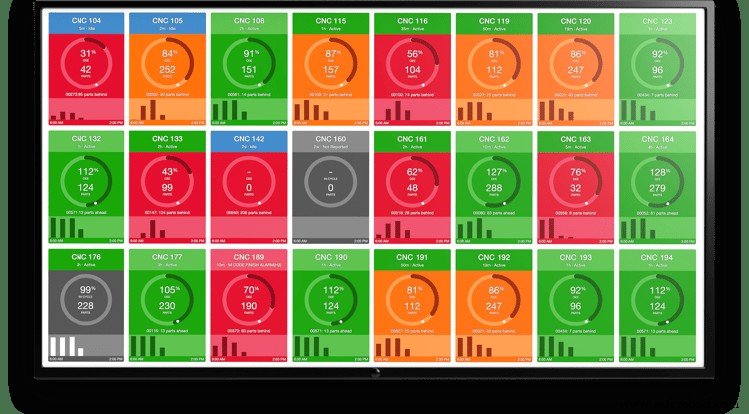
Real‑time dashboards provide floor managers and executives with accurate, context‑rich metrics. Tailored views ensure each stakeholder sees the information most relevant to them.
Data Science
DataOps accelerates the data‑science pipeline, reducing preparation time and enabling predictive maintenance, quality control, and operational optimization.
Application Development
Pre‑built and custom applications can be integrated seamlessly with ERP, MES, and CMMS systems, automating workflows and driving continuous improvement.
What Is an Industrial DataOps Platform?
A comprehensive platform orchestrates the entire data lifecycle—edge collection, cloud processing, security, integration, cleansing, contextualization, and visualization—ensuring that insights are accurate, timely, and actionable.
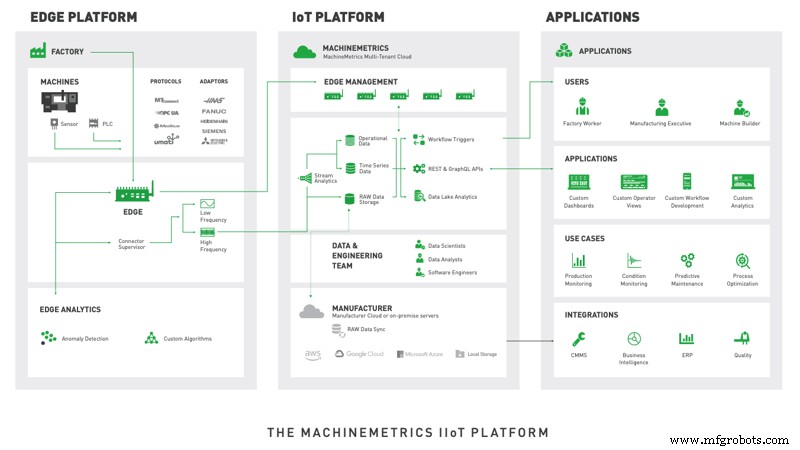
Such platforms empower manufacturers to turn data into decision‑making fuel, delivering measurable gains in efficiency, safety, and profitability.
Industrial Technology
- Node‑Locked vs Floating Licenses: How to Choose the Right One for Your Engineering Software
- Choosing the Right Solid Carbide CNC Cutter Bits for Stainless Steel – Avoid Common Pitfalls
- Essential Design Tips for Cast Urethane Products
- Mastering Analog Electronics: Essential Knowledge for PCB Design
- 4 Critical Supermarket Management Challenges Every Retailer Must Address
- CNC Machining Essentials: Key Features & Benefits for Precision Lock Parts
- Industry 4.0 Today: Current Landscape and 2017 Outlook
- Top Manufacturing Trends to Watch in 2018
- Cut Downtime, Boost Productivity: Proven Strategies
- CO₂ as a Clean Fire Suppression Agent: Benefits, Challenges, and Environmental Impact