



Industry 4.0 Technologies: Real‑World Examples Driving Manufacturing Transformation
What Is Industry 4.0 Technology?
Industry 4.0, or the Fourth Industrial Revolution, shifts the focus from digitizing processes to making machines autonomous, interconnected, and data‑savvy. By enabling equipment to “talk” to one another and analyze vast data streams, businesses can achieve unprecedented efficiency and growth—an evolution as foundational as the transition from steam to electricity in the Second Industrial Revolution.
Want to learn more? Read our complete guide on Industry 4.0.
How Industry 4.0 Is Transforming Manufacturing
Industry 4.0 permeates every phase of manufacturing, from planning to delivery. It empowers firms to streamline operations, refine demand forecasting, eliminate data silos, enable predictive maintenance, enhance worker safety, and deliver virtual training. The result is a transparent, data‑driven enterprise where actionable insights guide decisions at every level.
10 Real‑World Industry 4.0 Technologies
Below are the most impactful digital‑transformation technologies shaping modern factories. Click any item to jump directly to its section:
- Big Data & Analytics
- Autonomous Robots
- Simulation / Digital Twins
- Horizontal and Vertical Integration
- Industrial IoT (IIoT)
- Cybersecurity
- The Cloud
- Additive Manufacturing
- Artificial Intelligence
- Augmented Reality
1. Big Data & Analytics
Big Data refers to the massive volumes of raw information generated by sensors, ERP systems, market feeds, and environmental factors. When coupled with advanced computing, these data streams become actionable insights that guide strategic and operational decisions.
Example of Big Data & Analytics in Manufacturing
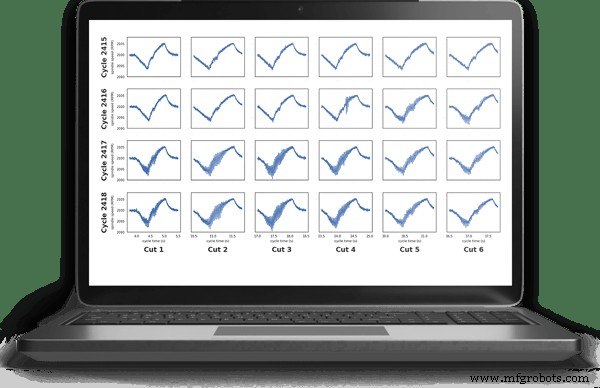
In a Wisconsin factory, an industrial IoT sensor on each machine logs real‑time usage, temperature, and vibration data to the cloud. Machine‑learning models analyze this input to predict when a belt will fail, scheduling maintenance during off‑peak hours. This predictive maintenance approach cuts downtime, extends tool life, and reduces maintenance costs.
2. Autonomous Robots
Autonomous robots operate independently, executing repetitive or hazardous tasks with minimal human oversight. Their speed, precision, and 24/7 availability enhance throughput while reducing injury risk.
Example of Autonomous Robots in Manufacturing
Robotic arms handle heavy welding and palletization, freeing workers from repetitive motions. Autonomous mobile robots navigate warehouses to pick and deliver orders, optimizing routes and eliminating bottlenecks. Their continuous operation drives higher output without sacrificing safety.
3. Simulation / Digital Twins
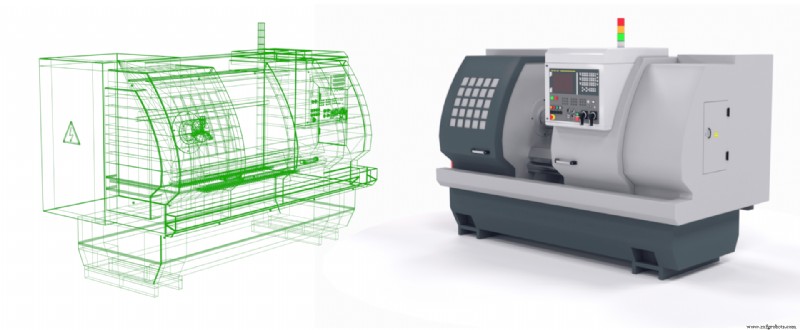
A digital twin is a dynamic, 3‑D digital replica of a physical asset or entire facility. By mirroring real‑time sensor data, it allows engineers to simulate processes, test changes, and predict maintenance needs without disrupting production.
Example of Simulation / Digital Twins in Manufacturing
Using IoT sensors, a plant creates a virtual map of its shop floor. Managers view asset uptime, maintenance status, and bottleneck hotspots in real time. They can run “what‑if” scenarios—such as adding a new machine or re‑routing a conveyor—to assess impact before physical changes, saving time and money.
4. Horizontal and Vertical Integration
Horizontal integration links disparate units within the same organization, while vertical integration connects processes across the supply chain. Together they foster end‑to‑end visibility, breaking silos and enabling coordinated decision‑making.
Example of Horizontal and Vertical Integration in Manufacturing
A multi‑site manufacturer shares inventory and production data across plants in real time, ensuring that delays in one location are immediately visible to procurement and sales teams. Cross‑departmental dashboards break down silos, aligning R&D, manufacturing, and logistics toward common performance goals.
5. Industrial IoT (IIoT)
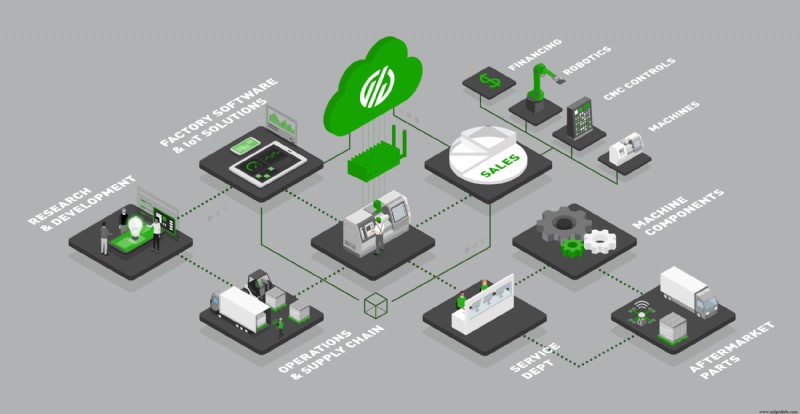
Industrial IoT deploys embedded sensors on machinery, lighting, HVAC, and more, collecting real‑time performance metrics. These devices form the nervous system of an Industry 4.0 ecosystem, feeding data into analytics platforms for continuous improvement.
Example of Industrial IoT in Manufacturing
Each production machine is equipped with an IIoT module that monitors efficiency, uptime, and output. Aggregated data feeds a machine‑learning model that identifies the highest‑priority bottleneck—whether a machine needs an upgrade or better utilization. The insight drives targeted interventions that boost throughput.
6. Cybersecurity
As connectivity increases, so does exposure to cyber threats. Robust cybersecurity protects industrial control systems, IoT devices, and corporate data from intrusion, sabotage, and ransomware.
Example of Cybersecurity in Manufacturing
Manufacturers implement layered defenses—network segmentation, zero‑trust access, real‑time threat detection, and incident response plans—to safeguard intellectual property and operational integrity. Proactive monitoring prevents ransomware attacks and mitigates sabotage risks to critical machinery.
7. The Cloud
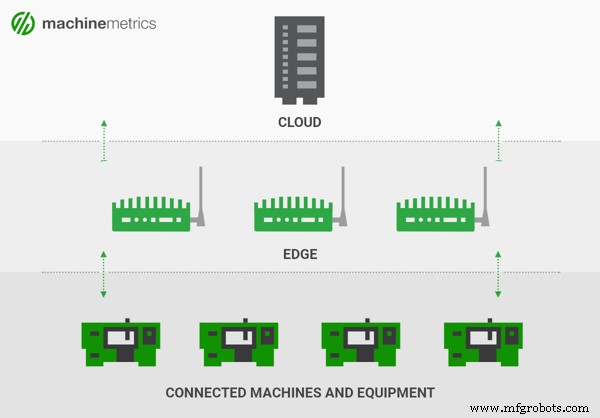
The Cloud hosts scalable storage, computing power, and analytics services, enabling manufacturers to process massive data volumes without on‑premise hardware investments.
Example of The Cloud in Manufacturing
Cloud platforms securely store sensor data, host AI models for risk analysis, and facilitate remote monitoring. They also support “cloud manufacturing” initiatives, allowing firms to coordinate production across geographically dispersed sites with minimal latency.
8. Additive Manufacturing
Also known as 3‑D printing, additive manufacturing builds objects layer by layer, offering design freedom and material efficiency compared to subtractive methods.
Example of Additive Manufacturing in the Manufacturing Industry
Adidas 3‑D prints custom‑shaped footwear, leveraging big‑data‑driven designs to meet individual fit requirements. The process reduces waste, shortens lead times, and enables on‑demand production.
9. Artificial Intelligence & Machine Learning
AI and ML extract patterns from complex data sets, delivering predictive insights for maintenance, demand forecasting, and process optimization. Their capacity to learn from new information continually improves decision accuracy.
Example of Artificial Intelligence in Manufacturing
AI algorithms analyze sensor feeds to forecast demand spikes and schedule preventive maintenance, reducing unexpected downtime by up to 30 % and aligning production with market demand in near real time.
10. Augmented Reality
AR overlays digital information onto the physical world, providing real‑time guidance to workers and technicians.
Example of Augmented Reality in Manufacturing
AR headsets guide new hires through safe operating procedures in a virtual environment before they interact with live equipment. Technicians use AR to view maintenance instructions and internal schematics directly on the machinery, accelerating repairs and reducing error rates.
MachineMetrics accelerates digital factory transformations by offering an intuitive industrial IoT platform that transforms raw equipment data into actionable insights. Today, thousands of machines across global factories are connected to MachineMetrics, driving reduced downtime, optimized capacity, and higher throughput.
Industrial Technology
- ASA, PETG, and PC Filaments Compared: Performance, Durability, and Best Uses
- 6 Proven Strategies to Optimize CNC Milling Efficiency
- BJT Switching: How Transistors Efficiently Control High‑Current Loads
- Choosing the Ideal Contract Manufacturer for Your Business Success
- Mastering Notch Filter Design: Precision Noise Suppression for Reliable Electronics
- Boost Manufacturing Efficiency: Proven Strategies for Peak Performance
- Decoding MCB Nameplate Ratings: A Practical Guide
- Dynamical Decoupling: A Breakthrough to Enhance Quantum Computer Performance
- Anodizing & Plating: Superior Corrosion Protection for Aluminum, Titanium, and More
- Ehmke Manufacturing Wins 2018 Boeing Performance Excellence Award