



Mastering Aluminum Die Casting: Eliminating Porosity & Shrinkage for Consistent Quality
After a production run of aluminum die castings, you may encounter the same recurring defects: tiny internal voids or irregular cavities clustered in thick‑wall areas. For engineers and production teams, porosity and shrinkage quietly reduce yield, inflate costs, and delay product launches.
These issues are more than cosmetic. Internal cavities in structural or pressure‑tight parts can lead to field failures—a risk no manufacturer can afford. The key to a stable die‑casting process is understanding how these flaws form and learning how to control them.
This guide explains the fundamental causes of porosity and shrinkage in aluminum die casting, offers practical avoidance measures, and provides a rapid troubleshooting reference table—everything you need to turn routine inspections into systematic improvements.
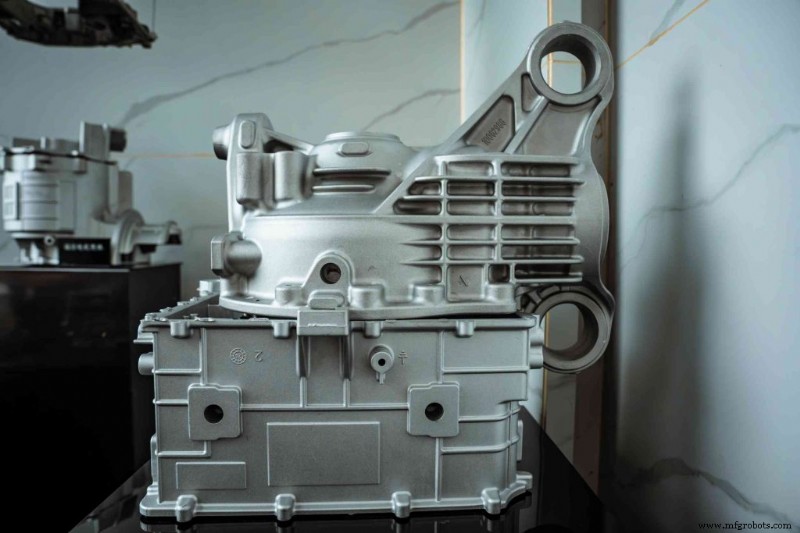
The Hidden Enemies: Porosity vs. Shrinkage
Before you can fix a defect, you must recognize its origin. Both porosity and shrinkage appear as internal holes, yet they arise through distinct mechanisms and require different corrective actions.
Identifying Gas Porosity in Die Castings
Gas porosity results from trapped gas rather than solidification shrinkage.
- Appearance: Smooth, rounded voids that are often nearly spherical—visible as bubbles in cross‑section.
- Typical Locations: Scattered throughout the part or concentrated where gas can accumulate.
- Root Cause: Turbulent filling and trapped air during high‑speed injection, or incomplete vaporization of die lubricants that release gas at the melt front.
Understanding Shrinkage in Aluminum Die Casting
Shrinkage is a natural consequence of aluminum contraction during solidification.
- Appearance: Rough, irregular, jagged‑walled voids—often described as “spongy” under a microscope.
- Typical Locations: Thick sections and thermal hot spots where solidification occurs last.
- Root Cause: When the outer shell solidifies first and seals off the interior, the remaining liquid metal cannot feed the shrinking core, creating shrinkage porosity.
Proven Strategies to Prevent Trapped Gas and Die Casting Porosity
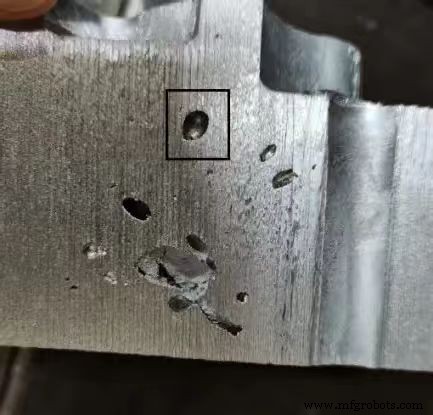
Once gas porosity is confirmed, the corrective levers become clear:
- Optimize Venting and Overflow Systems
Ensure adequate vent channels to allow displaced gas to escape ahead of the advancing melt front. Overflow wells at the end of fill routes collect the coldest, most gas‑saturated metal and serve as additional venting points.
- Control Injection Speed
Manage the injection velocity profile with precision. A slow initial stage fills the runner and gate without turbulence; a rapid second stage advances the cavity quickly, preventing premature solidification. Modern high‑tonnage cold‑chamber machines enable multi‑stage control that dramatically reduces entrapped air.
- Vacuum Die Casting
For parts that demand zero tolerance on internal porosity—such as automotive hydraulic bodies or aerospace brackets—vacuum‑assisted die casting is highly effective. Evacuating the cavity to near‑zero pressure before injection greatly diminishes trapped gas.
- Proper Die Lubrication
Minimize excess lubricant on the die surface. Reduce spray volume, extend blow‑off time, and maintain die temperatures above 180 °C before injection to ensure complete volatilization of moisture and organic material.
Tackling Aluminum Casting Shrinkage Head‑On
Shrinkage defects require strategies that govern solidification rather than just filling.
Optimizing Solidification Control in Aluminum Die Casting
- Strategic Cooling Lines: Place cooling lines in thick‑wall areas to promote directional solidification toward the gate, allowing the gate to feed the shrinking core until the part is fully solid.
- Optimize Gate Design: Small gates can solidify too early and block feeding. Thicker gates and longer intensification pressure periods keep the feeding route open longer, directly reducing shrinkage.
- Choose the Correct Alloy: Not all aluminum alloys shrink equally. ADC12 and A380.0 are ideal for intricate, thin‑wall geometries that flow well. If hot tearing or solidification cracking is a concern, a higher‑silicon alloy may be preferable. Matching alloy to part geometry is one of the most under‑utilized levers for reducing shrinkage at the design stage. The JTR material library includes a full range of aluminum, zinc, and magnesium alloys, enabling engineers to optimize material selection alongside geometry.
A Quick Guide to Die Casting Defects Troubleshooting
The table below summarizes common defects, their likely causes, and immediate corrective actions that can stabilize part quality quickly.
| Defect Observed | Potential Root Cause | Immediate Floor Action |
|---|---|---|
| Smooth, round voids or surface blisters | Trapped air/gas, excessive lube, blocked vents | Reduce die lube; clean vents/valves; adjust slow‑shot speed |
| Spongy, irregular holes in thick sections | Cooling contraction; poor metal feeding; local hot spots | Increase local cooling; raise intensification pressure; extend holding time |
| Bumps or blisters appearing after heat treatment or baking | Expanding trapped gas under heat (hidden gas porosity); moisture residue | Reduce water‑based lube; increase vacuum extraction; extend die blow‑off time |
| Shallow dents or depressions on flat exterior surfaces | Internal contraction pulling the skin (surface shrinkage/sink marks); localized hot spots | Spot‑cool the hot area; increase injection pressure; reduce cycle time slightly |
If parameter adjustments fail to eliminate a defect—or if the issue recurs—deeper causes may be at play. A broader process review may be necessary:
1. Evaluate Melt Quality
Hydrogen solubility in the melt is a major control on subsurface porosity. Regular rotary degassing and proper flux treatment keep the melt clean and reduce hydrogen‑related porosity. Neglecting furnace maintenance can undermine other process improvements.
2. Check Die Temperature Distribution
Use an IR thermal imaging camera before and after production to map the die face. Hot spots indicate insufficient cooling; cold zones may signal over‑cooling or blocked water circuits. Uneven die temperatures directly contribute to gas and shrinkage faults.
3. Review Part Geometry With Engineers
Defects sometimes stem from design rather than settings. Thermal nodes arise from abrupt wall‑thickness changes, blind pockets, or sharp internal corners. Design changes—adding draft angles, smoothing wall transitions, repositioning ribs—often eliminate persistent defects that machine parameters alone cannot solve.
Turn Your Aluminum Casting Problems into Production Success
Confronting shrinkage or gas porosity does not have to be a permanent cost. The solution lies in precise mold design, capable equipment, and disciplined heat management. Align these three elements and defect rates drop dramatically.
Choosing the right manufacturing partner is critical for consistent control of die‑casting defects. JTR Machine offers a full spectrum of die‑casting services—including both hot‑chamber and cold‑chamber processes—to meet your needs.
For more insights into common defects of aluminum die casting and their solutions, read our guide: 9 Perfect Solutions for the Defects of Aluminum Die Casting. If you’re seeking a manufacturing partner that can optimize your design for castability—or simply produce high‑quality aluminum die castings—contact JTR for a free manufacturability review and quote.
Related Guides
Industrial Technology
- Discover the New Sandvik Coromant Tool Library Add‑In for Fusion 360 – Streamline Tool Selection
- CNC Milling vs. Manual Milling: Choosing the Right Approach for Your Project
- Optimized Tooling & Machining Strategies for Electric Vehicle Parts
- Comprehensive Guide to Conveyor Systems: Components, Types, and Applications
- How AC Generators Work: A Clear, Simple Explanation
- Why an All-in-One PCB Supplier Is Your Best Choice: 8 Key Benefits
- How CMMS Software Sharpens Focus on Your Most Important Tasks
- The Evolution of Metal Stamping: From Ancient Coinage to Modern Innovation
- Using Polyurethane Coatings to Safely Dissipate Static and Prevent ESD Damage
- Professional PCB Trace Width Calculator – Ensure Optimal Trace Design