



Precision CNC Machining: Why Small‑Batch Prices So High (and How to Cut Costs)
In 2026, precision CNC machining remains the backbone of high‑performance parts for aerospace, medical, and semiconductor manufacturers. Project managers often confront a stark price gap between prototype runs and mass production. Understanding the technical and economic drivers behind this disparity is essential for effective cost control.
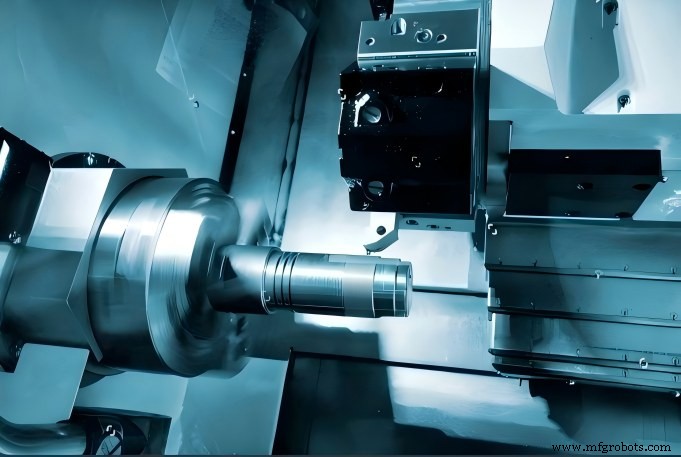
Engineering Cost Model for Precision CNC Machining
The total cost of a CNC‑machined part consists of fixed preparation expenses and variable execution costs. These can be grouped into three key categories:
1. Fixed Pre‑Production Costs (Setup)
- CAM Programming: A manufacturing engineer uses advanced CAM software to define toolpaths, spindle speeds, and feed rates based on the 3‑D CAD model. Complex geometries demand more programming hours, billed as a flat professional fee.
- Machine Setup & Calibration: This step involves installing vises or fixtures, loading cutting tools into the carousel, and performing micron‑level “dial‑in” to align the workpiece coordinate system.
2. Variable Production Costs (Run Time)
- Machine Hourly Rates: Standard 3‑axis VMCs typically run between $40 and $70 per hour, whereas 5‑axis simultaneous machines or Swiss lathes can exceed $120 per hour due to higher capital depreciation and maintenance.
- Material Removal Rate (MRR): Machining titanium alloys (Ti‑6Al‑4V) requires significantly slower speeds than 6061‑T6 aluminum, extending cycle times and increasing labor costs.
3. Quality Assurance & Inspection
Achieving tolerances of ±0.005 mm demands precise measurement tools such as CMMs. The metrology process adds billing hours to the project’s cost structure.
Why Low‑Volume Orders Command High Unit Prices
Project managers notice that the unit price for five prototype parts can be several times higher than that for 1,000 pieces. This phenomenon is driven by the amortization gap.
1. Setup Amortization Effect
Assume a fixed setup cost of $600 and a variable machining cost of $20 per unit:
- 1 unit: $620 per part
- 100 units: $26 per part
- 1,000 units: $20.60 per part
In low‑volume production, fixed engineering costs dominate. As volume grows, the impact of the setup fee diminishes, and the unit price converges toward raw material and machine‑time costs.
2. Changeover Efficiency & Opportunity Cost
Small batches necessitate frequent machine stoppages for retooling and recalibration. These “changeovers” erode productive spindle time. To maintain profitability, shops add a premium to compensate for downtime.
3. Prototyping Risk & Yield
The first unit (First Article) carries the highest non‑conformance risk. In a five‑piece order, a single scrap represents 20% of the inventory, justifying a higher risk‑adjusted price.
Practical Strategies for Project Managers to Reduce Costs
Leverage Design for Manufacturing (DFM) principles and strategic sourcing to streamline CNC machining procurement.
Rule 1: Minimize Setups Through Design
Design parts for a single setup whenever possible. If a component requires six faces, a 5‑axis machine can consolidate them, but weigh the higher hourly rate against labor savings.
Rule 2: Implement Differential Tolerancing
Apply tight tolerances only to critical mating surfaces. Non‑functional features can use standard tolerances (e.g., ±0.1 mm), speeding up cuts and reducing inspection time.
Rule 3: Optimize Internal Geometry
Round tools favor larger, more rigid end mills. Increasing internal corner radii eliminates the need for specialized EDM or ultra‑small end mills, boosting MRR and cutting costs.
Rule 4: Leverage Blanket Purchase Orders
For annual orders of 1,200 units delivered monthly, place a blanket order. This allows the shop to produce the full lot in one run while fulfilling monthly delivery schedules.
Future Trends in CNC Cost Models (2026–2027)
Automation and digital integration are reshaping CNC economics. Three key trends will influence cost calculations for both prototyping and mass production.
1. AI‑Driven Automated Quoting & CAM
AI‑integrated CAM software automatically identifies geometric features and generates optimal toolpaths, reducing programming hours. Fixed setup costs for complex parts are expected to stabilize or decline, making low‑volume production more affordable.
2. Expansion of Lights‑Out Manufacturing
Robotic pallet handling and tool automation enable “lights‑out” operations during low demand. Lower labor costs shift the cost weight toward material and energy consumption, benefiting large batch production.
3. Digital Twin Integration & Risk Mitigation
Digital twin simulations allow full process verification before the first cut, drastically reducing the risk premium for high‑cost materials like titanium or Inconel. This enables more aggressive pricing on precision, high‑risk projects.
FAQ: Frequently Asked Questions
Q1: How does material choice affect hourly machine rates?
A1: Base machine rates stay constant; however, harder materials increase tool wear and processing time, raising consumables and labor costs.
Q2: What is the standard lead time for small‑batch CNC machining?
A2: Typically 2–4 weeks for 1–10 parts, with 3–5 days for express orders at a 50–100% premium.
Q3: Does 5‑axis machining always cost more than 3‑axis?
A3: Hourly rates are higher, but for complex parts that would require multiple setups on a 3‑axis machine, 5‑axis machining can save labor and setup time.
Related Guides
Industrial Technology
- Using a Transistor as an Electrically Controlled Switch
- Choosing the Right Tooling Materials for Injection Molding Success
- Master Warehouse Inventory Control: 6 Proven Strategies for Peak Efficiency
- Why Circle Segment Cutters Improve Milling Efficiency and Surface Quality
- India Strides Toward Becoming a Global Electronics Manufacturing Hub
- Repairing Broken PCB Traces: Step‑by‑Step Guide
- LMS's ExporTech™: Pioneering Global Aerospace Fuel Solutions
- Understanding Polyurethane Coefficient of Friction for Optimal Design
- Human-Centric Supply Chain Transformation: Boost Efficiency & Resilience
- Gas Welding Explained: Process, Parts, and Applications