



Why Aerospace CNC Machining Is So Expensive – A Technical Breakdown
As a CNC operator on the shop floor, I often see engineering drawings that look flawless on a screen yet pose serious manufacturing challenges when imported into our CAD/CAM workflow. When procurement teams receive quotes for aerospace precision machining, the first reaction is usually sticker shock.
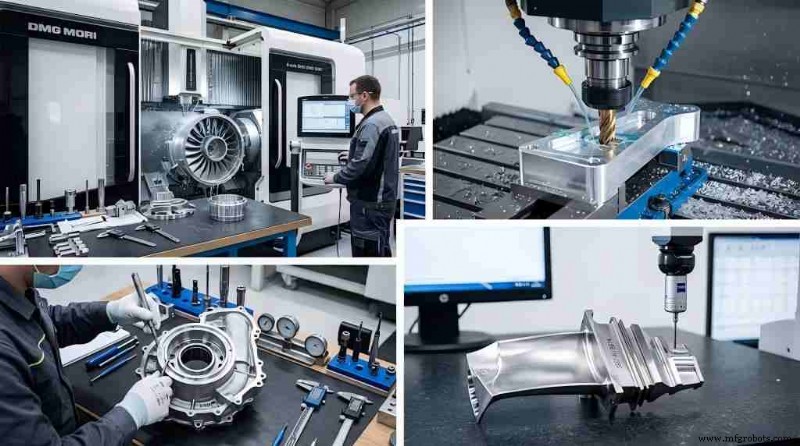
The control panel of a 5‑axis CNC machine reveals the true drivers behind these high prices. Costs are driven by the physical realities of cutting high‑strength alloys, managing structural deflection, preventing extreme tool wear, and executing the rigorous quality controls mandated by AS9100. Below is a technical analysis of why these parts command premium pricing, supported by specific machining data and operational insights.
Heavy Metal & Tough Exotics: Why Aerospace Materials Drain Tools
In conventional commercial CNC machining, working with Aluminum 6061 or mild steel allows high spindle speeds, aggressive feeds, and long tool life. In aerospace precision machining, we process exotic alloys engineered to survive extreme thermal and mechanical loads. These material properties directly erode cutting tool efficiency.
1. Titanium (Ti‑6Al‑4V) vs. Standard Aluminum
Titanium Ti‑6Al‑4V is prized for its strength‑to‑weight ratio and corrosion resistance, but its thermal conductivity is only ~6.7 W/m·K. When a solid carbide end mill engages a titanium workpiece, the friction‑generated heat cannot be dissipated through the material or chip. Instead, heat concentrates on the tool edge, often exceeding 800 °C, causing rapid thermal cracking and adhesive wear. To mitigate this, cutting speeds must be dramatically reduced, which in turn lengthens cycle times.
2. Machining Superalloys (Inconel 718)
Superalloys such as Inconel 718 can withstand high temperatures because their yield strength remains stable even under heat. However, they undergo severe work hardening during cutting, leading to chipping if the feed is too slow and rapid notch wear if the depth of cut is high.
| Material Designation | Cutting Speed (Vc, m/min) | Typical Tool Life (min per edge) | Primary Wear Mechanism |
|---|---|---|---|
| Aluminum 6061‑T6 | 800 | 120–240 | Built‑up edge (BUE), minor abrasive wear |
| Titanium Ti‑6Al‑4V | 30–45 | 20–30 | Thermal degradation, chipping, notch wear |
| Inconel 718 | 15–30 | 20–40 | Rapid work hardening, depth‑of‑cut notch wear |
The “Buy‑to‑Fly” Ratio: Turning 90% of Premium Material into Chips
A key cost driver in aerospace structural components is the move toward monolithic designs that eliminate fasteners, rivets, and welded joints—potential fatigue failure points. Engineers now machine complex parts from a single forged block of raw material.
This practice creates a high buy‑to‑fly ratio—the ratio of raw stock purchased to the finished part usable in an aircraft. In aerospace, this figure typically ranges from 10:1 to 20:1.
For example, machining an aircraft bulkhead or wing spar from a 200 kg aluminum 7075‑T6 forging may leave only 15 kg of finished part. The remaining 185 kg of certified material becomes chips, contributing substantially to the final part cost through material purchase and machine‑hour expenses.
Controlling Thin‑Wall Deformation and Internal Stress
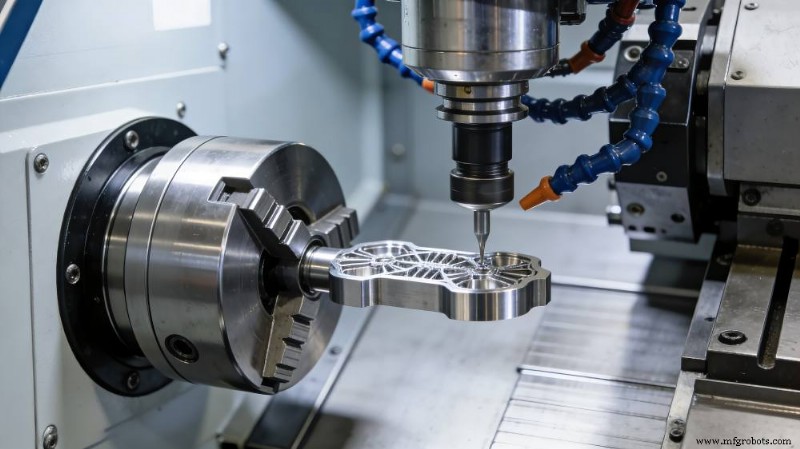
Aerospace parts often contain deep cavities separated by thin‑wall ribs or pockets of 1.5 mm or less. Machining these features introduces structural instability and part deflection.
When the exterior skin of a forged plate is removed, the internal residual stresses are disturbed, causing warping, bowing, or twisting during or after machining. Thin walls also lack rigidity and are prone to chatter—high‑frequency vibration that degrades surface finish (typically 0.8–1.6 µm Ra) and can fracture the walls.
To mitigate thin‑wall deformation, a highly sequenced, multi‑stage process is essential:
- Rough Machining: Uniformly remove bulk material from both sides to balance residual stress release.
- Stress Relieving / Age Hardening: Remove the part from fixtures and perform a thermal stress‑relief cycle.
- Semi‑Finishing Passes: Re‑clamp the part with specialized workholding and machine to within 0.25 mm of final dimensions.
- Final Precision Pass: Execute high‑speed, low‑depth‑of‑cut finishes to meet geometric tolerances without excessive cutting forces.
This multi‑step sequence increases setup times, handling costs, and overall machine utilization.
Hidden Costs: 5‑Axis Machines, Specialized Fixtures, and Strict AS9100 QC
1. Rigid 5‑Axis Kinematics
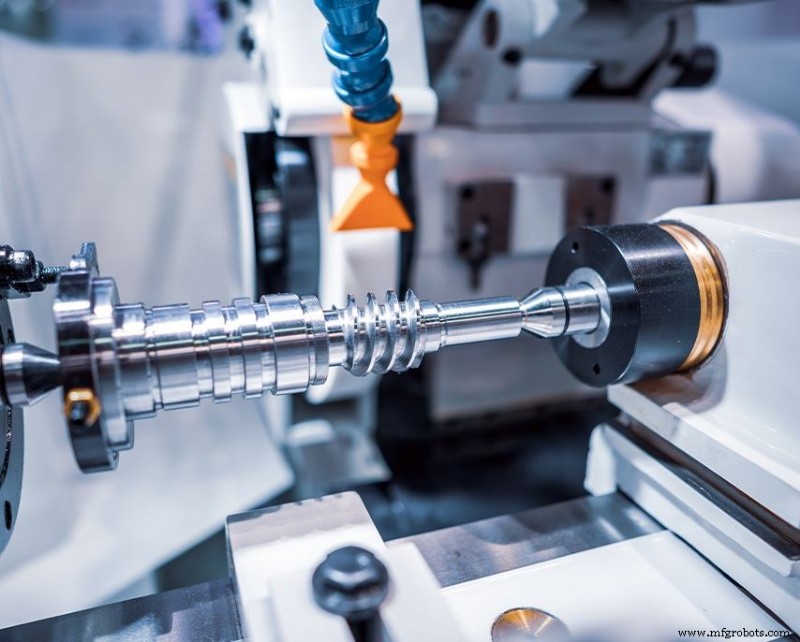
Aerospace components feature continuous curved geometries that cannot be produced on standard 3‑axis mills. They require high‑end 5‑axis simultaneous machining centers with rigid spindles to handle titanium challenges while achieving positioning accuracies of ±0.002 mm or better. The acquisition, maintenance, and thermal‑compensation calibration of these machines add to the hourly shop rate.
2. Custom Fixturing & Workholding
Standard vices and clamps cannot hold thin‑walled aerospace parts without distortion. We design and CNC‑machine dedicated modular vacuum fixtures or profile jaws that support the part uniformly across its geometry.
3. 100% Traceability and NDT
Every aerospace part requires a complete manufacturing documentation trail. Under AS9100, CNC services must maintain full material traceability, including Mill Test Reports (MTR) that verify the raw material heat lot. After machining, parts undergo CMM dimensional validation and are subjected to NDT methods such as Liquid Penetrant Inspection (LPI) or ultrasonic testing to detect subsurface micro‑cracks before final surface treatments.
How Designers Can Reduce Aerospace CNC Machining Costs
While aerospace components must meet stringent performance criteria, design engineers can modify geometry to enhance machining efficiency and reduce tool wear.
1. Avoid Sharp Internal Corners
Sharp 90° internal corners with a radius of 1 mm or less force the use of small‑diameter end mills, which are fragile and require slow feeds to prevent breakage. Increasing corner radii allows larger, rigid indexable end mills, maximizing material removal rates.
2. Relax Tolerances Where Permitted
Specifying tight tolerances (e.g., ±0.005 mm) on non‑critical surfaces increases cost exponentially. The machinist must make many passes, frequently stop the machine to measure, and adjust wear offsets manually. Reserve tight tolerances for critical mating faces or bearing bores.
3. Standardize Wall Thickness
Variable wall thicknesses within a single pocket require complex toolpaths and multiple tool changes. Standardizing wall profiles enables uniform roughing and finishing routines, reducing programming overhead and cycle time.
In summary, aerospace precision machining costs reflect the rigorous physical and regulatory environment of the aviation and defense sectors. Poor machinability of exotic materials, high material waste, thin‑wall distortion controls, and exhaustive traceability requirements converge to create a high‑cost manufacturing landscape.
FAQ
Q1: Which aluminum alloy is best for lightweight aerospace structures?
A1: Aluminum 7075‑T6 is the primary choice for structural components due to its high yield strength, comparable to certain steels, though it offers lower corrosion resistance than 6000‑series alloys. For superior weldability and marine corrosion resistance, 5‑series (e.g., 5083) and 6‑series (e.g., 6061) alloys are preferred.
Q2: How does tool wear affect CNC machining cost?
A2: Cutting titanium or Inconel requires advanced solid carbide end mills with PVD coatings, which can dull after only 20–30 minutes of continuous cutting. Replacing consumables and performing tool changes and re‑calibration adds significant labor and material costs.
Q3: How long does it take to produce complex aerospace CNC parts?
A3: Lead times typically range from 6 to 12 weeks, depending on certified material acquisition, fixture design, multiple stress‑relief cycles, and AS9100 testing.
Related Guides
Industrial Technology
- Norton’s Theorem: Simplifying Linear Circuits with Current Sources and Parallel Resistance
- 9 Essential Checks for Your First PCB Production Project
- Revolutionizing Talent: How Workplace Development Drives Modern Workforce Success
- SMT PCB Design Essentials: Expert Component Layout for Superior Quality
- How Waterjet Cutting Enhances Precision in Medical Implants
- Understanding Complex Numbers: From Scalars to Phasors in AC Circuit Analysis
- Rapid Prototyping for Precision Machining: Speed & Accuracy
- Unlock the Full Potential of Your Coordinate Measuring Machine
- Bernadine Hawes Named Vice Chair of NIST’s Manufacturing Extension Partnership Advisory Board
- Waterjet Cutting Explained: 5 Common Myths Busted