



Understanding Complex Numbers: From Scalars to Phasors in AC Circuit Analysis
When we talk about the distance between two cities, a single numeric value—such as miles or kilometers—suffices. But describing how to travel from one city to another requires both a distance and a direction. In mathematics, a single-dimensional quantity like distance is called a scalar.
Scalars are the workhorse of everyday math: temperature, weight, voltage, resistance, and current are all scalar values. For example, a 12‑V battery or a 5‑ohm resistor are expressed with a single number.
When we shift from direct current (DC) to alternating current (AC), the picture changes dramatically. Voltage, current, and even resistance (known as impedance in AC) acquire additional dimensions—most notably, frequency and phase shift. Even in a single‑frequency AC circuit, phase becomes a critical parameter alongside amplitude.
To analyze these multidimensional quantities, we need a mathematical tool that can capture both magnitude and phase in one compact representation. That tool is the complex number. Think of it as a vector that carries both a length (amplitude) and an angle (phase shift), much like a map arrow indicating distance and direction between two cities.
Graphical Representation of Complex Numbers
Complex numbers are most intuitively understood when visualized as vectors on the complex plane. A vector’s length corresponds to the number’s magnitude, while its angle from the positive real axis represents its phase. The following figure illustrates this relationship:
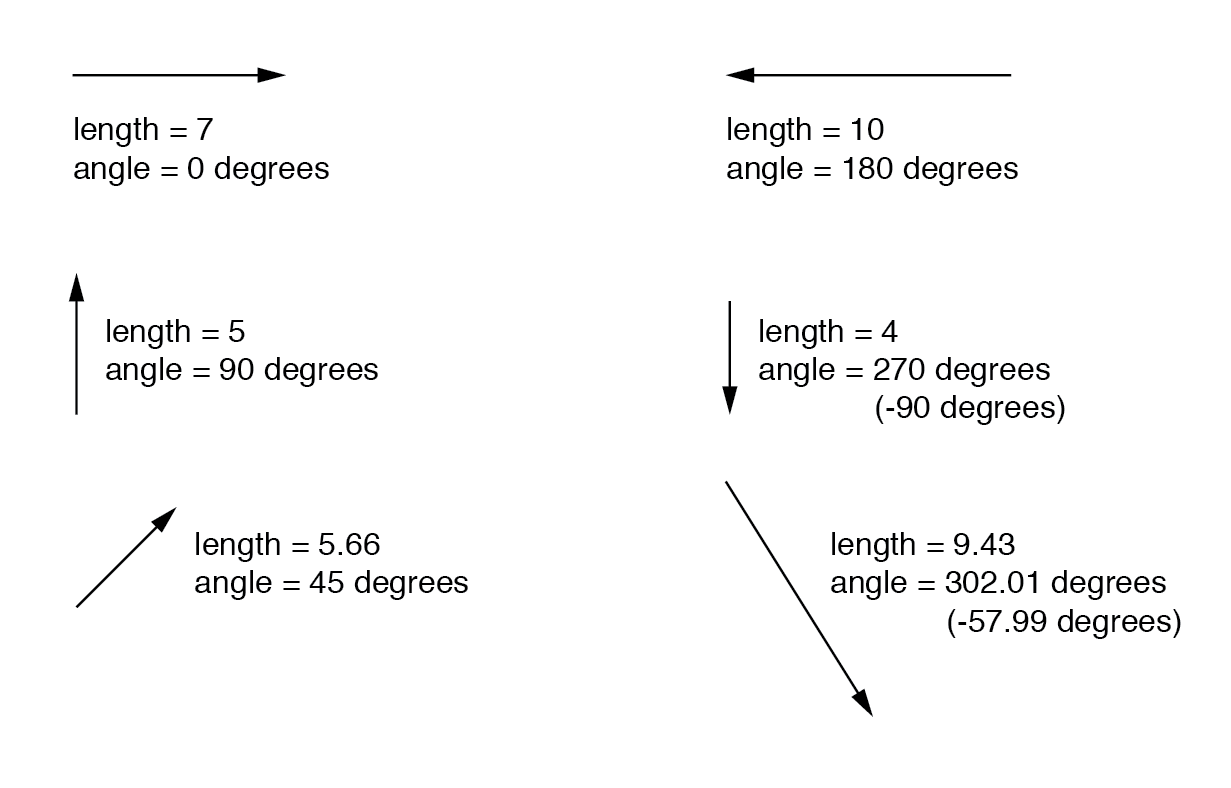
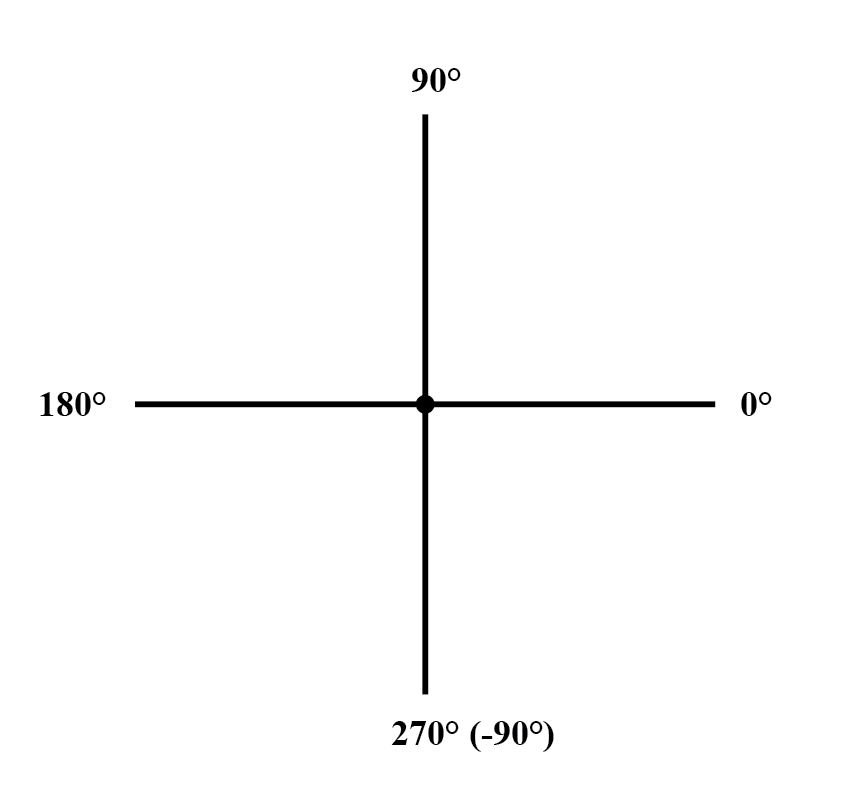
In this coordinate system, the positive real axis is defined as 0°, and angles are measured counter‑clockwise, mirroring conventional map bearings:
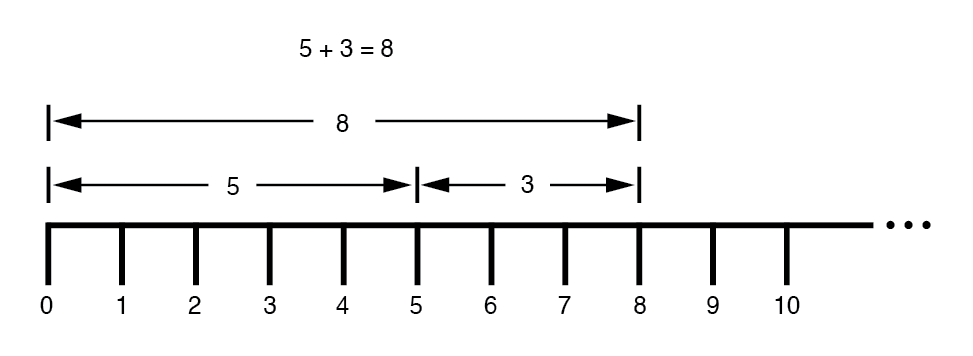
The idea of picturing numbers on a line is familiar from grade‑school number lines:

We learned how to add and subtract by visualizing lengths along that line:
And we extended this to fractions and decimals, representing values between the integers:
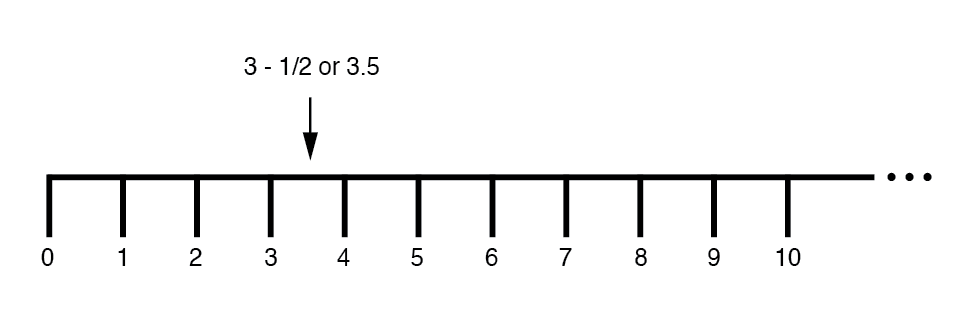
All these numbers—whole, integer, rational, irrational, real—are one‑dimensional. Their linear arrangement captures only a single axis of variation.
However, quantities that possess both magnitude and direction, such as the amplitude and phase of an AC waveform, cannot be adequately described on a one‑dimensional line. They require a two‑dimensional representation—a vector—on the complex plane.
Key Takeaways
- A scalar is a one‑dimensional quantity (e.g., temperature, voltage).
- A complex number simultaneously encodes magnitude and phase.
- A vector (or phasor in electrical engineering) visually represents a complex number as an arrow with a defined length and direction.
Related Resources
For a deeper dive into complex numbers and their applications in AC circuit analysis, consult standard textbooks such as "Engineering Circuit Analysis" by Hayt and Kemmerly, or the IEEE Spectrum articles on phasor mathematics.
Industrial Technology
- Foundations of DC Circuits: Understanding Direct Current and Core Electrical Concepts
- Understanding AC Circuits: A Beginner's Guide
- Getting Started with SPICE: A Text‑Based Circuit Simulation Tool
- Decoding Numbers and Symbols in Electronics
- Numbers vs Numeration: Understanding the Distinction and Its Practical Impact
- Understanding Negative Numbers in Binary: Sign-Magnitude, Complement, and Two’s Complement
- Polar vs. Rectangular Notation for Complex Numbers – A Practical Guide
- Mastering Complex Number Arithmetic: Essential Operations & Techniques
- Foundations and Advancements of AC Motor Technology
- Python Numbers: Understanding Immutable Numeric Data Types